A coffee table may not be the biggest piece of furniture in your living room, but it’s one of the most important. It’s the place where drinks are set down, books are stacked, and everyday life naturally gathers. Building your own coffee table gives you the freedom to choose a size and style that fits your home perfectly while saving money compared to buying ready-made. A particularly attractive and practical option is pairing an oak veneer top with steel box section legs. The result is a table that feels modern, stylish, and durable enough for daily use without carrying the cost or weight of solid oak.
The Style of the Coffee Table and Where It Belongs
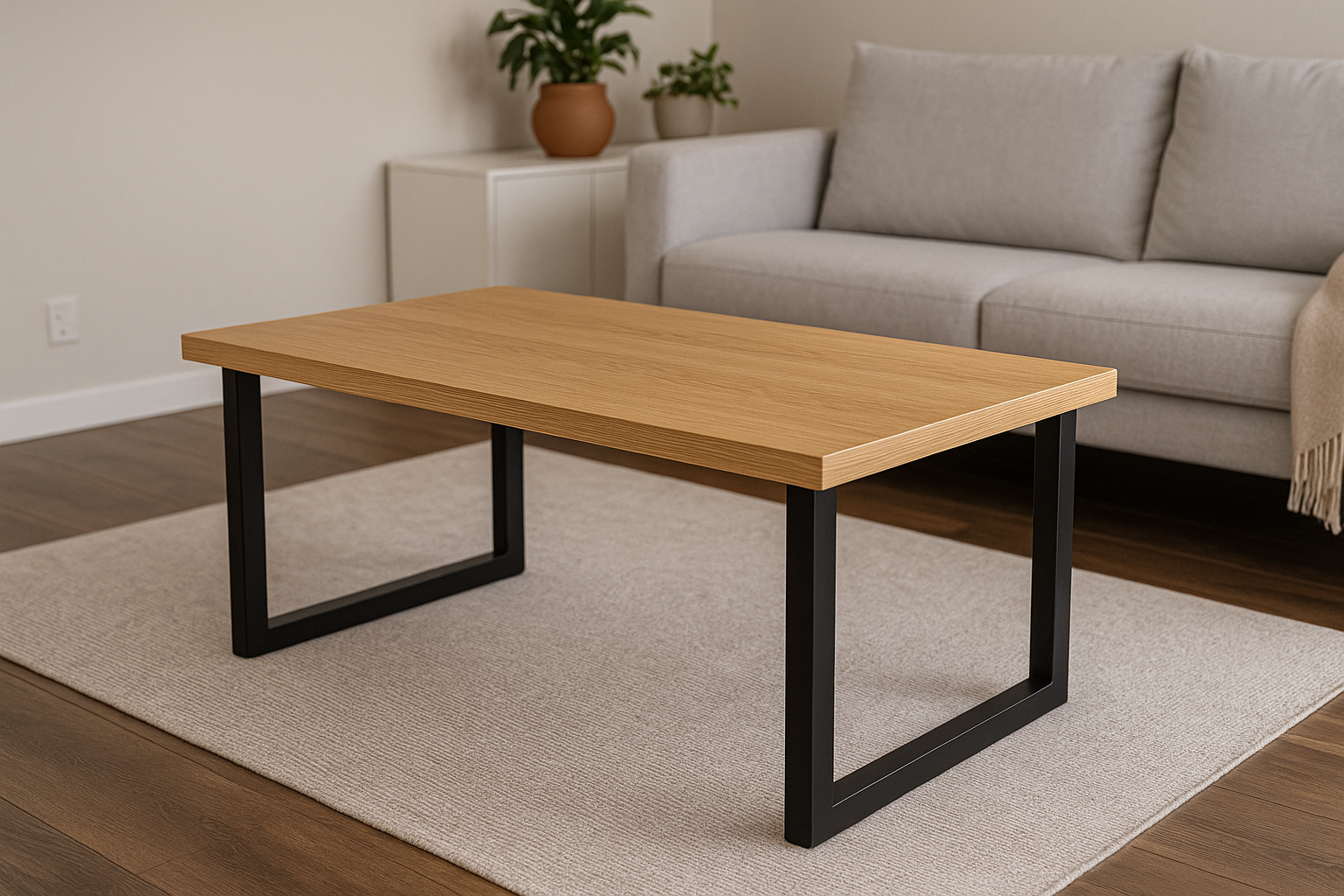
Oak veneer paired with steel legs creates a coffee table with a clean, contemporary character. The oak veneer surface brings natural warmth and grain, while the steel legs add structure and bold geometry. Unlike slimmer hairpin legs, which often fade into the background, box section legs have presence. They anchor the piece visually, giving the table a more architectural feel.
This style is particularly suited to modern apartments, where space is limited but style is a priority. It also works beautifully in Scandinavian-inspired living rooms, where light woods and clean lines dominate. In industrial or urban interiors, the blend of warm wood and raw steel feels right at home. The combination is versatile enough to work in minimalist settings as well as more eclectic ones.
What Box Section Steel Legs Are and How They Look
Box section legs are made from hollow rectangular or square steel tubing. Welded into rigid frames, they are available in a range of shapes, from simple rectangles to trapezoids or custom angular designs. Their straight lines give them strength and a modern, architectural aesthetic that contrasts well with natural timber.
On a coffee table, box section legs bring stability and boldness. They make the piece feel substantial, ensuring that even a slim veneered top has a grounded presence.
Why Oak Veneer and Steel Work Well Together
Oak veneer is an excellent choice for projects where you want the look of oak without the cost, weight, or potential movement of solid wood. It is made by bonding thin slices of oak onto a core material such as MDF or particleboard. This creates a stable, lightweight panel that resists warping and is easy to work with.
When paired with box section steel legs, veneer achieves a refined balance. The boldness of the steel frames grounds the lighter, more affordable surface, creating a coffee table that feels well-proportioned and stylish. It’s a combination that delivers on both practicality and appearance.
Choosing the Right Colour for the Legs
Steel box section legs are commonly available in black, white, or raw steel finishes. Black creates a sharp contrast against the oak veneer, giving the table a modern, graphic edge. White softens the look, enhancing the light, Scandinavian aesthetic. Raw steel leans into the industrial style but should be sealed to prevent rust.
For a bespoke approach, the legs can be painted in any colour. To do this, lightly sand the steel for adhesion, apply spray or brush paint, and finish with a clear coat. This allows you to coordinate the table with your living room palette, whether you prefer subtle blending or bold contrast.
Why Oak Veneer Differs from Solid Oak
Unlike solid oak, which is hardwood all the way through, oak veneer has only a thin layer of oak on the surface. The benefit is that veneered panels are far lighter, more affordable, and more stable — they don’t expand or contract with changes in humidity the way solid wood does.
The trade-off is durability. The veneer layer is thin, usually less than a millimetre thick, which means it can’t be sanded and refinished multiple times. Once damaged, chips or deep scratches are difficult to repair. For a coffee table, which sees daily use, this means extra care is needed: coasters, placemats, and quick cleanup of spills are essential.
Everyday Durability and Maintenance
Coffee tables are often treated casually. Mugs, glasses, and even feet end up on them, so the surface must be protected. Oak veneer will stay beautiful for many years if looked after carefully. Using coasters prevents water rings, trays protect against scratches, and spills should be wiped up promptly. Unlike solid oak, you can’t refinish veneer once it’s worn through, so prevention is key.
The advantage is that veneer is resistant to warping or cracking, so the top will stay flat and stable no matter the season. This makes it a smart option for busy households that want practicality without the upkeep of solid wood.
Choosing the Right Thickness
Oak veneered panels are available in 18mm, 22mm, and 25mm thicknesses. For a coffee table, 22mm or 25mm is the sweet spot, providing a balance of strength and appearance. An 18mm panel works for smaller tables but may look insubstantial when paired with chunky steel legs. A thicker top balances the weight of the frames, ensuring the design feels proportional.
Cutting and Preparing Veneer
If you’re cutting the panel yourself, use a fine-tooth saw blade and take precautions against chipping. Masking tape along the cut line, cutting slowly, and using a track saw are the best ways to achieve a clean finish. A circular saw will do the job if that’s what you have, but the accuracy of a track saw makes a noticeable difference.
For those without access to good tools, ordering veneered panels pre-cut to size from an online supplier is worth considering. It costs a little more per square metre but guarantees straight, accurate cuts and eliminates the hassle of handling large sheets.
Sanding Veneer Safely
Sanding veneer requires care. The oak surface layer is thin, so aggressive sanding can quickly go through to the core material. Start with a fine grit such as 180, sanding lightly with the grain, and avoid power sanding unless you are confident. Edges should be sanded gently by hand for the best results.
Edge Treatments
The edges of veneered panels usually expose the MDF or particleboard core. These can be covered with iron-on oak edge banding, which creates the look of a solid oak top. For a more premium finish, solid oak lippings can be glued to the edges, then sanded flush. If you prefer a minimalist approach, you can simply ease the edges with fine sandpaper for comfort, though the exposed core will remain visible.
Attaching the Box Section Legs
Box section legs are fixed to the underside of the top using screws through their mounting plates. Position the legs 5–8cm in from the edges to ensure stability and a balanced appearance. Always drill pilot holes before inserting screws, as this prevents splitting and ensures a secure fit.
Check the placement before drilling to ensure the frames don’t clash with skirting boards if the table will sit against a wall. Also consider the space between the legs for storing baskets or ottomans underneath.
Finishing the Veneer Surface
Finishing protects the veneer and enhances the oak grain. For coffee tables, where spills and scratches are inevitable, a durable finish is essential.
- Hardwax oil provides a natural matte look while offering good resistance to stains.
- Danish oil or tung oil bring warmth and depth, though they may require reapplication.
- Polyurethane varnish creates the toughest barrier, protecting against scratches and water rings, though it may add more shine.
Apply multiple thin coats, sanding lightly between applications. Because veneer is thin, avoid heavy sanding between coats — a light touch is enough to smooth the finish.
Conclusion
A coffee table with an oak veneer top and steel box section legs combines style, affordability, and practicality. The veneer gives you the natural beauty of oak grain without the cost or weight of solid wood, while the steel legs add bold geometry and stability. Together they create a table that looks professional, feels substantial, and suits a wide range of interiors.
By choosing the right thickness, cutting carefully (or ordering pre-cut), sanding gently, finishing thoughtfully, and attaching the legs with precision, you can create a coffee table that rivals designer pieces while staying within budget.
This combination is perfect for modern living rooms, Scandinavian-inspired spaces, or industrial lofts. While veneer requires a little extra care compared to solid oak, it offers a smart balance of cost and style — proof that with thoughtful choices, you can make a coffee table that looks elegant, functions beautifully, and reflects your personal taste.
