Posted on

How to Prepare Reclaimed Wood for DIY Tables and Desks

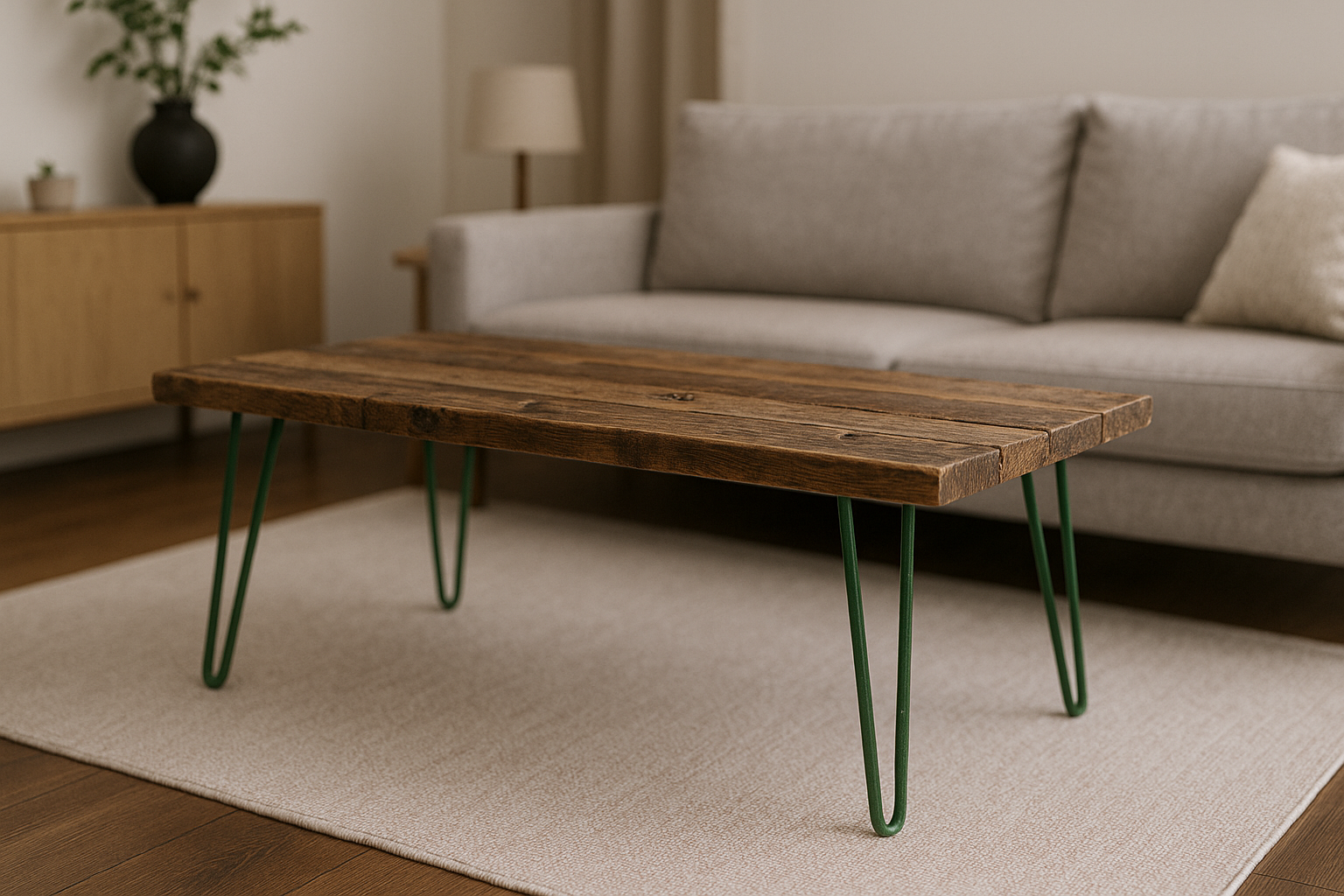
Reclaimed wood has become one of the most popular materials for DIY furniture. Its rustic charm, sustainability, and unique character make it ideal for projects where you want personality as well as practicality. But reclaimed wood is rarely ready to use straight away. Whether it’s scaffold boards, barn timber, or old flooring, it usually needs cleaning, straightening, and finishing before it can be turned into a dining table, coffee table, or desk.

This guide will take you through the full process of preparing reclaimed wood for furniture making, from the first clean-up to the final finish. We’ll also look at how to complete your project by choosing the right legs to suit your table design.

Step 1: Cleaning the Boards

The first task with reclaimed wood is to remove years of grime. Boards may have dust, dirt, grease, or even paint layers that need attention. Start by brushing off loose debris with a stiff brush. For heavily soiled wood, wash the boards with warm water and mild detergent, scrubbing with a stiff bristle brush. Always allow the timber to dry completely before moving on — rushing this step can trap moisture and cause warping later.

Cleaning isn’t about making the wood look perfect at this stage. It’s about removing the surface mess so you can properly assess the boards and plan the next steps.

Step 2: De-Nailing and Checking for Metal

Reclaimed wood often hides nails, screws, or staples from its previous life. These must be removed before you can cut or plane the boards, as hidden metal will damage saw blades and sanding equipment. Use pliers or a claw hammer to extract visible nails. For stubborn pieces, punch them through with a nail set.

It’s also wise to run a handheld metal detector over the boards before cutting — even tiny fragments can cause trouble. This step might seem tedious, but it saves expensive tools and ensures safety.

Step 3: Flattening and Straightening

Reclaimed boards are rarely straight. Years of use and weather exposure often leave them warped, cupped, or twisted. How much you correct this depends on the project.

For rustic coffee tables, you may decide to keep some unevenness for character. For dining tables or desks, however, you’ll want a flat, stable surface. Use a planer to flatten the boards if you have access to one. Alternatively, a belt sander and some patience can reduce high spots. If the boards are badly twisted, you may need to cut them into shorter sections and join them again to create a usable top.

Step 4: Cutting to Size

Once the boards are cleaned and flattened, cut them to the required length. A circular saw is suitable, though a track saw or mitre saw provides more accuracy. Always clamp the wood securely and measure twice before cutting.

Scaffold boards, often used for reclaimed projects, typically measure 225mm wide and 38mm thick. Two or three joined side by side make a good width for a coffee table, while four or more can form a dining table top.

Step 5: Joining Boards Together

To create a table top, the boards need to be joined. The best method is to glue the edges with wood glue and clamp them until dry. Adding dowels or biscuits helps alignment and strength, though this requires extra tools.

If you prefer a simpler approach, screw battens across the underside of the boards to hold them together. This is quick and effective but may leave small gaps visible on the surface. For rustic furniture, this is often acceptable — some even prefer the slightly uneven look.

Step 6: Sanding the Surface

Sanding is where the transformation really begins. Start with coarse grit (around 60–80) to remove roughness, old paint, or surface dirt. Progress gradually to finer grits (up to 180–240) for a smooth, touch-friendly surface.

An orbital sander speeds things up, but be prepared for dust. A mask, goggles, and good ventilation are essential. For edges and corners, hand sanding gives more control. The aim is not to remove every mark but to make the wood safe and pleasant to use while preserving its unique character.

Step 7: Choosing a Finish

Finishing protects reclaimed wood and enhances its grain. The right finish depends on the look you want and the type of furniture you’re making.

  • Hardwax oil: Gives a natural matte look and excellent protection against stains — ideal for dining tables and desks.
  • Danish oil or tung oil: Adds warmth and richness, though it may need reapplication over time.
  • Polyurethane varnish: Provides the toughest surface, perfect for coffee tables in busy households, though it adds more shine.

Apply multiple thin coats, sanding lightly between each one for a smooth result. Reclaimed wood often absorbs finish unevenly, but this only adds to its charm.

Suitability for Dining Tables, Coffee Tables, and Desks

Reclaimed wood can be used for almost any table or desk, but there are a few things to keep in mind:

  • Dining tables need a strong, durable surface and a finish that can withstand spills. Hardwax oil or polyurethane is usually the best choice.
  • Coffee tables benefit from reclaimed wood’s character. Smaller tops highlight knots, marks, and patina without overwhelming the room.
  • Desks made from reclaimed boards can make a home office feel warmer and more personal. Just be sure to sand thoroughly so the surface is smooth enough for writing or using a laptop.

Choosing the Right Legs

Once the top is ready, the choice of legs completes the table. Reclaimed wood has a lot of personality, so the base should balance and complement it rather than compete. Two of the most versatile options are hairpin legs and steel box section legs.

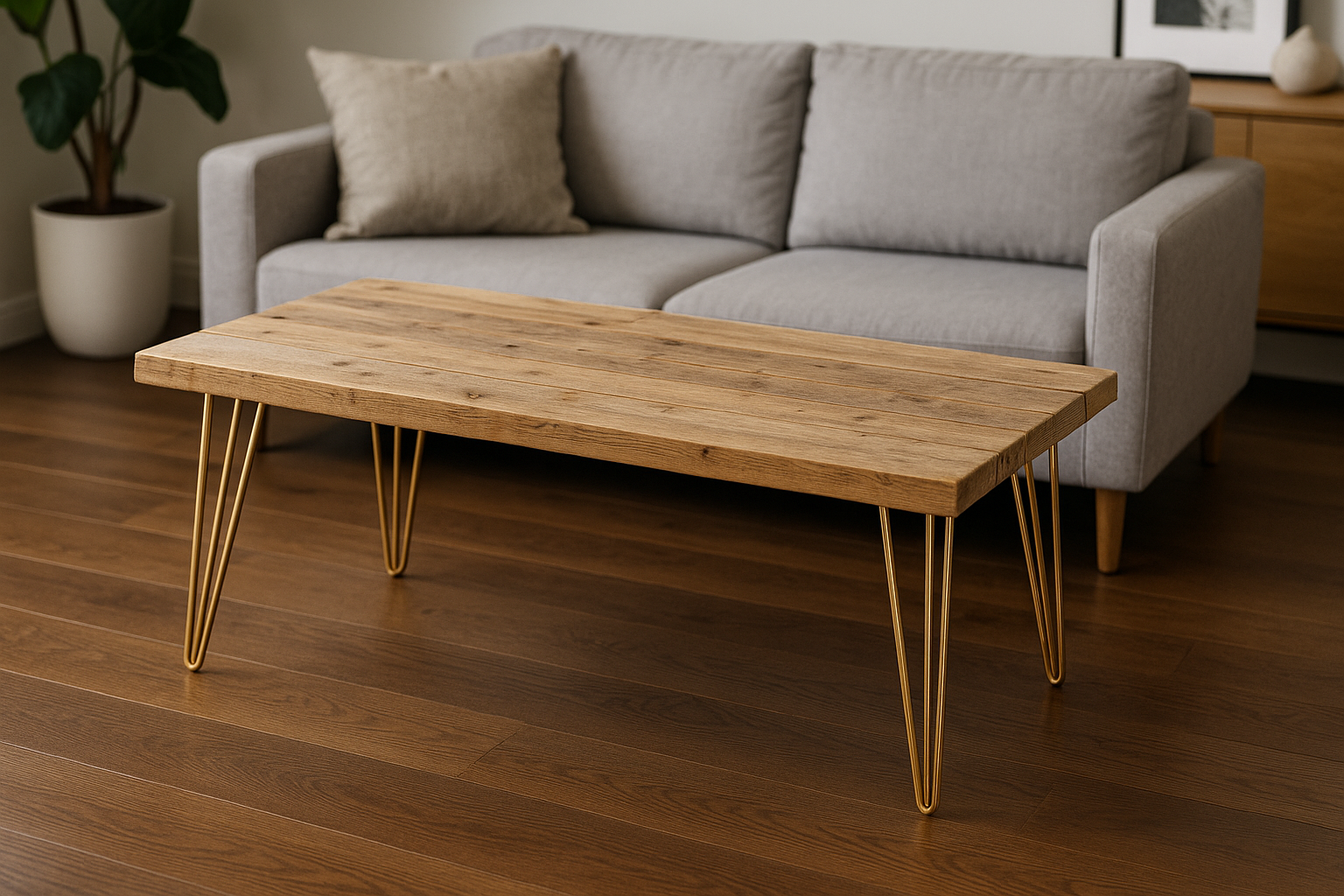
  • Hairpin legs are slim, elegant, and timeless. They lift the rustic weight of reclaimed wood, making the piece feel lighter and more modern. They work especially well for coffee tables and smaller desks, where a refined look is desirable.
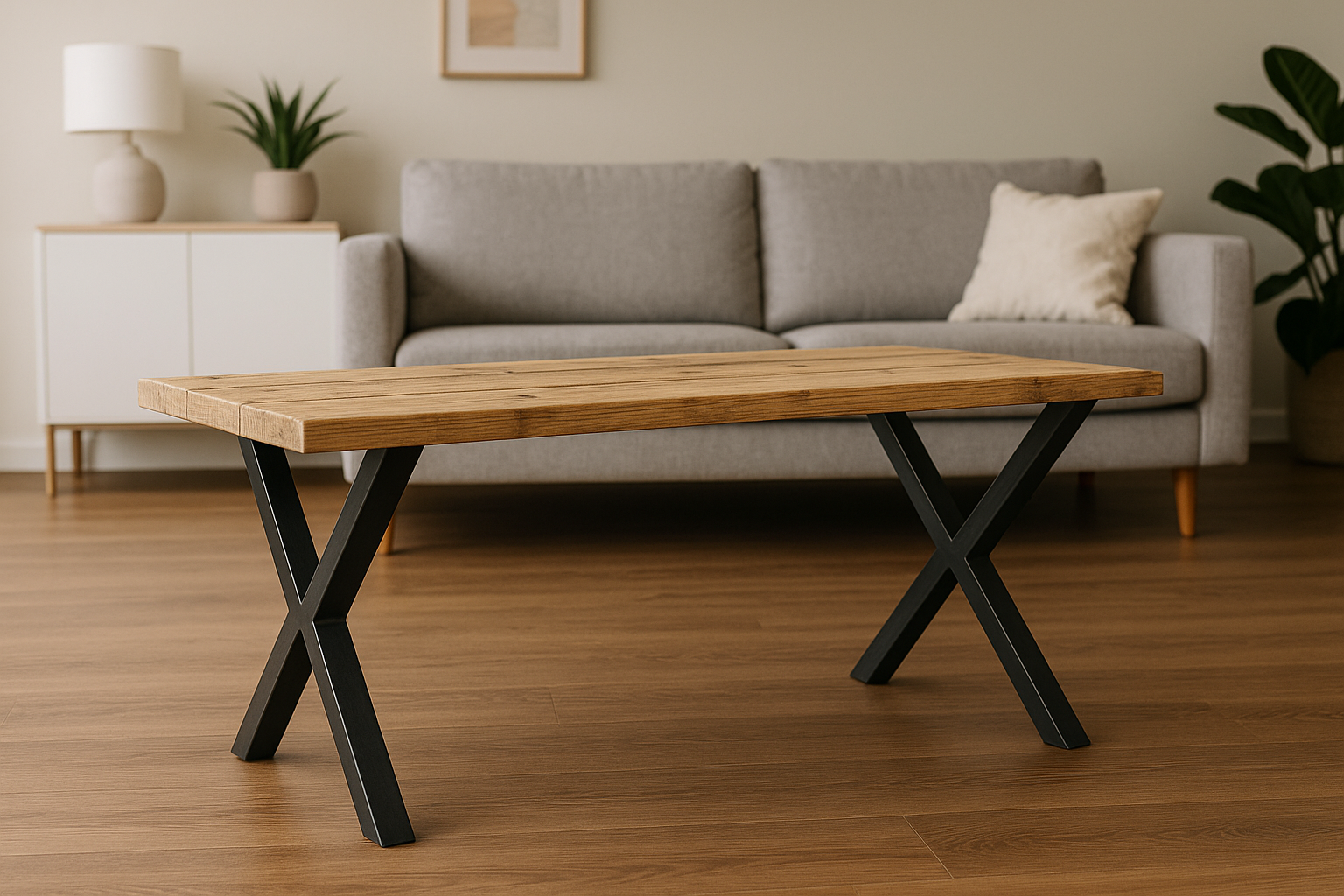
  • Box section legs are bold, geometric, and strong. Their clean lines anchor the table visually and provide excellent stability for larger tops, making them perfect for dining tables and heavy desks. Black or raw steel creates an industrial edge, while white softens the look.

Both styles suit reclaimed wood because they contrast its roughness with modern simplicity. The choice comes down to the size of your project and the feel you want: airy and delicate with hairpins, or solid and architectural with box sections.

Conclusion

Preparing reclaimed wood for DIY furniture is a rewarding process. It takes time to clean, de-nail, flatten, sand, and finish, but the result is a table or desk that carries history and character no new timber can match. By pairing it with the right legs — hairpins for elegance or box section frames for strength — you can create a piece that blends rustic authenticity with modern design.

Whether it becomes a dining table, coffee table, or desk, reclaimed wood ensures your project is more than just furniture. It becomes a story of transformation, where old boards find a new purpose and your living space gains a centrepiece full of personality.
Posted on

Why Reclaimed Wood is Perfect for DIY Tables and Desks

When it comes to building your own furniture, the choice of material has a huge impact on both the look of the finished piece and the satisfaction you get from making it. Among the many options available, reclaimed wood has a special appeal. It is sustainable, full of character, and makes every project unique. Whether you’re making a dining table, a desk, or a coffee table, reclaimed wood can transform a simple design into something with real depth and personality.

This article will explore what reclaimed wood is, why it works so well for furniture, the challenges you’ll face when using it, and how to prepare and finish it properly. We’ll also look at which types of tables and desks benefit most from reclaimed wood, and how to combine it with modern leg designs for a balanced, timeless look.

What Is Reclaimed Wood?

Reclaimed wood is simply timber that has been salvaged from another use and given a second life. It can come from many sources: old barns and warehouses, scaffold boards, shipping pallets, railway sleepers, or even flooring and beams from demolished houses. Instead of being thrown away or left to rot, these boards are cleaned up and reused.

The appeal of reclaimed wood lies in its history. Every mark, nail hole, and weathered surface tells a story. Unlike new timber, which often looks uniform, reclaimed wood carries the character of its previous life. It may show saw marks from decades ago, colour changes from sun and rain, or small imperfections that give it a lived-in feel.

The Unique Aesthetic of Reclaimed Wood

The first thing you notice about reclaimed wood is its patina. Years of exposure to the elements, use in construction, or contact with tools and fasteners leave behind marks that can’t be replicated artificially. The result is a surface that looks instantly warm, interesting, and authentic.

Knots, cracks, nail holes, and even old paint residues can all add to the charm. Instead of trying to eliminate imperfections, most makers choose to celebrate them. A dining table made from reclaimed boards becomes a talking point — every mark hints at a previous life. A desk built from old scaffold boards feels like it carries both history and strength.

For coffee tables in particular, reclaimed wood has huge appeal. The smaller surface area allows the wood’s character to shine without overwhelming the room, and the table instantly feels lived-in rather than pristine.

Why Reclaimed Wood Is Sustainable

Reclaimed wood is also one of the most environmentally responsible choices you can make. By reusing existing timber, you reduce demand for freshly felled trees, helping to preserve forests. You also prevent perfectly usable material from being wasted.

Many types of reclaimed wood are stronger and denser than new equivalents because they were originally cut from old-growth trees, which are no longer widely available. Choosing reclaimed wood for your dining table or desk means you’re not only saving resources but also giving yourself access to timber quality that might be hard to find otherwise.

The Challenges of Working with Reclaimed Wood

Of course, using reclaimed wood isn’t always straightforward. Unlike freshly milled timber, which arrives clean and ready to use, reclaimed boards often need significant preparation.

  • Hidden nails and screws: These can damage saw blades or planers if not removed carefully. A metal detector can help identify them before cutting.
  • Warping and twisting: Years of use or exposure to weather can leave boards less than perfectly straight. Some may need planing or careful clamping to bring them back into shape.
  • Dirt and paint: Many reclaimed boards are rough, with ingrained dirt or old paint layers. Sanding and cleaning are essential before finishing.
  • Variable sizes: Scaffold boards, for example, are typically 225mm wide and 38mm thick, but reclaimed boards can vary widely. You may need to mix and match to build a table top of the right size.

These challenges mean reclaimed wood isn’t always the easiest option for beginners. But with patience and the right tools, the results are worth it.

Preparing Reclaimed Wood

The preparation process is just as important as the build itself.

  1. Cleaning: Start by brushing off dirt and debris. For heavily soiled boards, a light wash with water and a stiff brush may be needed, followed by thorough drying.
  2. De-nailing: Go over each board carefully to remove any nails, screws, or staples. Even small fragments can damage tools.
  3. Flattening and straightening: Depending on the project, you may need to plane the boards flat. For rustic projects, you can often keep the roughness, but dining tables and desks usually need smoother, more level surfaces.
  4. Cutting to size: Use a circular saw or track saw for accurate cuts. Always measure carefully and clamp securely, as reclaimed wood can shift if not firmly held.
  5. Joining boards: For wide table tops, boards can be glued edge to edge, reinforced with dowels or biscuits. Alternatively, battens screwed across the underside can hold them together, though this may leave small gaps.

Choosing the Right Furniture Projects

Reclaimed wood works particularly well for dining tables, coffee tables, and desks, though each comes with its own considerations.

  • Dining tables: Reclaimed wood creates a warm, inviting surface, perfect for family meals and gatherings. Because dining tables see a lot of wear, finishing is important to protect against spills and stains.
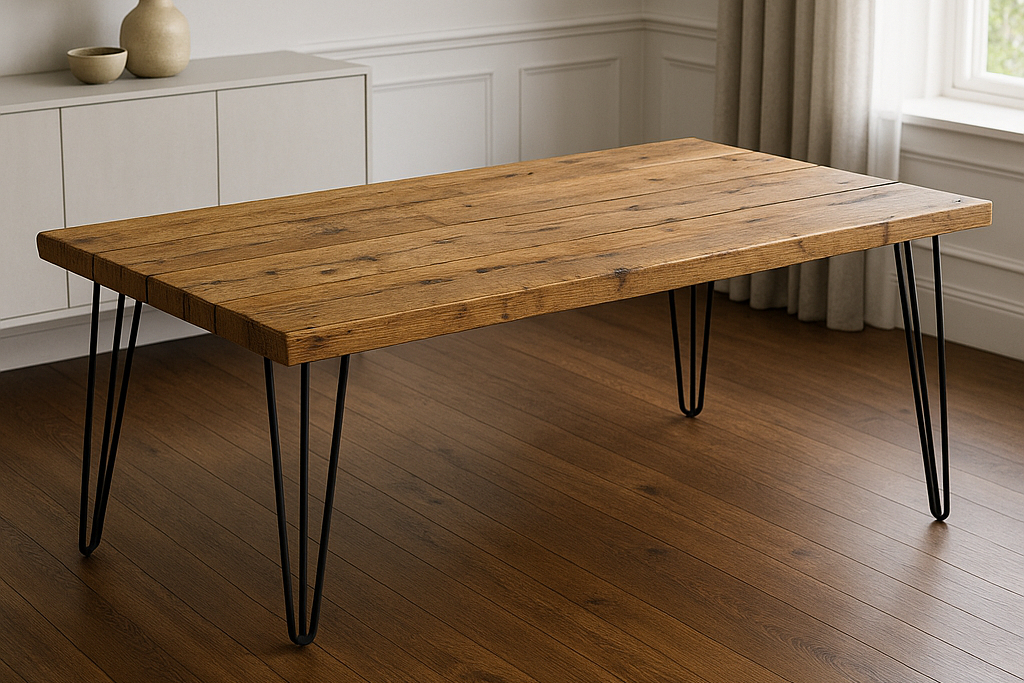
  • Coffee tables: These benefit from the character of reclaimed wood without needing huge quantities. A coffee table made from old scaffold boards feels rustic yet stylish, especially when paired with slim steel legs.
  • Desks: A reclaimed wood desk can add personality to a home office. The natural marks and character of the wood make the workspace feel less sterile, while still being practical if finished correctly.

Pairing Reclaimed Wood with Modern Legs

One of the best ways to use reclaimed wood is to pair it with modern legs. The rugged, characterful top contrasts beautifully with the clean lines of steel.

  • Hairpin legs: Slim and elegant, they lift the rustic top, making it feel lighter. This is particularly effective for coffee tables.
  • Box section steel legs: Bold and geometric, they ground the table, balancing the weight of the boards. Perfect for dining tables and desks.
  • Trestle legs: A traditional option that complements reclaimed tops well, creating a sturdy and practical base.

This mix of rustic and modern is one of the reasons reclaimed wood has become so popular in DIY furniture making.

Sanding and Finishing Reclaimed Wood

Sanding is where reclaimed wood transforms. Start with a coarse grit to remove dirt, paint, and splinters, then move gradually to finer grits for smoothness. An orbital sander makes the job quicker, but hand sanding works too if you prefer a traditional approach.

Finishing depends on the look you want:

  • Hardwax oil: Enhances the grain and provides a matte, natural look while offering strong protection.
  • Danish oil or tung oil: Add warmth and depth but may require periodic reapplication.
  • Polyurethane varnish: Provides maximum durability, making the surface resistant to scratches and water rings, though it adds more shine.

Because reclaimed wood already has character, you don’t need to overdo the finish — the goal is to protect it while letting its history show through.

Long-Term Appeal of Reclaimed Wood

Furniture made from reclaimed wood has a unique appeal because no two pieces are ever the same. Every dent, knot, and variation tells a story, and over time the table or desk will gain even more character through use. Unlike pristine surfaces, which can look spoiled when scratched, reclaimed wood embraces imperfection. This makes it ideal for family dining tables, busy desks, or coffee tables that are in constant use.

Reclaimed wood also ages gracefully. Instead of deteriorating, it develops more patina and personality. A reclaimed wood dining table today will look even better in ten years, with the marks of meals, celebrations, and daily life layered on top of its already rich history.

Conclusion

Reclaimed wood is one of the most rewarding materials for making DIY furniture. It is sustainable, unique, and full of character. While it requires more preparation than freshly milled timber, the effort pays off in a finished piece that feels authentic and one-of-a-kind.

Whether you’re building a dining table, a desk, or a coffee table, reclaimed wood can turn a simple design into a statement piece. Paired with modern steel legs, it creates a look that blends rustic charm with contemporary style. Finished with oils or varnishes, it becomes a surface that is practical for everyday life while celebrating the beauty of imperfection.

For makers who want furniture that tells a story, reclaimed wood is hard to beat. Every plank carries history, every knot adds character, and every finished table becomes more than just furniture — it becomes part of the home’s identity.

Posted on

Oak vs Ash vs Walnut: Which Hardwood is Best for Tables and Desks?

When building or buying a table or desk, the wood you choose defines not only how it looks, but also how it feels to use and how long it will last. Among hardwoods, three stand out as enduring favourites: oak, ash, and walnut. Each has its own character, grain, and price point, and each brings something unique to dining tables, coffee tables, and desks.

If you’re deciding which hardwood to use, it helps to understand their differences in style, durability, and practicality. Let’s look closely at oak, ash, and walnut to see which might be the right fit for your project.

Style and Appearance

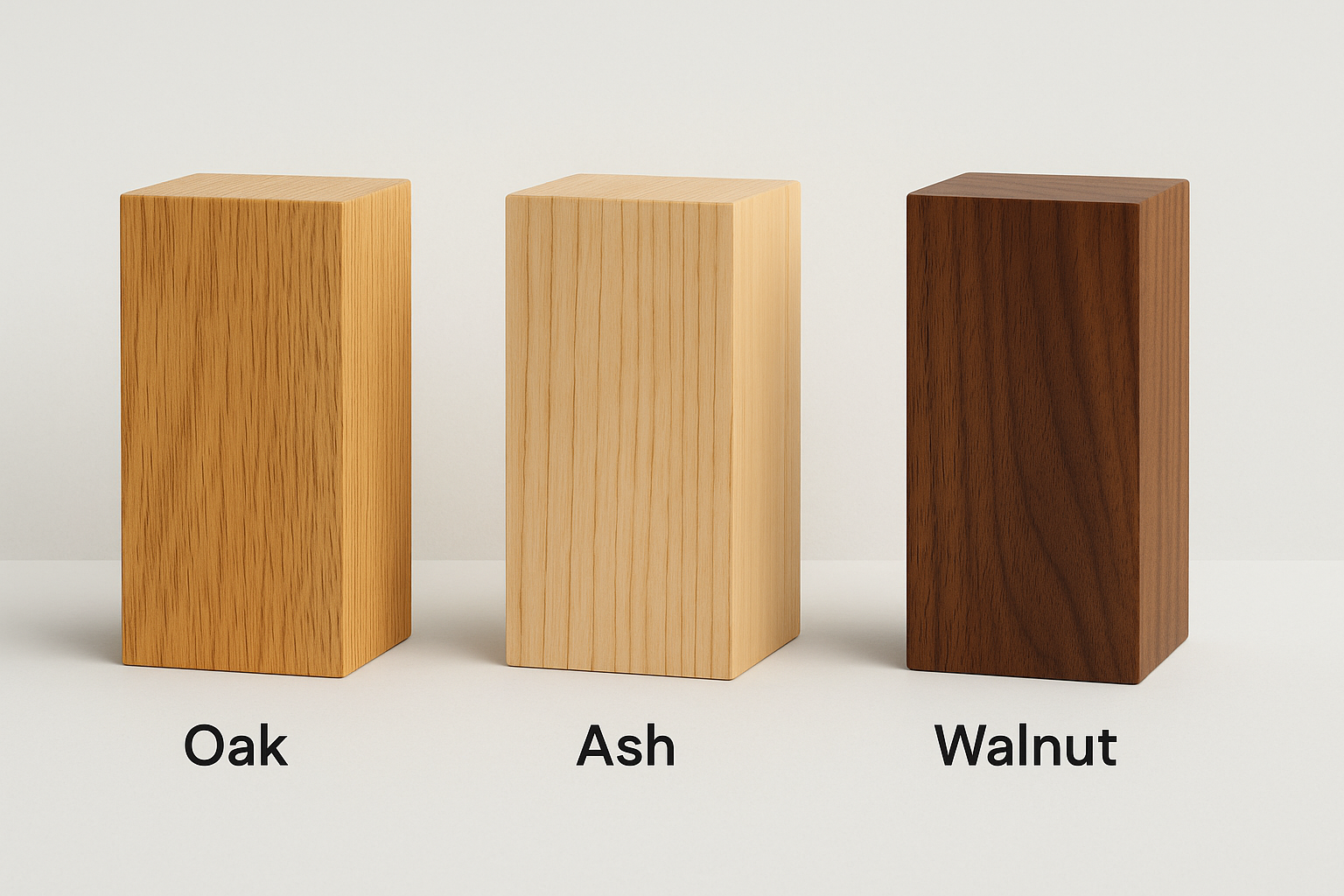
Oak is famous for its distinctive grain and golden tones. It carries a sense of tradition and weight, looking equally at home in rustic farmhouse interiors and more formal spaces. Oak’s prominent medullary rays and natural variation give every table top its own character.

Ash has a lighter appearance, often almost white or pale cream with subtle grain patterns. Its colour and texture make it ideal for modern or Scandinavian interiors, where a clean, airy look is desired. Compared to oak, it feels fresher and less heavy visually.

Walnut is the most luxurious of the three, with its rich chocolate-brown tones and elegant swirling grain. It has long been associated with premium furniture, creating pieces that feel sophisticated and refined. A walnut dining table or desk makes a bold statement, instantly drawing the eye.

Strength and Durability

All three are hardwoods, so they’re naturally strong and well-suited for furniture that will take daily wear.

  • Oak is extremely durable. A dining table made of oak can withstand decades of meals and gatherings. An oak desk will support heavy equipment without sagging.
  • Ash is also strong but slightly less dense than oak. It’s tough enough for daily use but lighter to work with, which makes it appealing for DIY makers.
  • Walnut is durable too, but softer than oak. It resists warping and cracking, yet its darker surface can show scratches more clearly. For that reason, many walnut pieces are finished with extra care to preserve their appearance.

Weight and Practicality

Hardwoods are heavier than softwoods, but they vary.

  • Oak is dense and heavy. A large oak dining table or desk is difficult to move, but it feels solid and substantial once in place.
  • Ash is noticeably lighter, making it easier to handle and assemble. For coffee tables or smaller desks, this can be a real advantage.
  • Walnut sits between the two, still heavy but generally lighter than oak. Its balance of weight and strength makes it versatile for different furniture types.

Cost and Availability

Price is often a deciding factor.

  • Oak is widely available and more affordable than walnut, though more expensive than softwoods like pine. It offers a good balance of cost and longevity.
  • Ash is usually priced similarly to oak, sometimes slightly cheaper. Its availability makes it a cost-effective choice for those who want a light-coloured hardwood.
  • Walnut is the most expensive of the three. It’s considered a premium wood, and its price reflects both its rarity and its desirability. Walnut furniture is often seen as an investment.

Dining Tables, Coffee Tables, and Desks Compared

  • Dining tables: Oak offers traditional weight and durability, ash gives a light, modern look, and walnut creates a luxurious centrepiece. If you want a family table that lasts, oak or ash are practical. If you want elegance and drama, walnut wins.
  • Coffee tables: Ash is ideal for small spaces thanks to its light tone, oak provides a substantial focal point, and walnut delivers richness that makes the coffee table a true statement piece.
  • Desks: Oak feels strong and professional, perfect for heavy daily use. Ash is lighter, great for a modern home office, and easier to move. Walnut desks stand out as premium furniture, though they require a bit more care to avoid scratches.

Finishing and Maintenance

All three woods respond beautifully to finishes, but in different ways.

  • Oak looks excellent with hardwax oil or varnish, which enhance its golden tones and protect the grain. It can be refinished multiple times over decades.
  • Ash benefits from clear finishes that preserve its pale tone. Oils can add warmth, while lacquers keep the surface crisp and modern.
  • Walnut often looks best with oil finishes that enrich its dark tones and highlight the swirling grain. Because scratches show more easily, a durable protective finish is especially important.

Which Should You Choose?

  • Choose oak if you want durability, timeless style, and a material that will last for generations. It’s the most versatile choice across dining tables, desks, and coffee tables.
  • Choose ash if you prefer a lighter, modern look and want something easier to work with that still offers the strength of hardwood.
  • Choose walnut if you want a premium piece that feels luxurious and sophisticated, and you’re willing to invest more to achieve that distinctive look.

Conclusion

Oak, ash, and walnut are all excellent hardwoods for making tables and desks, but they each bring their own strengths. Oak is classic, strong, and long-lasting. Ash is light, modern, and practical. Walnut is dark, rich, and undeniably luxurious.

When deciding between them, think about how you want your furniture to look in your home, how much maintenance you’re willing to do, and how long you want the piece to last. With the right choice, your table or desk will not only serve its purpose but also bring beauty and character to your space for years to come.

Posted on

Hardwood vs Softwood: Is Oak or Pine Better for Making Tables and Desks?

When it comes to building your own furniture, one of the first and most important decisions is which wood to use. The material you choose will determine not only the look of the finished piece but also its strength, longevity, and how it performs under daily use. Two of the most common choices for DIY makers and professional furniture builders alike are oak and pine. Oak is a classic hardwood known for its density and character, while pine is a versatile softwood prized for its affordability and ease of use.

Both woods have their place in furniture making, but they are very different in appearance, performance, and cost. If you are considering making a dining table, coffee table, or desk, it’s worth understanding the pros and cons of each before you start.

What Makes Oak and Pine Different

The fundamental difference lies in the categories they belong to. Oak is a hardwood, grown slowly and characterised by its density, strength, and complex grain. Pine is a softwood, grown quickly and widely used in construction as well as furniture because of its availability and lower cost.

This difference affects everything from how they look and feel to how they wear over time. Oak furniture is heavy, strong, and built to last for decades or even centuries. Pine, by contrast, is lighter, easier to work with, and more affordable, but less durable in the long term.

Style and Appearance

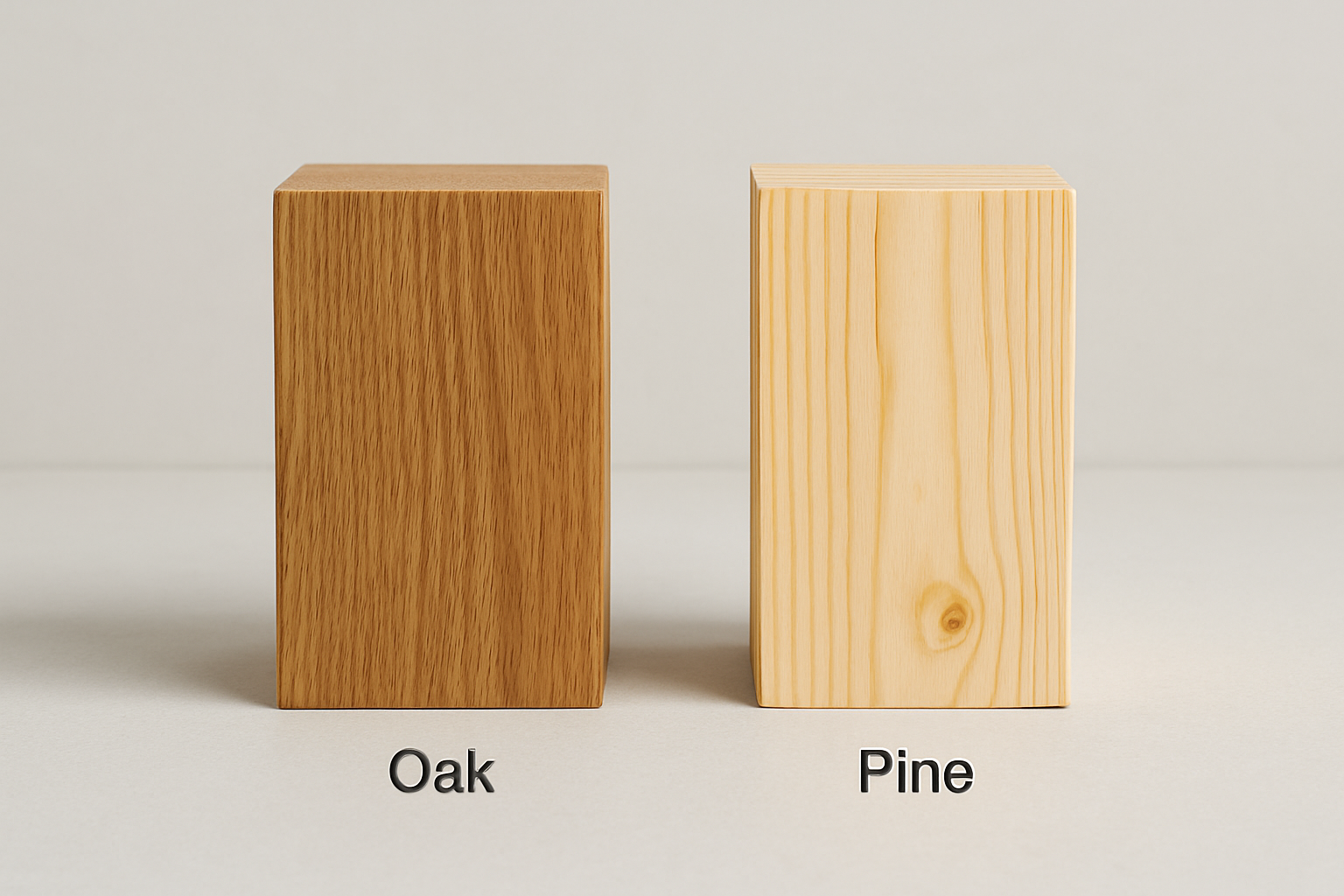
Oak has a distinctive look that has made it one of the most prized woods for furniture. Its grain is strong and visible, often with striking patterns like medullary rays. Oak’s natural tone ranges from light golden to rich brown, and it can be left natural, oiled, or stained to enhance its beauty. A dining table or desk made from oak immediately looks substantial and elegant, making it ideal for both modern rustic homes and traditional interiors.

Pine has a much simpler grain, with a lighter, pale yellow tone that can darken over time. It can look charming in a rustic or country setting, and it readily accepts paint or stain, making it a flexible option if you want to customise the look. A pine coffee table or desk can be painted white for a Scandinavian feel, stained dark for a traditional look, or left natural for a farmhouse vibe. The key advantage of pine’s appearance is its adaptability — it can be dressed up or down depending on your décor.

Strength and Durability

Oak is one of the strongest hardwoods commonly used in furniture. A solid oak dining table will withstand decades of daily use, from family meals to heavy serving dishes. An oak desk can comfortably support computer equipment and books without sagging. Oak coffee tables are durable enough to handle everything from mugs to children playing on them.

Pine is softer and more prone to dents and scratches. A pine desk may pick up marks from pens or laptops, while a pine dining table will show signs of cutlery and heavy plates much sooner than oak. However, this doesn’t mean pine isn’t usable — many people embrace the patina that develops on pine furniture, seeing it as part of its rustic charm. Still, if you need a surface that will remain pristine over many years, oak is the better choice.

Weight and Practicality

Because oak is dense, it is also heavy. Moving an oak dining table or large desk is a two-person job, and the weight makes it less practical in spaces where furniture needs to be shifted frequently. The advantage is that once in place, oak furniture feels solid and immovable.

Pine, being lighter, is easier to cut, handle, and move. If you are new to DIY furniture making, pine is far easier to work with than oak. It is more forgiving on tools, quicker to cut, and lighter to assemble. For small spaces or temporary setups, pine has the advantage of practicality.

Cost and Availability

Oak is significantly more expensive than pine. It is a slow-growing hardwood, and its density makes it more costly to process and transport. An oak dining table top or desk top is an investment, but one that will last for decades.

Pine is widely available and much cheaper, making it the go-to choice for budget-conscious DIY makers. Pine boards can be found in almost any timber yard or DIY store, while oak usually has to be sourced from specialist suppliers.

Maintenance and Longevity

Oak furniture is low-maintenance once finished properly. It can be sanded, refinished, and repaired countless times over its life. A scratched oak coffee table can be restored to look like new with some sanding and oil. This is why oak pieces are often passed down through generations.

Pine, by contrast, is softer and doesn’t respond as well to refinishing. Deep dents may remain even after sanding, and the wood tends to warp more easily if not properly dried and sealed. That said, pine coffee tables or desks can still last many years with care — they simply won’t endure for generations the way oak will.

Dining Tables, Coffee Tables, and Desks Compared

  • Dining tables: Oak is the clear winner for long-term durability and elegance. It can handle daily meals, hot dishes, and constant use while still looking beautiful. Pine is cheaper and lighter, but it will show wear much more quickly.
  • Coffee tables: Both woods work well, depending on your style. Oak gives you a substantial, refined centrepiece, while pine creates a more rustic, casual table that you can paint or stain to suit your décor.
  • Desks: Oak desks feel professional and solid, able to support heavy equipment for years. Pine desks are more budget-friendly and lighter, but they may pick up marks from regular use and require a desk mat or coasters for protection.

Finishing Options

Oak looks beautiful when finished with hardwax oil, Danish oil, or polyurethane varnish. These finishes enhance its grain and protect it against stains and scratches. Oak’s density means it holds finishes well, and with proper care it can last for decades without needing more than the occasional refresh.

Pine benefits from finishes that harden the surface, as it is naturally softer. Varnish is often the best choice for durability, though oils and waxes can bring out its warm colour. Pine also paints well, making it ideal if you want a bold colour or a clean white Scandinavian look.

Which Should You Choose?

The choice between oak and pine ultimately depends on your budget, your style preferences, and how you intend to use the table or desk.

  • Choose oak if you want a piece of furniture that will last a lifetime, develop character with age, and withstand heavy daily use. It’s an investment, but one that pays off in durability and timeless style.
  • Choose pine if you want affordability, flexibility, and a lighter wood that is easy to work with. It’s perfect for rustic furniture, painted projects, or pieces you expect to change over time.

Conclusion

When it comes to making tables and desks, both oak and pine have their place. Oak is strong, dense, and built for longevity, making it the premium choice for dining tables, coffee tables, and professional desks. Pine, on the other hand, is budget-friendly, easy to work with, and versatile in style, though less durable over the long term.

If you want heirloom quality, go with oak. If you want practicality and affordability, pine is a great choice. Either way, building your own furniture ensures you get a piece that reflects your needs, your space, and your creativity — and that’s what makes it truly valuable.

Posted on

Solid Oak vs. Birch Plywood vs. Oak Veneer vs. Scaffold Boards: Choosing the Best Coffee Table Top

A coffee table may not be the largest piece of furniture in your home, but it’s one of the most important. It sits in the centre of the living room, where it inevitably becomes a hub for mugs, snacks, books, laptops, and even the occasional pair of feet. Because coffee tables get so much use, the material you choose for the top matters just as much as the style of legs beneath it. A good top must be durable, attractive, and suited to daily life.

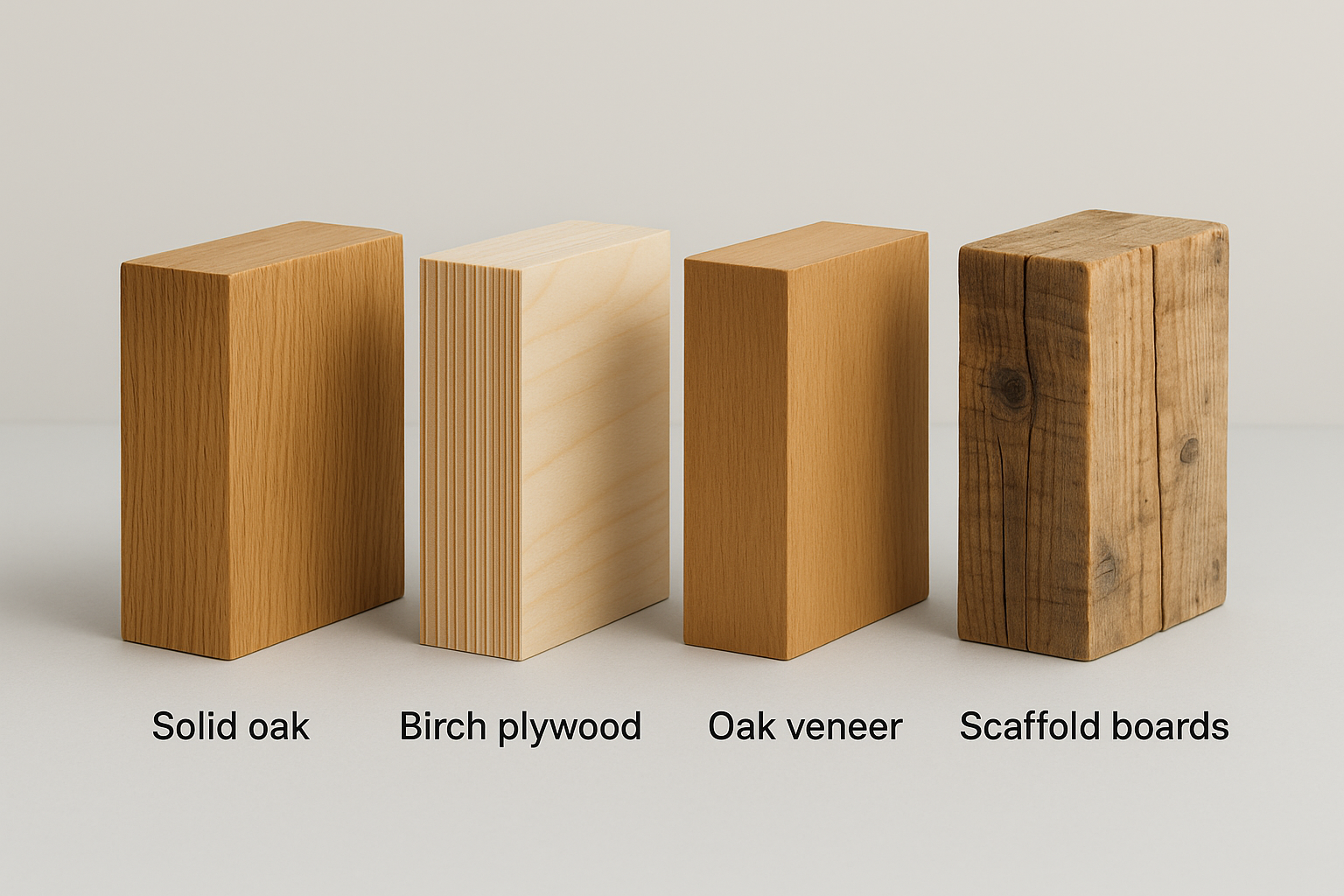
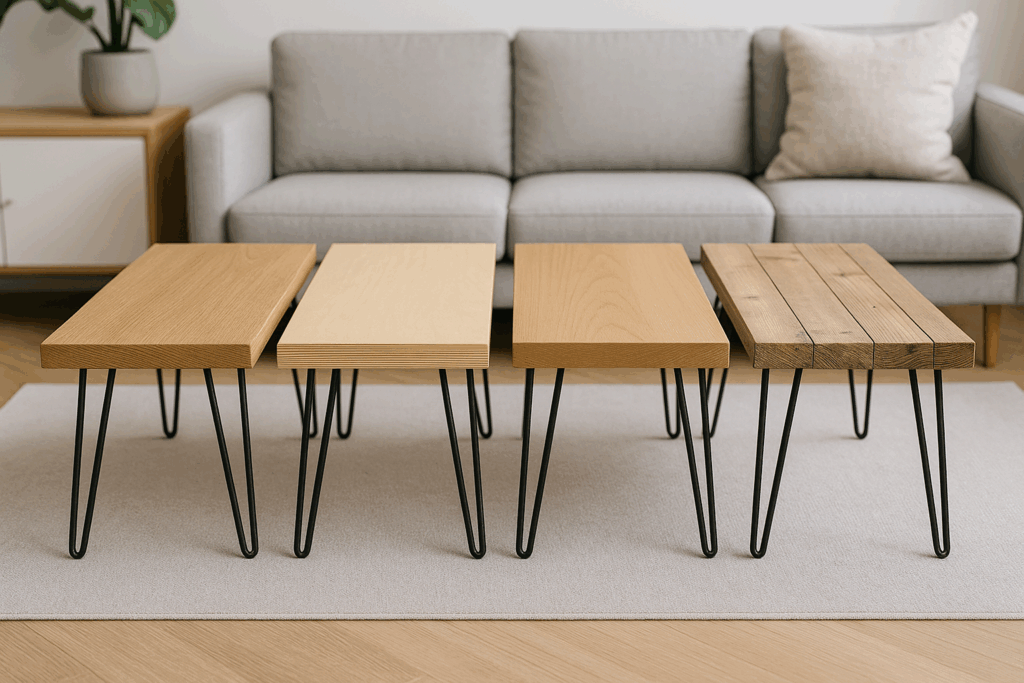
The four most popular choices for DIY coffee tables are birch plywood, solid oak, oak veneer, and scaffold boards. Each brings its own advantages, challenges, and personality. Whether you want modern minimalism, timeless luxury, rustic charm, or a cost-effective solution, one of these options will suit you.

The Style of Each Coffee Table Top

Solid oak offers timeless elegance. With its distinctive grain, natural variation, and rich tone, oak creates a coffee table that feels substantial and enduring. It suits both classic living rooms and modern rustic interiors.

Oak veneer delivers the look of oak in a lighter, more affordable package. Its clean and consistent surface makes it ideal for modern or Scandinavian-inspired rooms. It doesn’t have the depth of solid oak but offers a practical balance of style and budget.

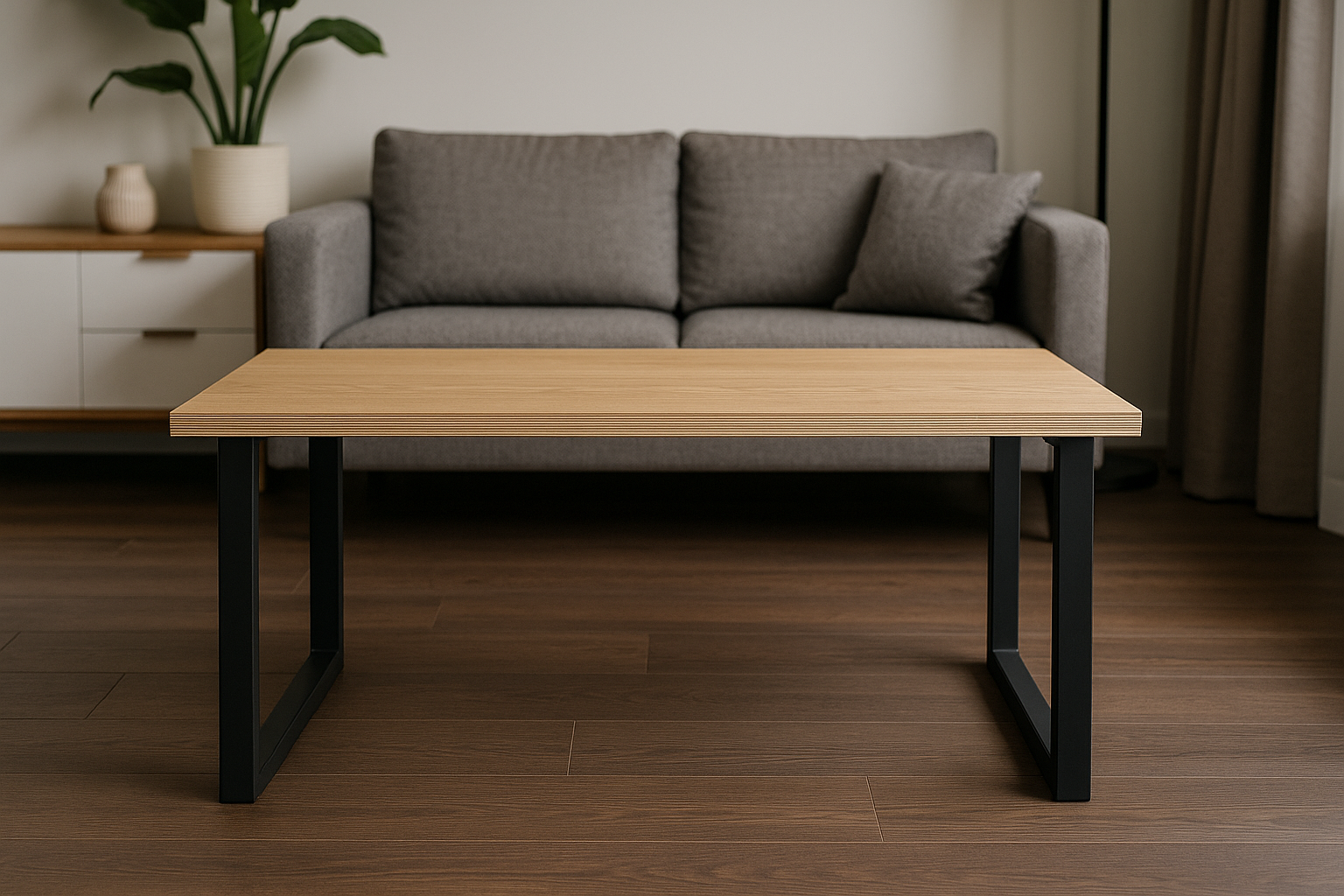
Birch plywood has a fresh, architectural aesthetic. Its pale tone and layered edges are hallmarks of Scandinavian and minimalist design. It feels airy, contemporary, and stylishly understated.

Scaffold boards lean into rustic, industrial charm. With their chunky thickness, visible grain, and reclaimed character, they create coffee tables full of personality. They’re best suited to eclectic, rustic, or industrial interiors where imperfections are celebrated.

Strength, Weight, and Practicality

Solid oak is dense and heavy. It makes for a strong and stable top, capable of withstanding decades of daily use. Its weight can make construction and moving the table more challenging, but the payoff is durability.

Oak veneer is lighter because its core is made from MDF or particleboard. This makes it easy to work with and stable against warping. However, it isn’t as strong or durable as solid wood, and the thin veneer layer can be vulnerable to chips.

Birch plywood strikes a balance between strength and manageability. Its many thin layers of birch veneer make it resistant to warping and strong for its weight. It’s lighter than oak but still sturdy enough for coffee tables.

Scaffold boards are chunky and inherently strong, but as softwood, they dent more easily than hardwoods. They’re also heavy when used in multiples, so moving the table can be a two-person job.

Durability and Daily Use

Coffee tables are exposed to constant wear. Drinks leave water rings, food crumbs spill, and scratches are common.

  • Solid oak is the most forgiving. It can be sanded and refinished many times, meaning it will last decades if cared for.
  • Oak veneer looks beautiful when new, but the thin oak layer cannot be sanded deeply. Scratches and chips are harder to repair, so prevention is key — coasters and placemats are essential.
  • Birch plywood is durable, but its surface veneer is thin. Sanding must be gentle, and a protective finish is crucial to resist scratches and spills.
  • Scaffold boards dent and mark easily, but their rustic style means these imperfections add character rather than detract from the look. They age gracefully in homes where “lived-in” is part of the appeal.

Cost and Availability

Solid oak is the most expensive choice, reflecting its premium quality and longevity. It’s an investment material, especially for larger tables.

Oak veneer is far more affordable and widely available. Veneered panels can also be bought pre-cut to size, which reduces the need for heavy-duty tools.

Birch plywood is mid-range. It’s more costly than softwood plywood but cheaper than solid hardwood. Its availability from timber merchants and online suppliers makes it accessible for most DIY projects.

Scaffold boards are the cheapest option. Reclaimed boards are particularly cost-effective and bring added character. Even new boards are inexpensive compared to oak or birch ply.

Cutting and Preparation

Solid oak requires precise cutting with high-quality tools. Its density makes it harder to work with, but the results are rewarding.

Oak veneer demands delicate handling. Its thin layer chips easily when cut, so a fine-tooth blade, masking tape, or scoring along the cut line helps protect the surface.

Birch plywood cuts cleanly with the right blade, though accuracy is crucial. A track saw is best for straight lines, and dust extraction is recommended due to the fine dust it produces.

Scaffold boards are easier to cut but must usually be joined together to form a top. This involves gluing, dowels, or battens underneath to hold the boards securely.

Sanding and Finishing

  • Solid oak can be sanded aggressively and reshaped if needed. It responds beautifully to oils and varnishes, which enhance its grain while providing protection.
  • Oak veneer must be sanded very gently with fine paper, as the surface is thin. It should be finished with oils or varnishes that don’t require heavy sanding between coats.
  • Birch plywood needs careful sanding to avoid going through the veneer. Hardwax oil or polyurethane varnish works well to highlight its pale tone while protecting it.
  • Scaffold boards often require heavy sanding initially to remove dirt, paint, or splinters, followed by finer sanding for smoothness. Finishes like hardwax oil, Danish oil, or varnish can be used depending on whether you want rustic or refined results.

Which One Should You Choose?

  • Choose solid oak if you want a premium, long-lasting coffee table that can be refinished and repaired for decades.
  • Choose oak veneer if you want the look of oak without the cost or weight, and don’t mind taking extra care with coasters and mats.
  • Choose birch plywood if you prefer a clean, modern aesthetic and want a balance between affordability and durability.
  • Choose scaffold boards if you value rustic character, affordability, and don’t mind dents or imperfections becoming part of the table’s story.

Conclusion

Coffee tables are subjected to constant use, so the top material you choose will define both its style and its lifespan. Solid oak is the most durable and timeless, oak veneer is stylish and budget-friendly but requires more care, birch plywood offers a modern, minimal look at a reasonable cost, and scaffold boards bring rustic authenticity and affordability.

When paired with the right legs — whether bold steel box section frames or slim hairpin legs — each material can be transformed into a coffee table that reflects your taste and lifestyle. The key is to match the material not only to your décor but also to the way you actually live day to day. With the right choice, your DIY coffee table will become more than just a surface — it will be the centrepiece of your living space.

Posted on

How to Make a Coffee Table with Scaffold Boards and Steel Box Section Legs

A coffee table is the workhorse of the living room. It’s where drinks are placed, snacks are shared, books and magazines are stacked, and laptops or games consoles often make an appearance. It’s also a visual anchor, drawing the eye to the centre of the room. Building your own coffee table means you can choose a size, style, and material that reflects your personality and suits your space. One combination that strikes a brilliant balance of rustic character and industrial strength is a scaffold board top paired with steel box section legs.

This design creates a table that is full of charm and history but also grounded and bold. It’s affordable, relatively simple to build, and makes a piece of furniture that feels just as at home in a modern loft as it does in a rustic farmhouse.

The Style of the Coffee Table and Where It Belongs

Scaffold boards have an inherently rugged look. Whether new or reclaimed, they bring visible grain, knots, and character to a project. On their own, they can feel heavy and rough, but when combined with the clean geometry of steel box section legs, the result is balanced and stylish. The steel adds structure and sharp lines, lifting the rustic top into a piece that feels modern and intentional.

This style works beautifully in industrial interiors, where exposed brick, concrete, and steel are celebrated. It also suits eclectic or rustic living rooms, where imperfections and natural textures add charm. Even in more minimalist settings, the combination of wood and steel creates a coffee table that feels practical but design-led.

What Box Section Steel Legs Are and How They Look

Box section legs are made from hollow square or rectangular steel tubing welded into strong frames. They are available in shapes such as rectangles, trapezoids, or custom designs, and their straight lines give them an architectural quality that contrasts beautifully with the irregular character of scaffold boards.

On a coffee table, these legs bring visual weight. Unlike hairpin legs, which are slim and understated, box section legs make a bold statement. They anchor the table and give the rustic top a strong, modern foundation.

Why Scaffold Boards and Steel Work So Well Together

Scaffold boards are chunky, typically 225mm wide and 38mm thick. This makes them naturally sturdy but also visually heavy. Box section steel legs counterbalance that bulk with clean, precise lines. The mix of rustic timber and engineered steel achieves a harmony that feels both rugged and refined.

The steel frames also provide excellent support, ensuring the table top remains strong and stable. It’s a combination that blends the raw charm of reclaimed timber with the durability of modern materials.

Choosing the Right Colour for the Legs

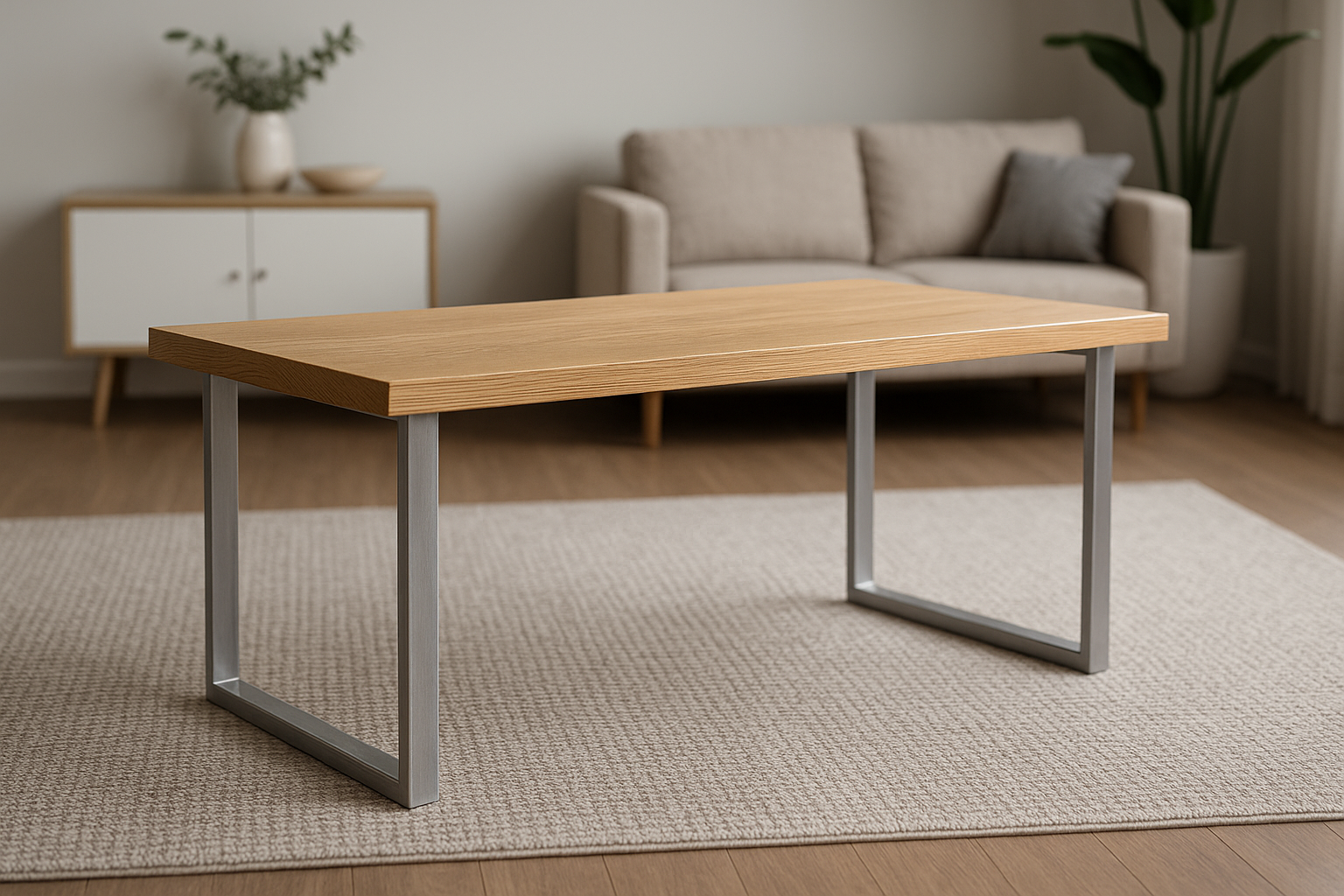
Box section steel legs are usually available in black, white, or raw steel finishes. Black provides a classic, bold contrast with the lighter tones of scaffold boards. White offers a softer, fresher look, which can brighten up the rustic character of the wood. Raw steel leans into the industrial style but should be sealed with a clear coat to prevent rust.

If you want something more bespoke, you can paint the legs. Sand them lightly first for adhesion, then apply spray paint or brush paint in your chosen colour, finishing with a clear protective coat. This gives you flexibility to coordinate the table with your living room décor.

Why Scaffold Boards Are a Popular DIY Choice

Scaffold boards have become a go-to material for DIY makers. They’re affordable, widely available, and incredibly strong. Their thickness makes them sturdy enough for heavy-duty use, while their rustic grain and imperfections give them character.

Reclaimed scaffold boards are especially popular for furniture. They may carry paint marks, nail holes, and weathering that tell the story of their previous life. For some people, this lived-in look is the whole appeal. New boards, by contrast, are cleaner and easier to sand smooth, but still retain a raw authenticity that works well in rustic-modern interiors.

Cutting the Boards to Size

Scaffold boards usually come in long lengths, so cutting them down is essential for coffee tables. A circular saw will handle the job, though a mitre saw or track saw gives more accuracy. Always clamp the boards securely, measure twice, and cut slowly. Scaffold boards are thick and heavy, so goggles, hearing protection, and a dust mask are essential, along with dust extraction if possible.

If you don’t want the hassle of cutting, some suppliers sell pre-cut scaffold board tops. While this option costs more, it saves effort and ensures clean, accurate edges.

Joining the Boards Together

Most coffee table tops are made by joining two or three boards side by side. The most secure method is to glue the edges and clamp them until dry. Adding dowels or biscuits helps keep everything aligned and increases strength.

If you don’t want to glue, battens can be fixed across the underside to hold the boards together. This is quicker and simpler, though it often leaves small gaps between the boards, which may not be ideal if you want a perfectly smooth surface.

Reinforcing Against Movement

Like all solid timber, scaffold boards move with humidity. Over time, this can cause cupping or warping. To reduce this, attach battens or bars underneath, running across the grain. Wooden battens screwed in place are inexpensive and effective. Steel bars routed into the underside provide even more stability but require more tools and expense.

On a coffee table, sagging is less of a concern than on a dining table, but reinforcement still helps keep the surface flat and stable for years to come.

Sanding the Boards

Sanding is an essential step. Reclaimed scaffold boards are often rough, with splinters, paint, or dirt. Even new boards need smoothing before use. Start with a coarse grit to clean and level the surface, then progress to finer grits for a smooth finish. An electric sander makes this much quicker, but hand sanding works too if you prefer a more traditional approach.

The aim is to create a surface that feels pleasant to the touch while retaining some of the wood’s natural character. Marks and imperfections can be left in place to enhance the rustic look if you like.

Pilot Holes and Edge Treatments

When attaching steel box section legs, always drill pilot holes first. This prevents splitting and ensures the screws seat properly.

For the edges, you can leave them square for a rugged look, round them slightly with sandpaper for comfort, or use a router to create a chamfer or rounded profile. Even a small amount of shaping can elevate the table and make it more comfortable to use.

Finishing the Table Top

Finishing is vital to protect the wood and bring out its grain. Hardwax oil is an excellent choice, providing a matte, natural look while guarding against stains. Danish oil or tung oil add warmth and richness but may need periodic reapplication. For maximum durability, polyurethane varnish creates a tough, protective layer that resists scratches and spills, though it adds more shine.

Apply several thin coats, sanding lightly between applications. This ensures a smooth, resilient finish that can handle the daily demands of a living room coffee table.

Conclusion

A coffee table made with scaffold boards and steel box section legs is a project that combines rustic charm with industrial strength. The boards bring warmth, history, and texture, while the steel frames provide structure and boldness. Together, they create a piece that feels substantial, stylish, and perfectly suited to daily life.

By cutting and joining the boards carefully, sanding them smooth, finishing them thoughtfully, and attaching the steel legs securely, you can make a coffee table that looks professional but still carries the handmade character that makes it unique. Affordable, durable, and full of personality, a scaffold board and steel box section coffee table is the perfect DIY centrepiece for a living room where function and style go hand in hand.

Posted on

How to Make a Coffee Table with Birch Plywood and Steel Box Section Legs

A coffee table is one of the most practical and versatile pieces of furniture in the home. It serves as a resting place for mugs and snacks, a display for books and candles, and often doubles as a casual workstation. Because it is central to daily life, its design has to balance style, durability, and function. Making your own coffee table gives you control over all of these elements, allowing you to create something that suits your taste and budget. One of the most modern and achievable options is combining a birch plywood top with steel box section legs.

This pairing has become increasingly popular with DIY furniture makers because it’s both stylish and practical. Birch plywood offers a clean, contemporary surface, while steel box section legs provide boldness and stability. Together, they create a coffee table that feels light, modern, and capable of standing up to everyday use.

The Style of the Coffee Table and Where It Belongs

Birch plywood has a pale, understated grain that feels fresh and contemporary. When left with its layered edges exposed, it takes on a distinctive architectural quality. Box section steel legs, on the other hand, bring structure and presence to the design. Unlike slender hairpin legs, which recede visually, box section legs are strong and geometric, making the table feel more grounded.

This combination works perfectly in Scandinavian-inspired homes, where light woods and minimal lines dominate. It also suits modern apartments and urban lofts, where the steel frames echo architectural features like beams or railings. Even in eclectic or family living rooms, the blend of natural wood and engineered steel creates a table that feels practical yet stylish.

What Box Section Steel Legs Are and How They Look

Box section legs are made from hollow square or rectangular steel tubing. They are welded into frames that can take the form of simple rectangles, trapezoids, or custom angular shapes. Their appeal lies in their strength and their bold lines, which contrast beautifully with the natural softness of wood.

On a coffee table, box section legs add a sense of permanence. They make even a lighter plywood top feel substantial, grounding the design while ensuring the table can easily support daily use.

Why Birch Plywood and Steel Work Well Together

Birch plywood is an engineered material made by laminating thin sheets of birch veneer with alternating grain directions. This construction gives it strength, stability, and resistance to warping. Unlike cheaper softwood plywoods, birch ply has a smooth, consistent surface with no large voids. It’s widely used in furniture-making for its modern look and practical qualities.

When combined with box section steel legs, birch ply finds its perfect match. The plywood keeps the design light and affordable, while the steel adds strength and visual weight. Together, they create a balanced coffee table that feels modern, architectural, and durable.

Choosing the Right Colour for the Legs

Steel legs are typically offered in black, white, or raw steel finishes. Black creates a bold contrast with the pale plywood, giving the table a sharp, modern look. White blends more softly with the light wood, enhancing the Scandinavian character. Raw steel leans into industrial style but must be sealed with a clear coat to prevent rust.

For a bespoke touch, the legs can be painted in any colour. Sand them lightly first for adhesion, then apply spray paint or brush paint, followed by a protective topcoat. This flexibility lets you coordinate the legs with other accents in your living room.

Why Birch Plywood Is Popular for Furniture

Birch plywood has become a favourite for modern DIY makers because it offers a balance of strength, affordability, and style. It is stronger and more attractive than construction-grade plywood, with multiple dense layers of birch veneer that give it a stable, smooth surface. Its exposed layered edge is often treated as a design feature rather than something to hide, making it perfect for clean, contemporary furniture.

Compared to solid hardwood, it’s easier to cut and more affordable, yet still strong enough for everyday use. This makes it particularly well suited to coffee tables, where durability and appearance are both important.

Choosing the Right Thickness

Birch plywood is most commonly available in 18mm and 24mm thicknesses.

  • 18mm works well for smaller coffee tables, giving a sleek, minimal profile.
  • 24mm feels more substantial, resists sagging better, and balances visually with the chunky steel legs.

For most coffee tables, 24mm is the ideal choice. It creates a solid feel while retaining the modern, light appearance that plywood is known for.

The Realities of Using Plywood

Even high-quality birch plywood isn’t flawless. The surface may include small patches or plugs where knots have been removed, and sometimes scratches from handling. These imperfections are part of the character of plywood and usually blend in once sanded and finished.

It’s also important to remember that the top veneer is thin. Sanding must be gentle to avoid going through to the glue layer beneath. While this isn’t a major drawback, it’s a reality to keep in mind when preparing and finishing the surface.

Cutting the Top to Size

Accuracy is essential when cutting plywood. A track saw is the best tool for the job, as it ensures perfectly straight cuts with minimal chipping. A circular saw will work too, especially with a fine-tooth blade and masking tape along the cut line. Always clamp the panel securely, measure carefully, and cut slowly. Plywood produces a lot of fine dust, so wear goggles, a mask, and hearing protection, and use dust extraction if possible.

If you don’t have the right tools, many suppliers offer birch plywood cut to size. This costs slightly more but saves time and ensures perfect dimensions.

Reinforcing the Table Top

Coffee tables are smaller than dining tables, so sagging is less of an issue. However, if your table is longer than 120cm and made with 18mm plywood, you may want to reinforce it with a lengthwise batten or “spine” underneath. This helps the top stay flat under daily use and prevents any long-term bending.

Sanding Birch Plywood

Sanding prepares the plywood for finishing. Start with a medium grit and move to a fine grit such as 240. Always sand lightly with the grain. An orbital sander can be used carefully, but hand sanding is safer for the edges. Many makers choose to leave the layered edge visible as a feature, but you can also soften it with sandpaper for comfort.

Edge Treatments

The layered edge of plywood is one of its defining features. Some people leave it raw for a modern, industrial look, while others choose to cover it with iron-on edge banding for a more uniform appearance. If you want a refined finish, you can use a router to create a chamfer or round-over, or simply ease the edges with hand sanding.

Attaching the Box Section Legs

Box section legs are attached via screws through their mounting plates. Position them 5–8cm in from the corners to give a balanced look and stable support. Always drill pilot holes before driving screws into the plywood to avoid splitting or damaging the veneer layers.

Check the positioning before drilling to ensure the frames don’t interfere with nearby furniture or storage underneath the table.

Finishing the Plywood Top

Finishing not only protects the plywood but also enhances its natural beauty.

  • Hardwax oil gives a natural matte finish while protecting against stains.
  • Danish oil or tung oil warm up the wood but may require periodic reapplication.
  • Polyurethane varnish provides the toughest protection against scratches and water rings, though it can look shinier.

Apply multiple thin coats, sanding lightly between them for a smooth finish. This ensures the table can withstand daily living room use, from mugs and glasses to the occasional spill.

Conclusion

A coffee table made with a birch plywood top and steel box section legs is a modern, practical, and affordable DIY project. The plywood provides a clean, architectural look, while the steel frames add strength and bold geometry. Together, they create a table that is light enough for modern interiors but strong enough to handle everyday wear.

By choosing the right thickness, cutting accurately (or ordering pre-cut), sanding carefully, finishing thoughtfully, and attaching the legs securely, you can create a coffee table that looks professional and feels solid. This design is perfect for contemporary homes, studios, and urban spaces, proving that simple materials can produce stylish, long-lasting furniture when paired with care and creativity.

Posted on

How to Make a Coffee Table with an Oak Veneer Top and Steel Box Section Legs

A coffee table may not be the biggest piece of furniture in your living room, but it’s one of the most important. It’s the place where drinks are set down, books are stacked, and everyday life naturally gathers. Building your own coffee table gives you the freedom to choose a size and style that fits your home perfectly while saving money compared to buying ready-made. A particularly attractive and practical option is pairing an oak veneer top with steel box section legs. The result is a table that feels modern, stylish, and durable enough for daily use without carrying the cost or weight of solid oak.

The Style of the Coffee Table and Where It Belongs

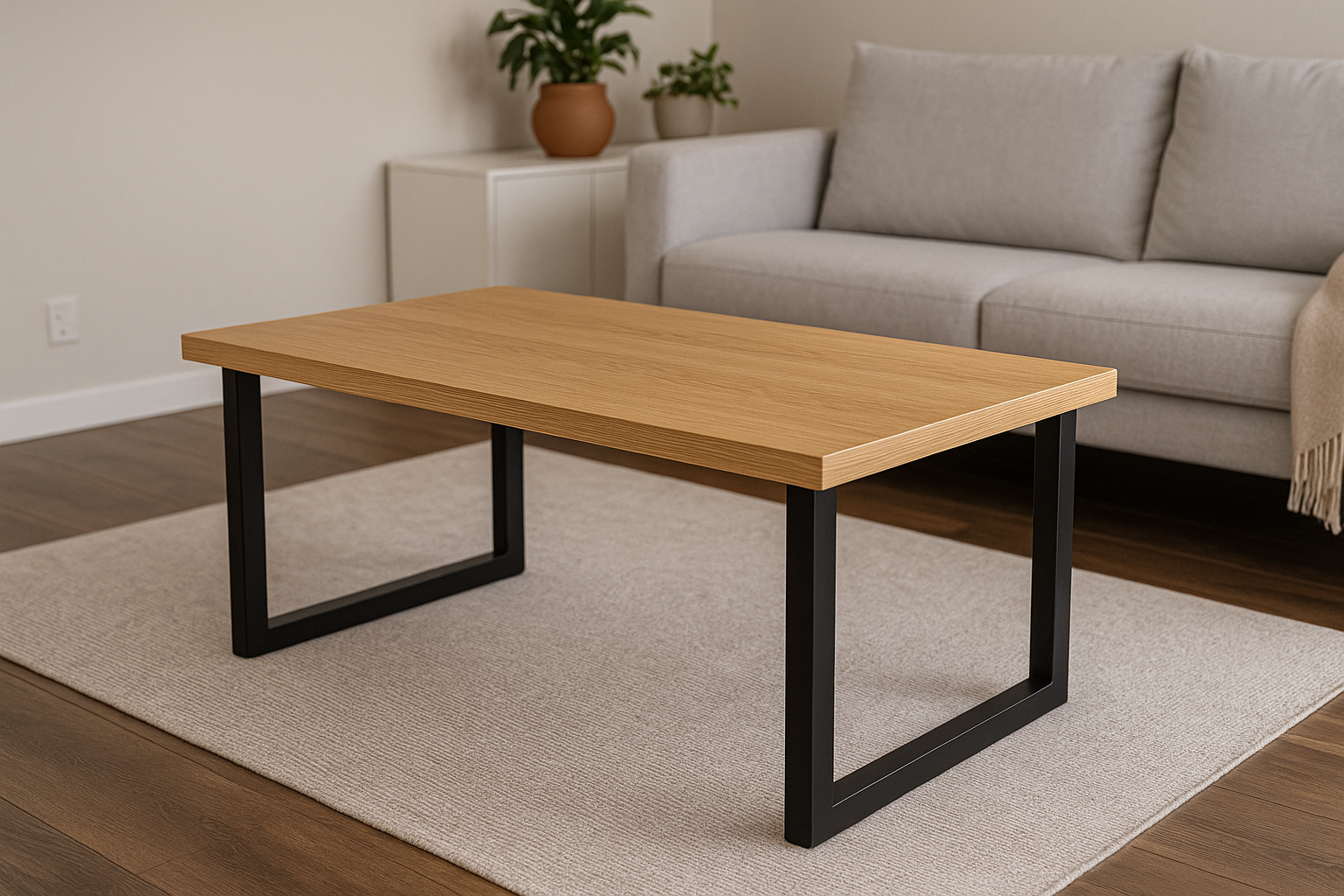
Oak veneer paired with steel legs creates a coffee table with a clean, contemporary character. The oak veneer surface brings natural warmth and grain, while the steel legs add structure and bold geometry. Unlike slimmer hairpin legs, which often fade into the background, box section legs have presence. They anchor the piece visually, giving the table a more architectural feel.

This style is particularly suited to modern apartments, where space is limited but style is a priority. It also works beautifully in Scandinavian-inspired living rooms, where light woods and clean lines dominate. In industrial or urban interiors, the blend of warm wood and raw steel feels right at home. The combination is versatile enough to work in minimalist settings as well as more eclectic ones.

What Box Section Steel Legs Are and How They Look

Box section legs are made from hollow rectangular or square steel tubing. Welded into rigid frames, they are available in a range of shapes, from simple rectangles to trapezoids or custom angular designs. Their straight lines give them strength and a modern, architectural aesthetic that contrasts well with natural timber.

On a coffee table, box section legs bring stability and boldness. They make the piece feel substantial, ensuring that even a slim veneered top has a grounded presence.

Why Oak Veneer and Steel Work Well Together

Oak veneer is an excellent choice for projects where you want the look of oak without the cost, weight, or potential movement of solid wood. It is made by bonding thin slices of oak onto a core material such as MDF or particleboard. This creates a stable, lightweight panel that resists warping and is easy to work with.

When paired with box section steel legs, veneer achieves a refined balance. The boldness of the steel frames grounds the lighter, more affordable surface, creating a coffee table that feels well-proportioned and stylish. It’s a combination that delivers on both practicality and appearance.

Choosing the Right Colour for the Legs

Steel box section legs are commonly available in black, white, or raw steel finishes. Black creates a sharp contrast against the oak veneer, giving the table a modern, graphic edge. White softens the look, enhancing the light, Scandinavian aesthetic. Raw steel leans into the industrial style but should be sealed to prevent rust.

For a bespoke approach, the legs can be painted in any colour. To do this, lightly sand the steel for adhesion, apply spray or brush paint, and finish with a clear coat. This allows you to coordinate the table with your living room palette, whether you prefer subtle blending or bold contrast.

Why Oak Veneer Differs from Solid Oak

Unlike solid oak, which is hardwood all the way through, oak veneer has only a thin layer of oak on the surface. The benefit is that veneered panels are far lighter, more affordable, and more stable — they don’t expand or contract with changes in humidity the way solid wood does.

The trade-off is durability. The veneer layer is thin, usually less than a millimetre thick, which means it can’t be sanded and refinished multiple times. Once damaged, chips or deep scratches are difficult to repair. For a coffee table, which sees daily use, this means extra care is needed: coasters, placemats, and quick cleanup of spills are essential.

Everyday Durability and Maintenance

Coffee tables are often treated casually. Mugs, glasses, and even feet end up on them, so the surface must be protected. Oak veneer will stay beautiful for many years if looked after carefully. Using coasters prevents water rings, trays protect against scratches, and spills should be wiped up promptly. Unlike solid oak, you can’t refinish veneer once it’s worn through, so prevention is key.

The advantage is that veneer is resistant to warping or cracking, so the top will stay flat and stable no matter the season. This makes it a smart option for busy households that want practicality without the upkeep of solid wood.

Choosing the Right Thickness

Oak veneered panels are available in 18mm, 22mm, and 25mm thicknesses. For a coffee table, 22mm or 25mm is the sweet spot, providing a balance of strength and appearance. An 18mm panel works for smaller tables but may look insubstantial when paired with chunky steel legs. A thicker top balances the weight of the frames, ensuring the design feels proportional.

Cutting and Preparing Veneer

If you’re cutting the panel yourself, use a fine-tooth saw blade and take precautions against chipping. Masking tape along the cut line, cutting slowly, and using a track saw are the best ways to achieve a clean finish. A circular saw will do the job if that’s what you have, but the accuracy of a track saw makes a noticeable difference.

For those without access to good tools, ordering veneered panels pre-cut to size from an online supplier is worth considering. It costs a little more per square metre but guarantees straight, accurate cuts and eliminates the hassle of handling large sheets.

Sanding Veneer Safely

Sanding veneer requires care. The oak surface layer is thin, so aggressive sanding can quickly go through to the core material. Start with a fine grit such as 180, sanding lightly with the grain, and avoid power sanding unless you are confident. Edges should be sanded gently by hand for the best results.

Edge Treatments

The edges of veneered panels usually expose the MDF or particleboard core. These can be covered with iron-on oak edge banding, which creates the look of a solid oak top. For a more premium finish, solid oak lippings can be glued to the edges, then sanded flush. If you prefer a minimalist approach, you can simply ease the edges with fine sandpaper for comfort, though the exposed core will remain visible.

Attaching the Box Section Legs

Box section legs are fixed to the underside of the top using screws through their mounting plates. Position the legs 5–8cm in from the edges to ensure stability and a balanced appearance. Always drill pilot holes before inserting screws, as this prevents splitting and ensures a secure fit.

Check the placement before drilling to ensure the frames don’t clash with skirting boards if the table will sit against a wall. Also consider the space between the legs for storing baskets or ottomans underneath.

Finishing the Veneer Surface

Finishing protects the veneer and enhances the oak grain. For coffee tables, where spills and scratches are inevitable, a durable finish is essential.

  • Hardwax oil provides a natural matte look while offering good resistance to stains.
  • Danish oil or tung oil bring warmth and depth, though they may require reapplication.
  • Polyurethane varnish creates the toughest barrier, protecting against scratches and water rings, though it may add more shine.

Apply multiple thin coats, sanding lightly between applications. Because veneer is thin, avoid heavy sanding between coats — a light touch is enough to smooth the finish.

Conclusion

A coffee table with an oak veneer top and steel box section legs combines style, affordability, and practicality. The veneer gives you the natural beauty of oak grain without the cost or weight of solid wood, while the steel legs add bold geometry and stability. Together they create a table that looks professional, feels substantial, and suits a wide range of interiors.

By choosing the right thickness, cutting carefully (or ordering pre-cut), sanding gently, finishing thoughtfully, and attaching the legs with precision, you can create a coffee table that rivals designer pieces while staying within budget.

This combination is perfect for modern living rooms, Scandinavian-inspired spaces, or industrial lofts. While veneer requires a little extra care compared to solid oak, it offers a smart balance of cost and style — proof that with thoughtful choices, you can make a coffee table that looks elegant, functions beautifully, and reflects your personal taste.

Posted on

How to Make a Coffee Table with a Solid Oak Top and Steel Box Section Legs

A coffee table is more than just somewhere to put your mug down — it’s a centrepiece of the living room, a hub for books, snacks, remote controls, and often the first piece of furniture guests notice when they walk in. Building one yourself allows you to create something sturdy, beautiful, and tailored to your space. Among the most stylish and durable designs is a solid oak top paired with steel box section legs. This combination marries the timeless appeal of hardwood with the clean, geometric strength of steel, producing a coffee table that looks contemporary but feels built to last.

The Style of the Coffee Table and Where It Belongs

Oak paired with steel is a design combination that balances natural warmth with industrial edge. A solid oak top brings grain, depth, and richness, while box section steel legs give the table structure and sharp lines. Together, they create a coffee table that feels modern yet timeless.

This design is particularly at home in urban lofts, where exposed brick and steel details suit the industrial look. It also works in Scandinavian-inspired homes, where oak’s warmth offsets the minimalism of steel. In modern family living rooms, it provides both strength and style — able to withstand daily use while still looking refined. Whether your décor leans rustic, industrial, or contemporary, this table fits in seamlessly.

What Box Section Steel Legs Are and How They Look

Box section legs are made from hollow steel tubing, either square or rectangular, welded into rigid frames. Their sharp geometry contrasts beautifully with the organic softness of wood grain. They’re often available in trapezoid, rectangular, or even custom shapes, giving you flexibility in the look of the table.

On a coffee table, box section legs make a bold statement. Unlike slim hairpin legs, which tend to disappear into the background, box section legs have visual weight. They anchor the table firmly to the floor, making it feel substantial and professional.

Why Solid Oak and Steel Work Well Together

Oak is one of the most prized hardwoods in furniture making. It’s dense, strong, and visually striking, with a grain pattern that ranges from straight and subtle to dramatic with medullary rays. On its own, however, oak can look heavy. Pairing it with steel box section legs balances that weight, giving the table both strength and lightness.

The steel frames provide excellent support, ensuring the heavy oak top won’t sag or warp. Visually, the mix of materials blends tradition with modernity — the warmth of wood against the cool precision of steel. It’s a look that’s equally at home in a rustic farmhouse or a modern penthouse.

Choosing the Right Colour for the Legs

Steel legs are most commonly available in black, white, or raw steel. Black is the classic choice, contrasting beautifully with oak and giving the table a bold, modern look. White feels softer and fresher, making the table lighter in appearance — ideal for Scandinavian-style living rooms. Raw steel highlights the industrial character but needs sealing with a clear coat to prevent rust.

If you want a bespoke look, painting is an option. Sand the legs lightly to help the paint adhere, then spray or brush them with your chosen colour, finishing with a protective clear coat. This allows you to tie the table into your existing décor — for example, matching the frame colour to your shelving or light fittings.

Why Solid Oak Stands Out Compared to Cheaper Alternatives

Unlike oak veneer or laminate, solid oak is consistent through its thickness. It can be sanded and refinished multiple times over decades of use. This makes it an excellent choice for coffee tables, which endure constant wear from hot mugs, water rings, and scratches. While veneer may show damage that can’t be repaired, solid oak can be restored time and again, giving it a lifespan measured in decades rather than years.

Solid oak also has a depth of grain and natural variation that imitations cannot match. Every table top is unique, carrying its own character in knots, rays, and colour shifts.

Choosing the Thickness of Oak

For a coffee table, the thickness of the top makes a big difference in both look and feel. Common sizes from timber suppliers include 19mm, 24mm, 27mm, 30mm, and even 40mm.

  • 19mm gives a sleek, modern profile but can feel a little light for larger tables.
  • 24mm or 27mm is a good middle ground, offering strength, substance, and balance with the steel legs.
  • 30mm or 40mm creates a chunky, bold look but adds considerable weight.

For most coffee tables, 24mm or 27mm is ideal — thick enough to feel substantial, but not so heavy that the table becomes difficult to move.

The Realities of Using Natural Oak

Oak is a natural material, and part of its charm lies in its imperfections. Knots, colour variations, and medullary rays are common features. Some suppliers offer prime oak, which has fewer knots and a more uniform appearance, while character oak embraces natural features for a more rustic look.

Because oak responds to changes in humidity, it may expand or contract slightly over the seasons. On a coffee table, this is less dramatic than on larger dining tables, but it’s still worth considering. Reinforcing the underside with battens or bars helps keep the top flat and stable.

Cutting the Oak Top to Size

If you’re cutting your oak yourself, accuracy and safety are key. A track saw provides the most precise results, though a good-quality circular saw can also work with a fine-tooth blade. Always measure carefully, mark your cuts clearly, and clamp the timber securely. Oak is dense and heavy, so work slowly and use dust extraction if possible.

For many DIY makers, it’s easier to buy the oak pre-cut to size from an online supplier. This reduces waste, eliminates the need for specialist tools, and guarantees square, accurate cuts.

Sanding and Preparing the Oak

Before finishing, oak needs sanding to create a smooth surface. Start with medium-grit paper to even out the surface, then progress to finer grits for a polished feel. Always sand with the grain to avoid scratches. An electric sander speeds up the process, but hand sanding works well on edges and corners.

At this stage, you may also want to ease the edges for comfort. A simple round-over with sandpaper softens the corners, or you can use a router to create a chamfered or profiled edge. Even subtle shaping makes the table feel more refined.

Attaching the Box Section Legs

Box section legs are usually fixed by screwing through their mounting plates into the underside of the top. Before attaching, decide on placement: legs are generally inset by 5–8cm from the edges for stability and balance. Drill pilot holes first to prevent splitting the wood, then fix the screws securely. Because oak is dense, using a drill with sufficient power makes the job much easier.

If the table will sit against a wall, check that the frames don’t clash with skirting boards. It’s also worth testing the leg position with your seating to make sure the frames don’t obstruct foot space.

Finishing the Oak Top

A finish protects the wood and enhances its natural grain. For a coffee table, durability is essential — hot drinks, water spills, and scratches are inevitable.

  • Hardwax oil is an excellent choice, offering a natural matte look while providing good resistance to stains.
  • Danish oil or tung oil bring warmth and depth but may require periodic reapplication.
  • Polyurethane varnish creates the toughest barrier, making the surface resistant to scratches and stains, though it adds more shine.

Apply several thin coats, sanding lightly between applications for a smooth, resilient finish. The result is a surface that looks beautiful while withstanding the daily wear of living room life.

Conclusion

A coffee table with a solid oak top and steel box section legs is a project that combines timeless materials with modern design. The oak top provides warmth, character, and durability, while the steel legs add structure and bold geometry. Together, they create a coffee table that feels substantial, stylish, and ready to handle daily use.

By choosing the right thickness of oak, cutting or ordering pre-cut panels, sanding carefully, finishing thoughtfully, and attaching the legs with precision, you can build a piece that looks as good as a designer table but carries the satisfaction of being handmade.

This combination suits a wide range of interiors, from industrial lofts to modern family living rooms, and with the right finish it will last for decades. A coffee table built from solid oak and steel isn’t just furniture — it’s a centrepiece you’ll use and appreciate every day.

Posted on

How to Make a Coffee Table with Scaffold Boards and Hairpin Legs

A coffee table is the kind of furniture that gets used without a second thought. It’s where cups of coffee are set down, snacks are served, laptops perch for late-night work, and sometimes it even doubles as a footrest. Because it takes on so many roles, a coffee table needs to be sturdy, practical, and inviting. Building your own gives you the freedom to decide how it looks and how it fits into your home. One of the most rewarding DIY projects is pairing scaffold boards with hairpin legs. The result is a table that feels rustic yet modern, substantial yet light, and full of character.

The Style of the Coffee Table and Where It Belongs

A coffee table made with scaffold boards and hairpin legs has a distinctive look. The boards bring rugged authenticity, often with visible grain, knots, and signs of their previous life. The slim steel legs balance this heaviness, lifting the design so it feels light rather than clunky. The result is a table that looks just as good in a modern loft apartment as it does in a cosy, eclectic living room.

This combination is particularly well-suited to industrial interiors, where raw materials and honest construction are celebrated. It also works beautifully in rustic and farmhouse-style homes, where warmth and charm are key. Even in more minimalist or contemporary spaces, the mix of wood and steel creates a stylish, functional centrepiece.

What Hairpin Legs Are and How They Work

Hairpin legs are a design classic. Made from bent steel rod welded to a mounting plate, they first appeared in the 1940s as a sleek, economical alternative to heavy wooden legs. Today they remain popular because they are strong, versatile, and timeless.

For a coffee table, hairpin legs are ideal. They are slim enough to keep the table from feeling bulky, but strong enough to support even a chunky scaffold board top. Available in two-rod or three-rod designs, they can be chosen to suit the scale of the table and the weight of the boards.

Why Scaffold Boards and Hairpin Legs Work Well Together

Scaffold boards are inherently chunky. Standard boards are about 225mm wide and 38mm thick, giving them heft and substance. On their own, they can feel heavy, even a little clumsy. Hairpin legs, by contrast, are light and refined. When combined, the result is a coffee table that feels grounded but not overpowering, rustic yet modern.

The character of reclaimed timber is softened by the elegance of steel, while the slim legs ensure the table doesn’t dominate the room. It’s a classic case of opposites working together to create balance.

Choosing the Right Colour for the Legs

Hairpin legs are typically sold in black, white, or raw steel finishes. Black creates a strong contrast with the lighter tones of scaffold boards, making the table feel bold and modern. White offers a softer, fresher look that suits Scandinavian-style interiors. Raw steel emphasises the industrial feel but must be sealed to prevent rust.

If you want something unique, you can paint the legs yourself. Lightly sand them to help the paint adhere, then apply spray paint or brush paint in the colour of your choice, finishing with a clear coat. This makes it easy to coordinate the table with your décor, whether that’s matching a colour scheme or adding a pop of contrast.

Why Scaffold Boards Are a Popular Choice

Scaffold boards have become a staple for DIY furniture projects. They are affordable, readily available, and strong enough for tables. Their generous thickness makes them sturdy, while their rustic grain gives them character. Reclaimed boards, in particular, are sought after for the story they carry — nail holes, paint marks, and weathering all add to their charm.

Even new boards have a raw authenticity that makes them appealing. They’re also straightforward to work with: cut them to length, join them together, and you have a chunky, characterful table top.

Cutting the Boards to Size

Scaffold boards usually come in lengths up to 3.9m, so cutting them down is essential for coffee tables. A circular saw can do the job, though a track saw or mitre saw gives more accurate results. Always clamp the boards securely before cutting, measure carefully, and work slowly for clean cuts. Because scaffold boards are thick and heavy, use goggles, hearing protection, and a dust mask, and ideally work with dust extraction.

If you’d prefer to skip the cutting, some suppliers sell pre-cut scaffold board tops. This option costs more but saves mess, time, and effort while ensuring square edges.

Joining the Boards Together

To create a coffee table top, two or three scaffold boards are usually joined side by side. The strongest method is to glue the edges and clamp them until dry. Adding dowels or biscuits helps align the boards and increase strength, though it requires more tools.

If you don’t want to glue, you can fix battens across the underside to hold the boards together. This is quicker and simpler, though it often leaves small gaps between the boards, which may not be ideal if you want a perfectly smooth surface.

Reinforcing Against Movement

Like all solid timber, scaffold boards move with changes in humidity. Over time, this can lead to cupping or slight warping. To reduce this, add battens or bars across the underside, fixed perpendicular to the grain. Wooden battens are inexpensive and easy to attach with screws. Steel bars routed into the underside provide more strength but require more tools and expense.

Coffee tables are shorter than dining tables, so sagging is less of a concern. Still, adding reinforcement helps ensure the surface stays flat over time.

Sanding the Boards

Scaffold boards are usually rough, especially if reclaimed. Sanding is essential to turn them into a usable surface. Start with coarse grit sandpaper to remove dirt, paint, or marks, then move to finer grits for a smooth finish. An electric sander makes this process much quicker, but sanding by hand works too if you enjoy a traditional approach.

The goal isn’t to erase all character but to create a surface that is smooth to the touch and safe for everyday use. Leaving some marks and imperfections adds to the table’s charm.

Pilot Holes and Edge Treatments

When attaching hairpin legs, always drill pilot holes into the underside of the boards first. This prevents the wood from splitting and helps the screws seat properly.

For the edges, you can leave them square for a rugged look, round them slightly with sandpaper for comfort, or use a router to create a chamfer or rounded profile. Even a small amount of shaping can make the table feel more refined and pleasant to use.

Finishing the Table Top

Finishing protects the wood from spills and enhances its natural beauty. Hardwax oil is one of the best options, giving a matte, natural look while offering good resistance to stains. Danish oil and tung oil bring out the warmth of the grain but may need reapplication. For maximum durability, polyurethane varnish provides a tougher surface that resists scratches and stains, though it can create more shine.

Apply several thin coats, sanding lightly between applications. This ensures a smooth, resilient surface that can handle the everyday demands of a coffee table.

Conclusion

A coffee table made with scaffold boards and hairpin legs is a project that combines rustic character with modern style. The chunky, authentic boards bring warmth and history, while the slim legs add elegance and keep the design light. The result is a table that is both practical and eye-catching, able to handle daily use while adding personality to your living room.

With careful cutting, joining, sanding, and finishing, you can create a piece that looks professional yet retains the handmade charm that makes it unique. Affordable, stylish, and full of character, a scaffold board coffee table with hairpin legs is a DIY project that delivers both function and beauty.