A coffee table is one of the most practical and versatile pieces of furniture in the home. It serves as a resting place for mugs and snacks, a display for books and candles, and often doubles as a casual workstation. Because it is central to daily life, its design has to balance style, durability, and function. Making your own coffee table gives you control over all of these elements, allowing you to create something that suits your taste and budget. One of the most modern and achievable options is combining a birch plywood top with steel box section legs.
This pairing has become increasingly popular with DIY furniture makers because it’s both stylish and practical. Birch plywood offers a clean, contemporary surface, while steel box section legs provide boldness and stability. Together, they create a coffee table that feels light, modern, and capable of standing up to everyday use.
The Style of the Coffee Table and Where It Belongs
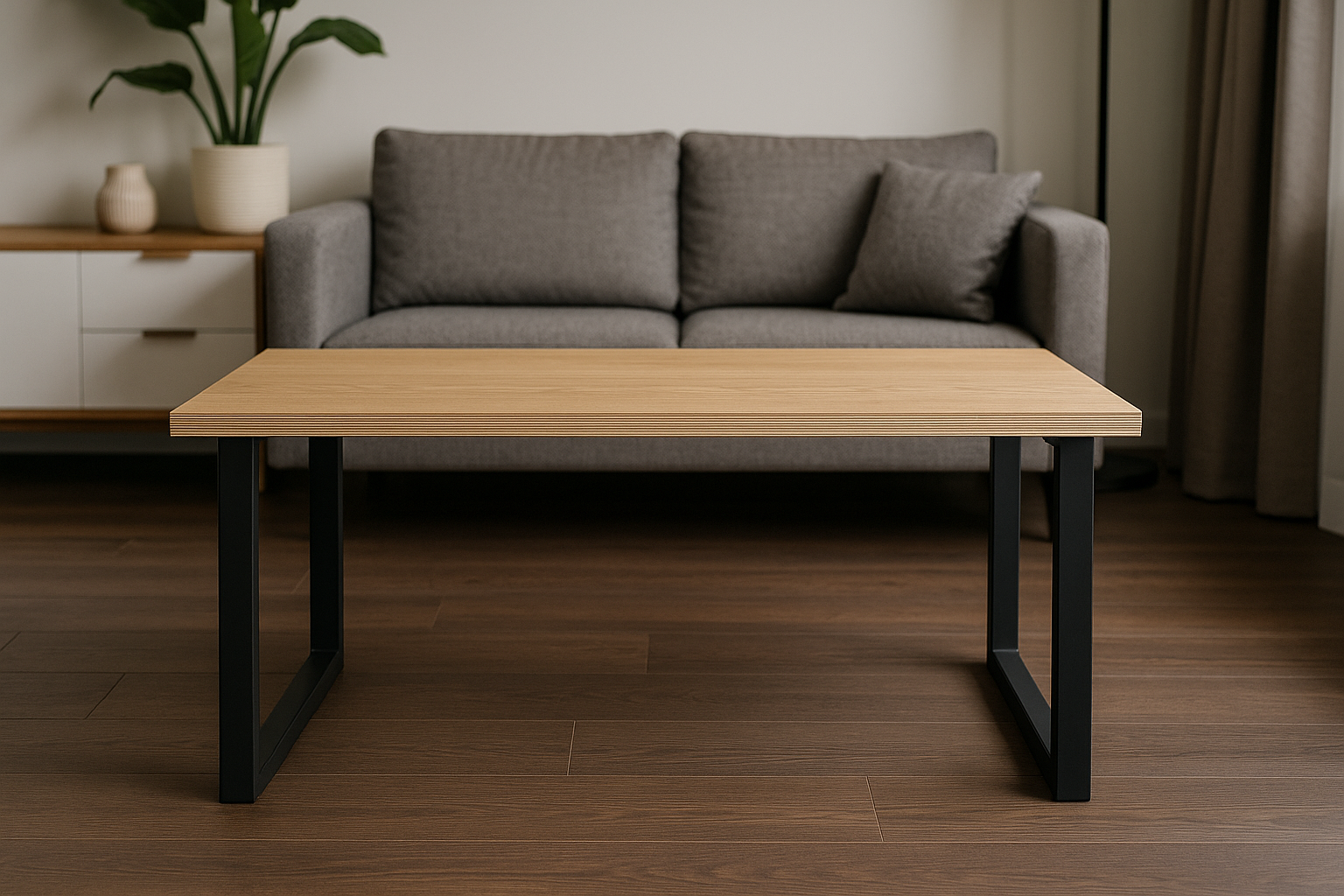
Birch plywood has a pale, understated grain that feels fresh and contemporary. When left with its layered edges exposed, it takes on a distinctive architectural quality. Box section steel legs, on the other hand, bring structure and presence to the design. Unlike slender hairpin legs, which recede visually, box section legs are strong and geometric, making the table feel more grounded.
This combination works perfectly in Scandinavian-inspired homes, where light woods and minimal lines dominate. It also suits modern apartments and urban lofts, where the steel frames echo architectural features like beams or railings. Even in eclectic or family living rooms, the blend of natural wood and engineered steel creates a table that feels practical yet stylish.
What Box Section Steel Legs Are and How They Look
Box section legs are made from hollow square or rectangular steel tubing. They are welded into frames that can take the form of simple rectangles, trapezoids, or custom angular shapes. Their appeal lies in their strength and their bold lines, which contrast beautifully with the natural softness of wood.
On a coffee table, box section legs add a sense of permanence. They make even a lighter plywood top feel substantial, grounding the design while ensuring the table can easily support daily use.
Why Birch Plywood and Steel Work Well Together
Birch plywood is an engineered material made by laminating thin sheets of birch veneer with alternating grain directions. This construction gives it strength, stability, and resistance to warping. Unlike cheaper softwood plywoods, birch ply has a smooth, consistent surface with no large voids. It’s widely used in furniture-making for its modern look and practical qualities.
When combined with box section steel legs, birch ply finds its perfect match. The plywood keeps the design light and affordable, while the steel adds strength and visual weight. Together, they create a balanced coffee table that feels modern, architectural, and durable.
Choosing the Right Colour for the Legs
Steel legs are typically offered in black, white, or raw steel finishes. Black creates a bold contrast with the pale plywood, giving the table a sharp, modern look. White blends more softly with the light wood, enhancing the Scandinavian character. Raw steel leans into industrial style but must be sealed with a clear coat to prevent rust.
For a bespoke touch, the legs can be painted in any colour. Sand them lightly first for adhesion, then apply spray paint or brush paint, followed by a protective topcoat. This flexibility lets you coordinate the legs with other accents in your living room.
Why Birch Plywood Is Popular for Furniture
Birch plywood has become a favourite for modern DIY makers because it offers a balance of strength, affordability, and style. It is stronger and more attractive than construction-grade plywood, with multiple dense layers of birch veneer that give it a stable, smooth surface. Its exposed layered edge is often treated as a design feature rather than something to hide, making it perfect for clean, contemporary furniture.
Compared to solid hardwood, it’s easier to cut and more affordable, yet still strong enough for everyday use. This makes it particularly well suited to coffee tables, where durability and appearance are both important.
Choosing the Right Thickness
Birch plywood is most commonly available in 18mm and 24mm thicknesses.
- 18mm works well for smaller coffee tables, giving a sleek, minimal profile.
- 24mm feels more substantial, resists sagging better, and balances visually with the chunky steel legs.
For most coffee tables, 24mm is the ideal choice. It creates a solid feel while retaining the modern, light appearance that plywood is known for.
The Realities of Using Plywood
Even high-quality birch plywood isn’t flawless. The surface may include small patches or plugs where knots have been removed, and sometimes scratches from handling. These imperfections are part of the character of plywood and usually blend in once sanded and finished.
It’s also important to remember that the top veneer is thin. Sanding must be gentle to avoid going through to the glue layer beneath. While this isn’t a major drawback, it’s a reality to keep in mind when preparing and finishing the surface.
Cutting the Top to Size
Accuracy is essential when cutting plywood. A track saw is the best tool for the job, as it ensures perfectly straight cuts with minimal chipping. A circular saw will work too, especially with a fine-tooth blade and masking tape along the cut line. Always clamp the panel securely, measure carefully, and cut slowly. Plywood produces a lot of fine dust, so wear goggles, a mask, and hearing protection, and use dust extraction if possible.
If you don’t have the right tools, many suppliers offer birch plywood cut to size. This costs slightly more but saves time and ensures perfect dimensions.
Reinforcing the Table Top
Coffee tables are smaller than dining tables, so sagging is less of an issue. However, if your table is longer than 120cm and made with 18mm plywood, you may want to reinforce it with a lengthwise batten or “spine” underneath. This helps the top stay flat under daily use and prevents any long-term bending.
Sanding Birch Plywood
Sanding prepares the plywood for finishing. Start with a medium grit and move to a fine grit such as 240. Always sand lightly with the grain. An orbital sander can be used carefully, but hand sanding is safer for the edges. Many makers choose to leave the layered edge visible as a feature, but you can also soften it with sandpaper for comfort.
Edge Treatments
The layered edge of plywood is one of its defining features. Some people leave it raw for a modern, industrial look, while others choose to cover it with iron-on edge banding for a more uniform appearance. If you want a refined finish, you can use a router to create a chamfer or round-over, or simply ease the edges with hand sanding.
Attaching the Box Section Legs
Box section legs are attached via screws through their mounting plates. Position them 5–8cm in from the corners to give a balanced look and stable support. Always drill pilot holes before driving screws into the plywood to avoid splitting or damaging the veneer layers.
Check the positioning before drilling to ensure the frames don’t interfere with nearby furniture or storage underneath the table.
Finishing the Plywood Top
Finishing not only protects the plywood but also enhances its natural beauty.
- Hardwax oil gives a natural matte finish while protecting against stains.
- Danish oil or tung oil warm up the wood but may require periodic reapplication.
- Polyurethane varnish provides the toughest protection against scratches and water rings, though it can look shinier.
Apply multiple thin coats, sanding lightly between them for a smooth finish. This ensures the table can withstand daily living room use, from mugs and glasses to the occasional spill.
Conclusion
A coffee table made with a birch plywood top and steel box section legs is a modern, practical, and affordable DIY project. The plywood provides a clean, architectural look, while the steel frames add strength and bold geometry. Together, they create a table that is light enough for modern interiors but strong enough to handle everyday wear.
By choosing the right thickness, cutting accurately (or ordering pre-cut), sanding carefully, finishing thoughtfully, and attaching the legs securely, you can create a coffee table that looks professional and feels solid. This design is perfect for contemporary homes, studios, and urban spaces, proving that simple materials can produce stylish, long-lasting furniture when paired with care and creativity.
