There’s something deeply satisfying about building your own furniture, and few projects are as rewarding as making a dining table. A table is more than just a surface; it’s a place where family and friends gather, where meals are shared, and where memories are made. One of the most popular modern designs combines slim steel hairpin legs with a solid oak top, giving you a table that is both timeless and contemporary. It’s a piece of furniture that balances warmth and strength while remaining versatile enough to suit a wide variety of interiors.
The Style of the Table and Where It Belongs
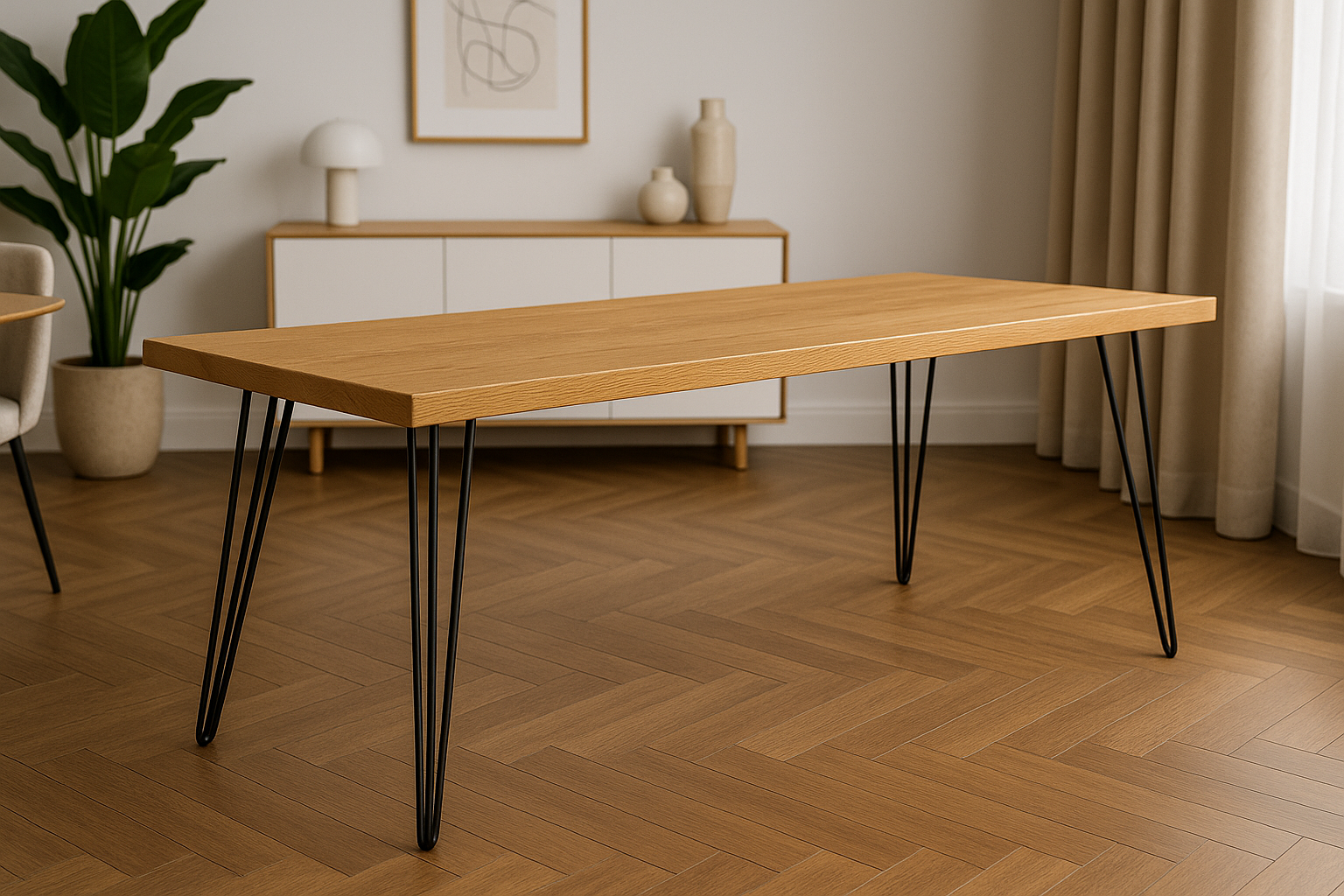
A dining table made with hairpin legs and a solid oak top has a character that feels minimal yet inviting. The thin steel legs provide a lightness that prevents the table from overwhelming a room, while the oak top introduces depth, texture, and natural warmth. This style of table works beautifully in Scandinavian-inspired homes where pale woods and clean lines dominate, but it also looks right at home in industrial lofts with exposed brick and concrete. In modern family homes, it strikes the right balance between practicality and design, while in mid-century spaces it pays homage to the 1940s origins of the hairpin leg.
What Hairpin Legs Are and Why They Work
Hairpin legs are crafted from bent steel rod, usually welded into a U-shape and attached to a mounting plate. They are available with two rods for lighter use or three rods for greater strength. Originally designed during the mid-20th century, they remain popular because of their slim, elegant profile and their ability to hold substantial weight without looking bulky. On a dining table, they give the oak top a sense of lightness and ensure that the focus stays on the wood itself.
Why Hairpin Legs Combine Well with Solid Oak
Oak is a dense hardwood that brings richness and durability to a table. Without careful pairing, though, an oak top can sometimes look overly heavy. Hairpin legs provide the perfect counterbalance: they are thin, refined, and almost disappear visually, allowing the oak to shine. The combination is one of strength and contrast — the rugged, timeless look of oak softened by the minimal elegance of steel. Together, they make a dining table that feels substantial but not overpowering.
Choosing the Right Colour for the Legs
The finish of your hairpin legs has a big impact on the look of the table. Black is the most classic and versatile option, working well with both light and dark oak finishes. White creates a fresher, airier feel that suits bright, minimal interiors. Raw steel has a raw industrial character but requires sealing to prevent rust. If you want something more customised, the legs can be painted in a colour of your choice. Lightly sanding them first helps paint adhere, and either brushing or spraying can be used depending on the finish you want. Spraying generally gives the smoothest result, while brushing allows for easy touch-ups. Adding a protective clear coat improves durability.
Why Solid Oak Stands Out from Cheaper Alternatives
Unlike laminated or veneered products, solid oak is consistent all the way through. It can be sanded, refinished, and repaired many times, giving it a lifespan that can stretch across decades. Laminated boards may look convincing at first but are prone to chipping and cannot be restored once damaged. Veneered panels offer a real wood surface but are limited by their thin top layer, which wears down over time. Oak, on the other hand, has a natural strength and presence that elevates a dining table, making it an investment as well as a functional piece of furniture.
Choosing the Thickness of the Oak Top
The thickness of the oak you choose will affect both the table’s performance and its appearance. Typical sizes from timber suppliers include 19mm, 24mm, 27mm, 30mm, and 40mm. A 19mm top feels sleek but may need reinforcement for longer spans. Twenty-four millimetres is often the best compromise between strength, price, and weight, while 27mm and 30mm look more substantial without being overly heavy. At 40mm, the table will be chunky, dramatic, and very solid, though the weight makes handling and assembly more challenging. The thicker the top, the less likely it is to sag, and the more premium it will look in a dining room.
The Realities of Working with Oak
Oak is a natural material, and with that comes character. Expect knots, variations in colour, and distinctive medullary rays, which appear as pale streaks across the grain. These features give oak its timeless look, though if you prefer a cleaner appearance, many suppliers offer prime-grade oak with fewer knots. Character-grade oak, on the other hand, embraces all the natural quirks. Neither option is better than the other — it simply depends on whether you want rustic charm or refined consistency.
Cutting the Oak to Size
If you plan to cut the oak yourself, accuracy is key. A circular saw with a fine-tooth blade is suitable, but a track saw will give you the most precise and straight cuts. Always measure carefully, mark clearly, and cut slowly. Because oak is dense and produces fine dust, wear safety goggles, a dust mask, and hearing protection, and if possible, use dust extraction. If you don’t own the right saws or want a cleaner, simpler process, many suppliers will cut oak tops to size for you. This ensures accurate dimensions and reduces both waste and mess, though it adds slightly to the cost.
Preventing Cupping and Sagging
As a natural hardwood, oak moves with changes in humidity. Over time, this can cause boards to cup, where the edges rise or fall slightly. To help prevent this, many makers attach bars across the underside of the table running perpendicular to the grain. These can be wooden battens screwed into place or metal bars routed into the underside. Wooden strips are simple and affordable, while metal is stronger but more expensive and requires more skill to fit. For dining tables longer than 150cm, it’s also wise to add a lengthwise batten or “spine” underneath to prevent sagging.
Positioning the Hairpin Legs
When it comes to attaching the legs, place them around 5–8cm in from the corners of the table. This ensures the table is stable without the legs sticking out awkwardly. If the table will be placed against a wall, make sure the legs don’t clash with skirting boards. It’s also a good idea to test the placement with chairs before fixing, as you’ll want to avoid having table legs that interfere with seating.
Sanding the Oak
Sanding prepares the oak surface for finishing and brings out its natural beauty. Start with a medium grit such as 120 and work up to 180 or 240 for a silky finish. Always sand with the grain to avoid scratches. An electric sander is the quickest way to achieve a smooth surface, but hand sanding is equally effective if you prefer a more traditional approach. Even lightly easing the edges with sandpaper makes the table more comfortable to use and gives it a professional finish.
Pilot Holes and Edge Profiles
Before attaching the legs, drill pilot holes into the underside of the oak. This prevents the wood from splitting and makes it easier to drive the screws cleanly. For the edges, you can use a router to create a chamfer, bevel, or rounded profile, or simply ease them by hand with sandpaper. Even subtle shaping makes the table more inviting and comfortable to use.
Finishing the Oak Top
Finishing is essential to protect the oak from spills and to highlight its grain. Hardwax oil is a popular choice for dining tables because it is easy to apply, enhances the natural beauty of the wood, and leaves a durable, matte finish. Danish oil or tung oil can also be used, giving a warmer tone and deepening the wood’s character, though they may need reapplying periodically. Varnishes and polyurethanes provide the toughest protection against stains and scratches, though they can sometimes look shinier than oils. For best results, apply several thin coats, sanding lightly between each one.
Conclusion
A dining table with hairpin legs and a solid oak top is a project that combines elegance, strength, and timeless style. The oak provides natural warmth and character, while the steel legs keep the table modern and refined. By choosing the right thickness of oak, preparing it carefully, reinforcing it where needed, and finishing it thoughtfully, you can create a table that looks professional, feels sturdy, and becomes a centrepiece in your home for years to come.
Whether your style leans towards minimal Scandinavian, bold industrial, or modern rustic, this combination is versatile enough to fit seamlessly. It’s a table that celebrates both the simplicity of steel and the richness of wood — a balance that makes for a piece you’ll be proud to gather around every day.
