Posted on

Solid Oak vs. Birch Plywood vs. Oak Veneer vs. Scaffold Boards: Choosing the Best Dining Table Top

When building your own dining table, one of the biggest choices you’ll make is what material to use for the top. The legs set the tone, but the top defines the table’s character, performance, and longevity. Popular DIY options include birch plywood, solid oak, oak veneer, and scaffold boards. Each has its own style, strengths, and limitations. The best option depends on your budget, your taste, and how much wear your dining table will see.

The Style of Each Table Top

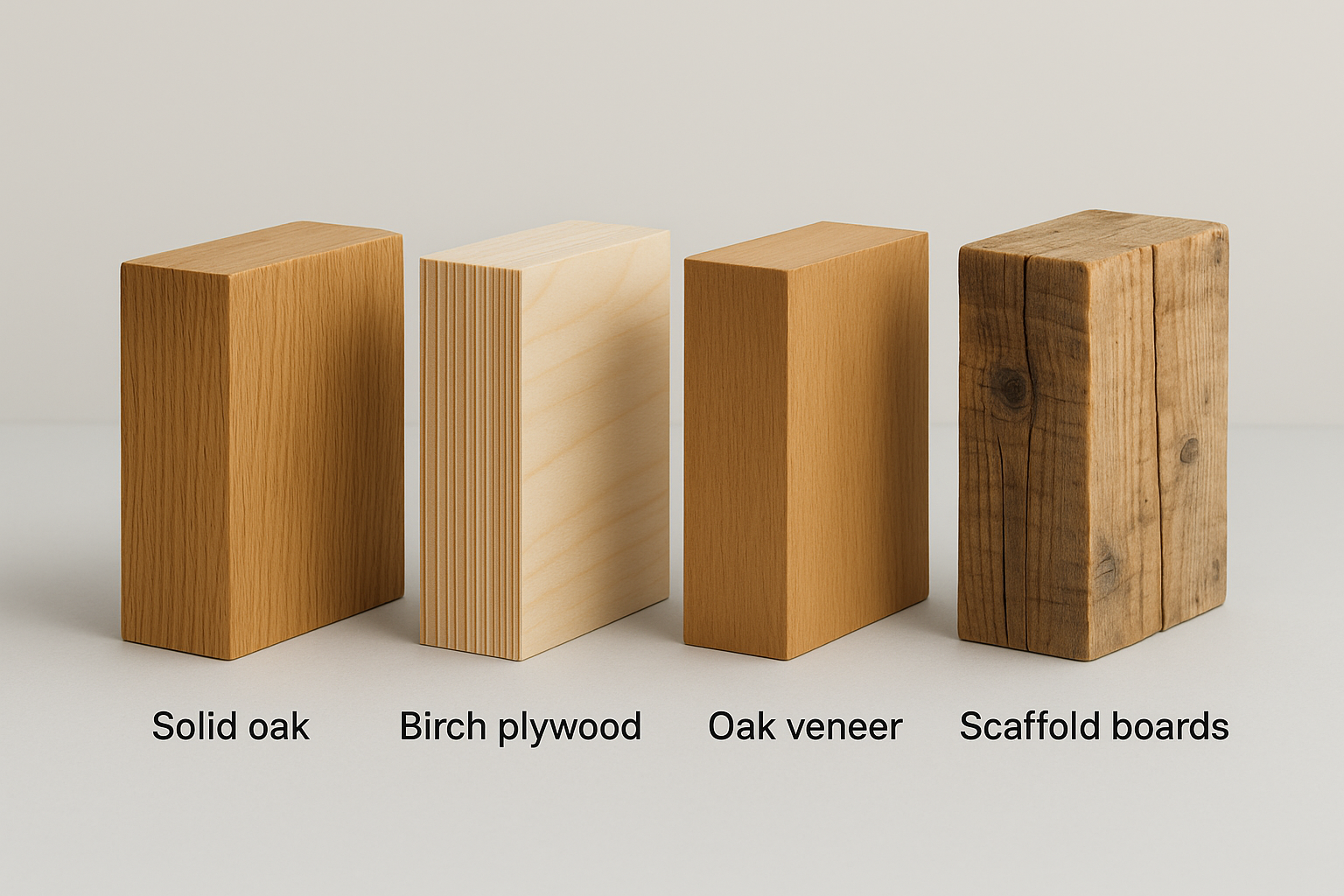
Solid oak is the classic choice. It feels timeless, heavy, and luxurious, with a depth of grain and colour that only real hardwood provides. It suits both traditional dining rooms and modern rustic homes, and it can look polished or casual depending on how it’s finished.

Oak veneer provides the look of oak in a more affordable, lighter package. Its clean, uniform appearance makes it ideal for modern, Scandinavian, or minimalist dining spaces. Veneer doesn’t have the same richness as solid oak but is a smart compromise for those on a tighter budget.

Birch plywood has a fresh, contemporary aesthetic. With its pale, subtle grain and exposed layered edges, it feels architectural and modern, especially in Scandinavian-inspired or urban interiors. It’s perfect if you want a clean, airy table with a design-led feel.

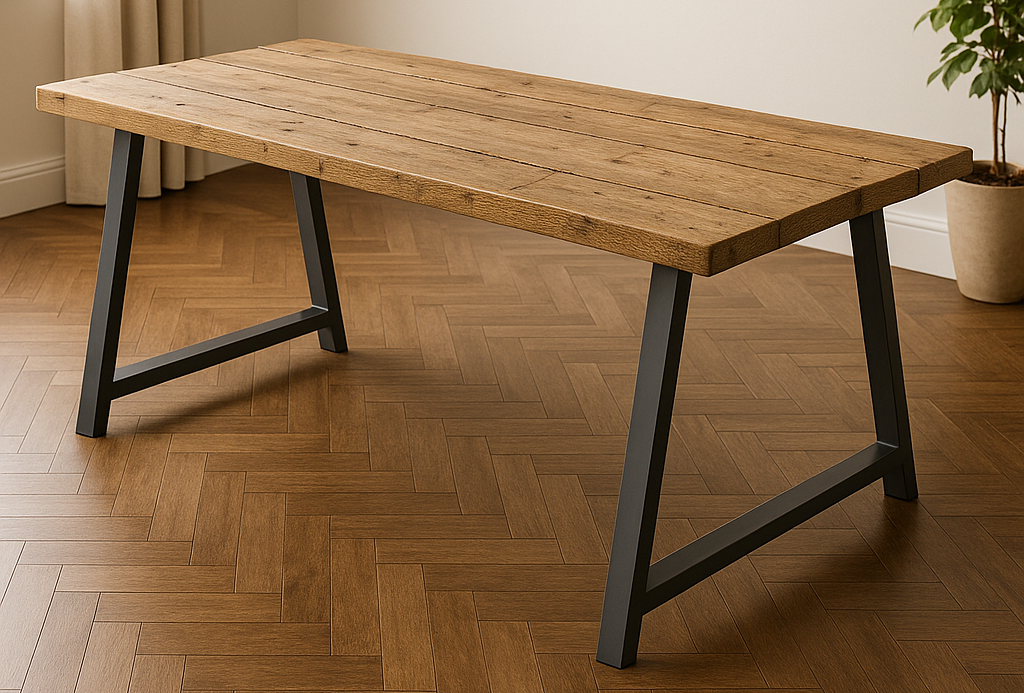
Scaffold boards bring rustic charm and character. Their chunky, weathered look makes them perfect for industrial lofts, eclectic dining rooms, or family homes where a table with a lived-in look feels right at home.

Strength, Weight, and Practicality

Solid oak is strong and durable but heavy. A large oak dining table requires careful handling and reinforcement to prevent sagging on longer spans. Its density means it will last for decades, but it also demands more effort during construction.

Oak veneer is much lighter and easier to work with. Because the oak is only a thin surface layer, it is bonded to a stable core such as MDF, making it resistant to warping. However, it isn’t as strong as solid wood, and the surface layer limits how much wear it can withstand.

Birch plywood is stable and strong relative to its weight. Unlike cheaper softwood plywood, birch ply has many layers of dense veneer, giving it strength across large sheets. It’s less heavy than oak and easier to cut, but it may sag over long spans unless reinforced.

Scaffold boards are inherently thick, around 38mm, so they make sturdy tops without needing extra reinforcement in smaller sizes. They’re not as hard as oak, so they dent more easily, but their rustic style means those marks often add to the character.

Durability and Daily Use

Dining tables see constant use — from hot plates to drink spills to everyday knocks. Solid oak is the most forgiving in the long term. Scratches can be sanded out, and the wood can be refinished many times, keeping the table looking good for decades.

Oak veneer, on the other hand, is less durable. Because the oak layer is thin, it cannot be sanded and refinished repeatedly. A veneer table can stay beautiful if you’re diligent about using placemats and coasters, but it won’t withstand the same level of wear as solid wood.

Birch plywood is durable but has its own quirks. The surface veneer is relatively thin, so it needs gentle sanding and a protective finish. With care, it makes an excellent dining surface, though it will show scratches more readily than oak.

Scaffold boards are forgiving in a rustic way. They may dent and mark easily, but instead of ruining the table, these imperfections become part of its character. If you want a more polished look, scaffold boards may feel too rough, but if you enjoy rustic charm, they only get better with age.

Cost and Availability

Solid oak is by far the most expensive option. It is a premium hardwood, and a large dining table requires a lot of it. It’s an investment piece, both in cost and longevity.

Oak veneer is affordable and widely available, offering the look of oak without the high price tag. Veneered boards can also be purchased pre-cut to size, saving hassle during construction.

Birch plywood sits in the middle. It is more expensive than softwood ply but still cheaper than solid oak. It’s widely available from timber merchants and online suppliers.

Scaffold boards are the most budget-friendly option. New boards are inexpensive, and reclaimed boards are even cheaper while offering extra character. They’re readily available from builders’ merchants and salvage yards.

Cutting and Preparation

Solid oak requires accurate, careful cutting with high-quality tools. It’s heavy and tough to work with but rewarding.

Oak veneer needs more delicate handling. It can chip easily when cut, so a fine-tooth blade, masking tape, or scoring the cut line is recommended.

Birch plywood cuts cleanly with the right tools, but accuracy matters. A track saw gives the best results, and because it produces lots of dust, proper safety gear is important.

Scaffold boards are straightforward to cut, though they’re heavy. To create a wide top, they must be joined together using glue, clamps, or battens underneath. Sanding is essential to transform them from rough planks into a usable surface.

Finishing Options

All four materials benefit from finishing. Solid oak responds beautifully to hardwax oil, Danish oil, or polyurethane varnish, enhancing the grain while protecting the surface.

Oak veneer should be finished with thin coats of oil or varnish, applied carefully to avoid damaging the thin surface.

Birch plywood looks great with hardwax oil, which highlights the pale tone while giving protection. Polyurethane can be used for added toughness.

Scaffold boards suit oils that highlight their rustic character. Hardwax oil provides a natural look, while varnish offers more durability for heavy use.

Which One Should You Choose?

Choose solid oak if you want a premium, long-lasting table that can be refinished and restored for decades. It’s an investment but one that pays off in beauty and durability.

Choose oak veneer if you want the look of oak at a lower cost and are prepared to take extra care to protect the surface from heavy wear.

Choose birch plywood if you like clean, contemporary design and want a balance between affordability, strength, and style. It’s particularly suited to modern, Scandinavian, and architectural interiors.

Choose scaffold boards if you want rustic charm and affordability. They’re ideal for industrial-inspired or eclectic interiors where imperfections are part of the appeal.

Conclusion

Birch plywood, solid oak, oak veneer, and scaffold boards each have their place in DIY dining table design. Oak is timeless and premium, veneer is cost-effective but requires care, birch ply is clean and modern, and scaffold boards are rustic and full of character. Paired with the right legs — whether slim hairpin legs for elegance or strong box section frames for boldness — each of these tops can be transformed into a dining table that reflects your taste and lifestyle.

The best choice comes down to how you live, how much wear your table will see, and the atmosphere you want to create in your dining space. Whatever material you choose, the result will be more than just a table — it will be the centrepiece of your home, built by your own hands.
Posted on

How to Make a Dining Table with Birch Plywood and Steel Box Section Legs

A dining table is more than just a piece of furniture. It’s a gathering place where family meals, celebrations, and conversations take place. Building your own table gives you the freedom to design something that fits your space and style perfectly. One particularly popular combination is a birch plywood top paired with steel box section legs. Together, these materials create a table that is strong, modern, and versatile — ideal for contemporary interiors where design and practicality go hand in hand.

The Style of the Table and Where It Belongs

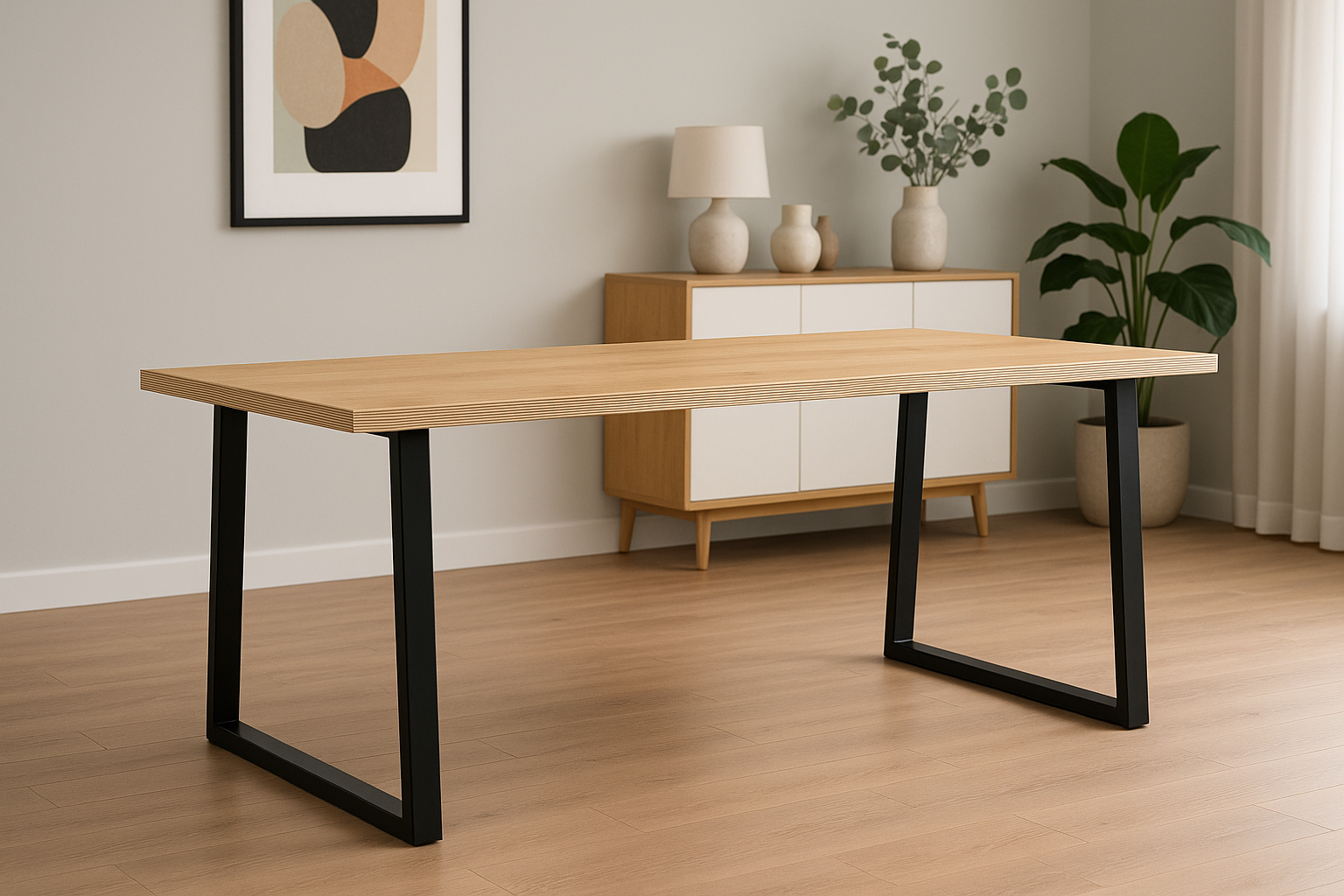
A dining table made with birch plywood and box section legs has a clean, architectural look. The pale, subtle grain of birch adds warmth and lightness, while the bold, geometric steel frames give the table structure and presence. This pairing is particularly well-suited to Scandinavian-inspired homes, urban lofts, and modern family dining rooms. The combination of natural wood and engineered steel gives the table a timeless quality that feels at home in both minimalist and eclectic interiors.

What Box Section Steel Legs Are and How They Look

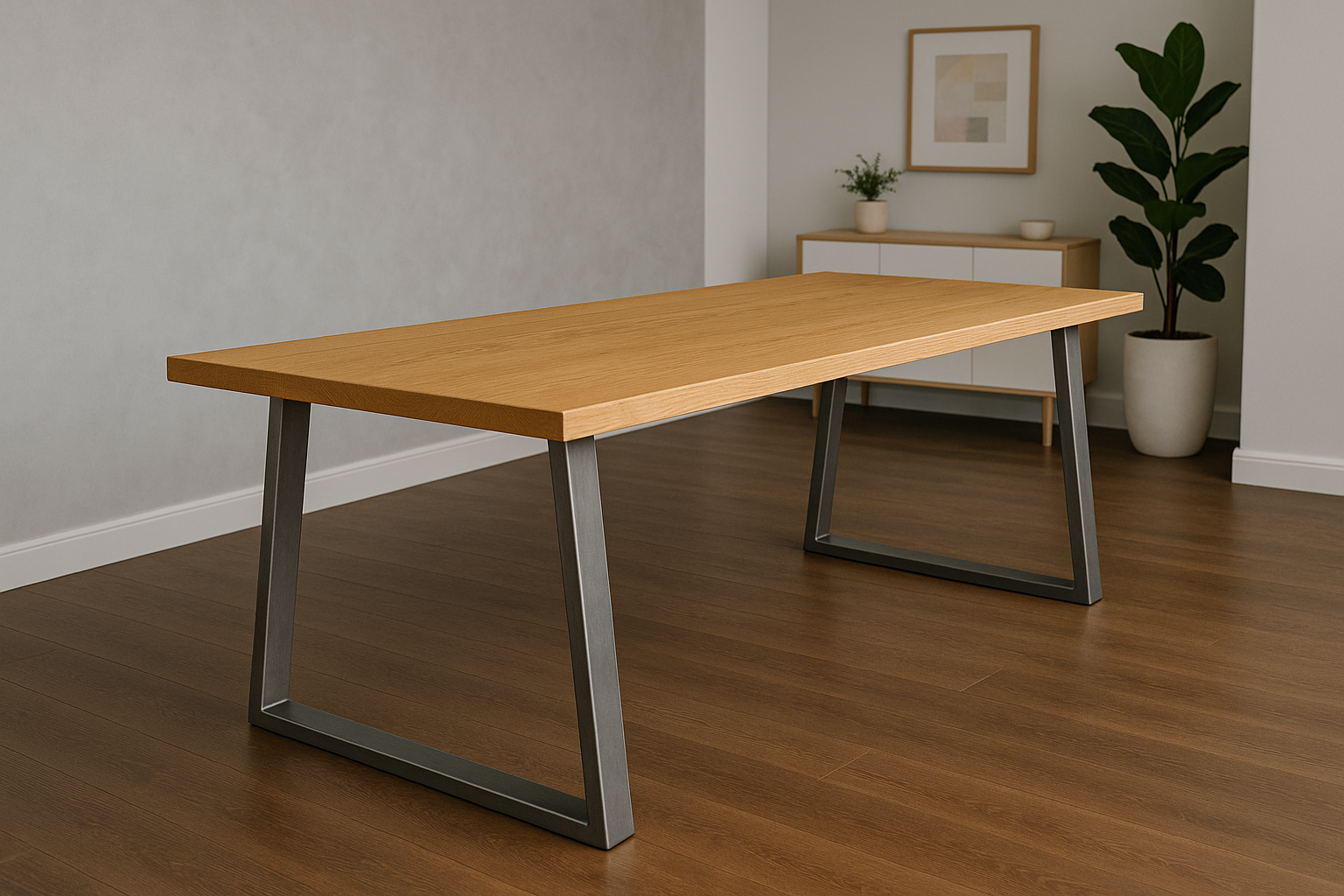
Box section legs are made from square or rectangular hollow steel tubing welded into a rigid frame. Their straight lines and angular geometry give them a strong, structural appearance that contrasts nicely with the softer look of wood grain. Available in rectangular, trapezoid, or custom shapes, they are highly versatile and extremely durable. Unlike hairpin legs, which are slender and subtle, box section legs have visual weight, giving the dining table a bold, grounded feel.

Why Birch Plywood and Steel Work Well Together

Birch plywood is a high-quality sheet material made from thin layers of birch veneer bonded together with alternating grain for strength. It is stable, smooth, and stronger than cheaper softwood plywoods used for construction. Its pale tone and fine grain give it a fresh, modern appearance. Paired with box section steel legs, the result is a dining table that is both practical and stylish. The plywood top keeps the look clean and contemporary, while the steel legs add strength and structure, creating a balance of warmth and industrial sharpness.

Choosing the Right Colour for the Legs

Steel legs are commonly available in black, white, or raw steel. Black provides a classic contrast against the light birch, making the table feel bold and modern. White has a softer effect, enhancing the Scandinavian aesthetic and keeping the overall look airy. Raw steel gives the most industrial edge but must be sealed to prevent rust. For a bespoke touch, the legs can be painted in any colour. Sand them lightly first, then apply spray paint for a smooth finish, or brush paint for smaller projects, and seal with a clear coat for durability.

Why Birch Plywood Stands Out

Unlike cheaper plywood that often contains knots, voids, and rough veneers, birch plywood is made with multiple uniform layers of dense birch veneer. It is smooth, strong, and consistent, making it ideal for furniture. Many makers choose to leave the exposed layered edges visible as a design detail, while others cover them with edging strips for a seamless finish. Birch plywood has become a popular choice for modern furniture because it combines practicality with a refined, contemporary look.

Choosing the Right Thickness

For dining tables, thickness makes a big difference to both strength and style. The two most common sizes for birch plywood are 18mm and 24mm. An 18mm top looks sleek and costs less, but for longer dining tables it may sag without reinforcement. A 24mm top feels more substantial, is sturdier, and resists sagging better while still looking clean and modern. For tables over 150cm long, 24mm is usually the best choice, especially when paired with box section legs that visually suit a more solid top.

The Realities of Using Plywood

Even high-grade birch plywood isn’t flawless. It may include small patches or plugs where knots have been repaired, and sometimes minor scratches or marks from handling. These are normal and can usually be smoothed out with sanding and hidden with finishing products. The edges may also show some glue lines, but many people celebrate this layered look as part of the modern aesthetic.

Cutting the Top to Size

If you are cutting the plywood yourself, accuracy is key. A circular saw will do the job, but a track saw is best for ensuring straight, clean lines. Always clamp the sheet securely, mark your cut lines clearly, and cut slowly. Plywood produces a lot of fine dust, so wear goggles, a dust mask, and hearing protection, and use dust extraction if available. If you don’t have the right tools, many suppliers sell pre-cut plywood tops. Though this costs more per square metre, it saves time, reduces waste, and guarantees precise dimensions.

Reinforcing Longer Tables

For dining tables longer than 150cm, reinforcement is recommended. While box section steel legs provide plenty of stability, the plywood itself may sag over time if unsupported. Adding a wooden batten or “spine” lengthwise underneath strengthens the structure and ensures the table remains level even under daily use.

Positioning the Box Section Legs

Box section legs should be positioned about 5–8cm in from each end of the table for balance and stability. Because the frames are wider than hairpin legs, it’s important to test the layout with chairs to ensure comfortable seating space. If the table will sit against a wall, also check that the legs don’t clash with skirting boards.

Sanding Birch Plywood

Before finishing, sand the plywood carefully to prepare the surface. With plywood, aggressive sanding can remove too much of the top veneer and expose glue. Start with a medium grit and work up to a fine grit such as 240, always sanding lightly and with the grain. An orbital sander can be used carefully, but hand sanding is often safer on edges.

Pilot Holes and Edge Treatments

Always drill pilot holes before screwing into plywood, as this prevents splitting and helps screws seat cleanly. For the edges, you can either leave the layered ply exposed as a design feature, lightly ease them with sandpaper, or cover them with edge banding for a seamless oak-like look. If you want a more refined edge, a router can be used to create a chamfer or rounded profile, but proceed gently to avoid damaging the veneer layers.

Finishing the Table Top

A finish protects the table and highlights the natural beauty of birch. Hardwax oil is an excellent choice, offering durability with a matte, natural feel. Danish oil or tung oil also work, bringing warmth to the wood but requiring reapplication over time. Polyurethane or varnish creates the toughest barrier against spills and scratches, though it can look shinier than oils. Apply multiple thin coats, lightly sanding between applications, for a smooth, resilient finish.

Conclusion

A dining table made with a birch plywood top and steel box section legs is a stylish, durable, and modern project. The plywood provides a clean, contemporary surface that is strong and practical, while the steel legs add structure and an architectural edge. Together they create a piece of furniture that is functional, versatile, and attractive.

By choosing the right thickness, cutting carefully or ordering pre-cut, reinforcing where necessary, sanding thoughtfully, and applying a protective finish, you can create a dining table that looks professional and lasts for years. Perfect for modern homes, studios, and open-plan living, this combination of birch and steel proves that simple materials can produce outstanding results when paired with care and creativity.

Posted on

How to Make a Dining Table with Birch Plywood and Hairpin Legs

Birch plywood is one of the most versatile and attractive sheet materials available, and when combined with sleek hairpin legs, it makes for a dining table that is affordable, stylish, and practical. Unlike bulky traditional tables, this design feels light and modern, while still being strong enough for everyday family meals. If you’re looking for a project that balances contemporary style with ease of construction, a birch plywood top on hairpin legs is an excellent choice.

The Style of the Table and Where It Belongs

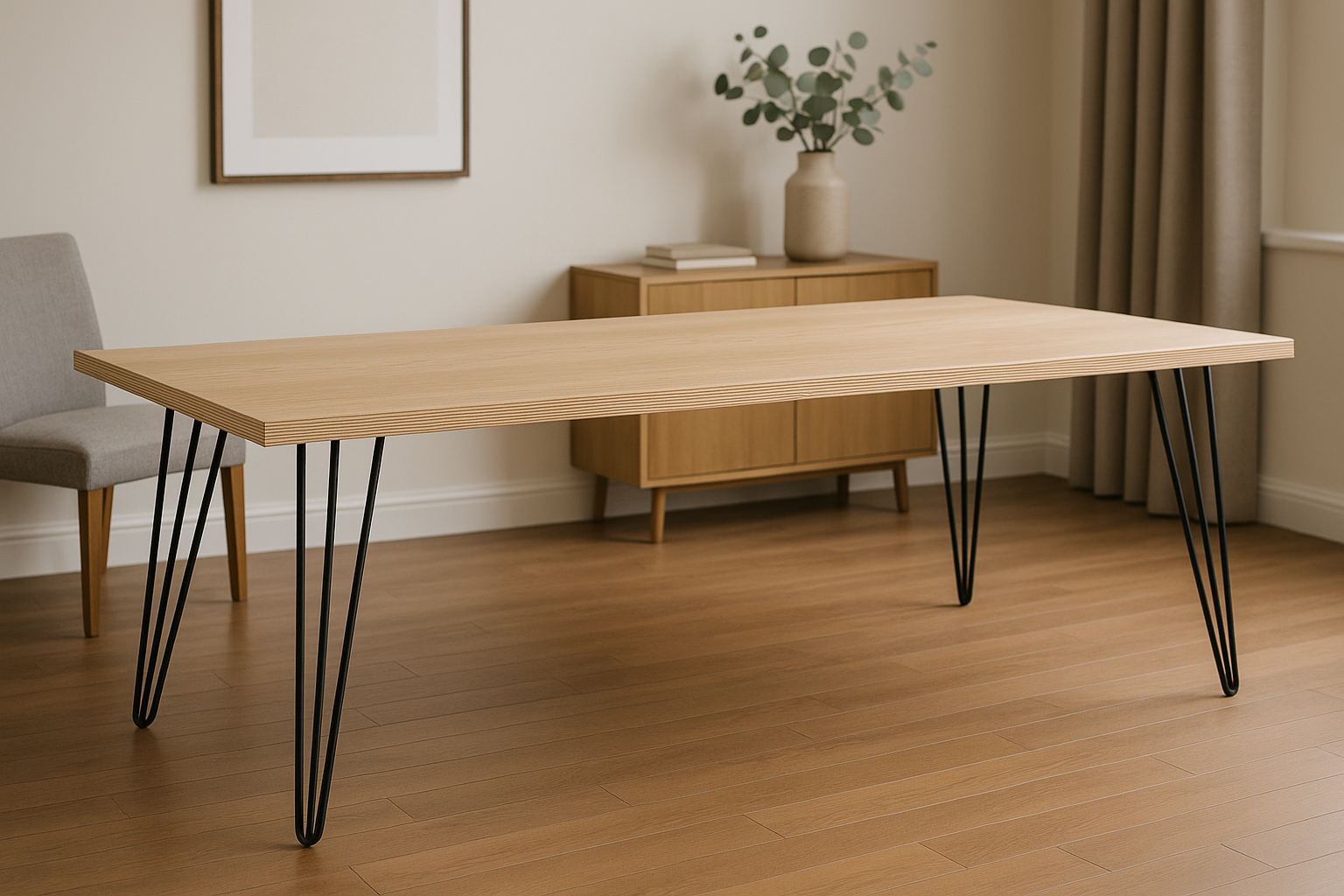
A dining table made from birch plywood and hairpin legs has a clean, minimalist look. The pale, subtle grain of birch works perfectly in Scandinavian-inspired interiors, modern apartments, and creative studios where a light and airy aesthetic is important. The slender steel legs keep the table visually unobtrusive, allowing the plywood top to take centre stage. This is a table that blends easily into its surroundings, whether you prefer a minimalist dining room, a rustic-modern kitchen, or an eclectic open-plan space.

What Hairpin Legs Are and How They Work

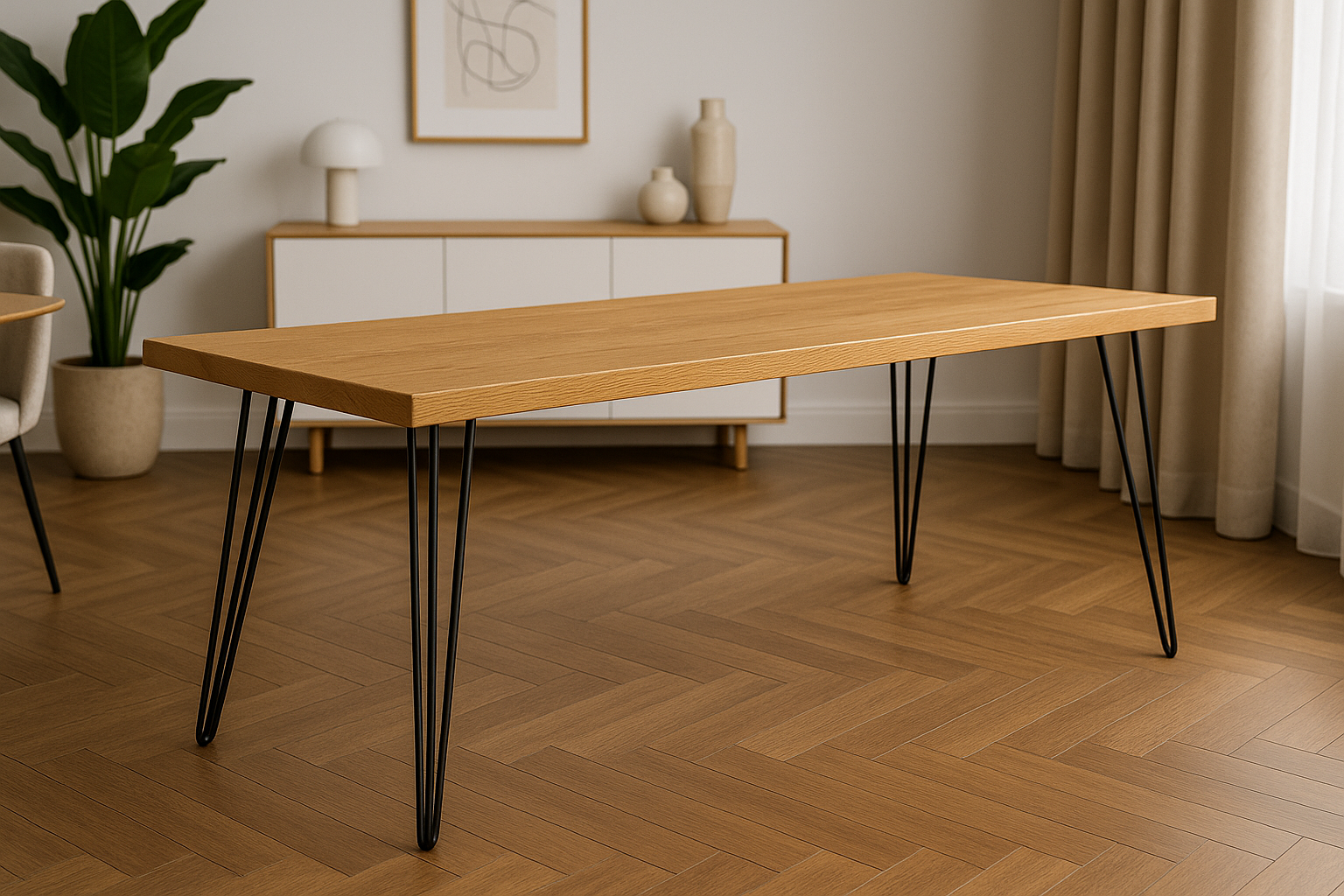
Hairpin legs are made from bent steel rods welded to a mounting plate. Their design dates back to the 1940s and has remained popular for its simplicity and strength. Available in two-rod or three-rod versions, hairpin legs can comfortably support heavy tops while maintaining a slender profile. On a dining table, they keep the structure light and stylish, ensuring that the table doesn’t feel clunky or overpowering in the room.

Why Birch Plywood and Hairpin Legs Work Well Together

Birch plywood is a high-quality sheet material made by laminating thin layers of birch veneer, alternating the grain for strength. This creates a stable, flat panel that is much stronger than cheaper softwood plywoods used in construction. Because it’s strong and available in large sheets, it can be cut into a table top of almost any size. Pairing it with hairpin legs is ideal because the slim steel complements the clean, modern aesthetic of plywood, creating a table that feels both practical and stylish.

Choosing the Right Colour for the Legs

Hairpin legs are typically available in black, white, or natural steel. Black provides a classic contrast with birch plywood, highlighting its pale tone. White enhances the Scandinavian feel, creating a fresh, airy look. Natural steel adds an industrial edge but should be sealed to prevent rust. If you want something more unique, you can paint the legs in any colour you choose — sanding them lightly first, then applying spray paint or brush paint, followed by a clear coat for durability.

Why Birch Plywood Stands Out

Unlike cheaper plywoods, which are usually softwood with voids and knots, birch plywood is made from multiple layers of dense birch veneer. It is stable, smooth, and consistent, with an attractive pale surface and layered edge that many people choose to leave exposed as a design feature. It has become increasingly popular for furniture making because it combines strength with a clean modern look and is easy to work with compared to solid hardwoods.

Choosing the Right Thickness

For dining tables, plywood thickness matters. The most common sizes for birch plywood are 18mm and 24mm. An 18mm sheet looks sleek and costs less but may sag over longer spans if unsupported. A 24mm top is sturdier, feels more substantial, and is less prone to sagging while still maintaining a modern look. For a dining table that sees daily use, 24mm is often the better choice, especially for longer lengths.

The Realities of Using Plywood

As a sheet material, plywood isn’t perfect. Even high-quality birch plywood may have small patches or plugs on the surface where knots have been replaced, as well as occasional scratches from handling. These can usually be sanded smooth or minimised with finishing, but they are part of the nature of working with plywood. The layered edges are often celebrated as part of the design, though they can also be edged with solid wood strips if you prefer a cleaner look.

Cutting the Top to Size

If you plan to cut the plywood yourself, accuracy is important. A circular saw will do the job, but a track saw is best for ensuring perfectly straight cuts. Always clamp the sheet securely, mark clearly, and work slowly. Plywood produces a lot of fine dust, so wear a dust mask, goggles, and hearing protection, and use dust extraction if possible. If you don’t have the right tools, consider ordering your plywood pre-cut to size from an online supplier. Although this costs slightly more per square metre, it saves time, reduces waste, and ensures perfect dimensions.

Reinforcing Larger Tables

For dining tables longer than 150cm, you may want to reinforce the top to prevent sagging. This can be done by attaching a wooden batten or “spine” lengthwise underneath. This is especially useful if you opt for the thinner 18mm plywood. Reinforcement ensures the table stays level and strong even under daily use.

Positioning the Hairpin Legs

Hairpin legs should be positioned around 5–8cm in from the corners of the table. This gives a balanced appearance while keeping the table stable. Before drilling, check that the legs won’t interfere with skirting boards if the table is against a wall, and test with chairs to ensure legroom is comfortable.

Sanding Birch Plywood

Sanding is essential to prepare the surface for finishing, but care is needed. With plywood, aggressive sanding can wear through the top veneer and expose glue. An orbital sander can be used carefully, but sanding by hand is often safer, especially on edges. The goal is simply to smooth the surface and remove minor scratches without thinning the veneer.

Pilot Holes and Edge Treatments

Always drill pilot holes before fixing screws into plywood. This prevents splitting and ensures screws go in cleanly. For the edges, you can leave the layered ply exposed for a modern, architectural look, or soften them with light sanding. If you prefer a more refined edge, you can use a router to add a chamfer or round-over, or attach solid wood strips for a seamless oak-like finish.

Finishing the Plywood Top

A protective finish is vital for a dining table. Hardwax oil is an excellent choice, providing durability while highlighting the natural grain and colour of birch. Other oils such as Danish or tung oil can also be used, though they may need refreshing over time. Varnishes and polyurethanes provide the toughest barrier against spills and scratches, though they tend to look shinier. For the best results, apply several thin coats, lightly sanding between applications to create a smooth, resilient finish.

Conclusion

A dining table made from birch plywood and hairpin legs is the perfect blend of modern style, affordability, and practicality. The plywood top provides strength and a clean, minimalist look, while the slim steel legs keep the design elegant and light. With thoughtful preparation — choosing the right thickness, cutting accurately, reinforcing longer spans, sanding carefully, and applying a protective finish — you can create a table that looks professional, feels solid, and serves your household for years.

This combination is ideal if you want a dining table that is simple yet stylish, versatile enough to fit into a variety of interiors, and practical for everyday life. It’s proof that with the right materials and a bit of care, you can make a piece of furniture that rivals high-end designs while carrying the pride of being made by your own hands.

Posted on

How to Make a Dining Table with Scaffold Boards and Steel Box Section Legs

A dining table is often the focal point of the home — a place where meals are shared, guests are welcomed, and everyday life unfolds. Making your own table is not only rewarding but also allows you to create a piece that fits your style and budget perfectly. One of the most popular DIY combinations today is pairing scaffold boards with steel box section legs. The result is a table that feels bold, rustic, and contemporary all at once, balancing the character of reclaimed wood with the strength of steel.

The Style of the Table and Where It Belongs

A dining table made from scaffold boards and box section steel legs has a rugged yet refined look. The boards bring rustic texture and warmth, while the squared steel legs add structure and modern geometry. This combination works especially well in industrial lofts, modern rustic homes, and creative interiors where furniture is meant to be practical but also make a statement. The chunky timber and strong steel create a table that feels substantial and grounded, ideal for both everyday family meals and larger gatherings.

What Box Section Steel Legs Are and How They Look

Box section legs are made from hollow rectangular or square steel tubing, welded into rigid frames. Their straight, sharp lines give them an architectural quality that contrasts beautifully with the organic grain of scaffold boards. Available in rectangular, trapezoid, and custom shapes, they offer flexibility in design while always providing a strong, reliable base. Unlike slim hairpin legs, box section legs have visual weight and presence, making the table feel bold and professional.

Why Scaffold Boards and Steel Are a Perfect Match

Scaffold boards are naturally chunky and characterful. On their own, they can look rustic or even rough, but when paired with box section steel legs, they transform into something balanced and striking. The rugged softness of wood plays against the clean geometry of steel, giving the table a modern industrial appeal. The strength of the steel also ensures the heavy timber top is supported securely, making this a practical as well as stylish combination.

Choosing the Right Colour for the Legs

Steel legs usually come in black, white, or raw steel finishes. Black is the most popular, offering a classic contrast with the pale tones of sanded scaffold boards. White creates a fresher, lighter look, ideal for more modern or Scandinavian-inspired interiors. Raw steel enhances the industrial edge but must be sealed to prevent rust. If you’d like something bespoke, the legs can be painted — sand them lightly first to improve adhesion, then apply spray paint or brush paint, followed by a clear topcoat for durability.

Why Scaffold Boards Are Popular for Dining Tables

Scaffold boards have become a favourite DIY furniture material because they are affordable, readily available, and inherently strong. Standard boards measure around 225mm wide and 38mm thick, with lengths up to nearly 4m. This makes them perfect for creating large dining table tops by joining several side by side. Reclaimed boards often come with marks, dents, and weathering that tell a story, while new boards are cleaner but still offer the same sturdy proportions. Their rustic appearance, combined with affordability, makes them a great option for those seeking character without the price tag of hardwood slabs.

Cutting the Boards to Size

Most scaffold boards need to be cut down to the desired table length. A circular saw can do the job, though a track saw or mitre saw gives straighter, cleaner results. Always measure carefully, mark your cuts, and clamp the boards securely before cutting. Because scaffold boards are chunky, wear goggles, a dust mask, and hearing protection, and use dust extraction where possible. If you don’t have access to the right tools, many suppliers sell scaffold board tops pre-cut to size, which costs more but saves effort and mess.

Joining the Boards

To create a wide dining surface, several boards must be joined together. The most secure method is to glue the edges and clamp them until dry. Adding dowels or biscuits helps keep everything aligned and adds strength. If you prefer a simpler approach, you can fix battens across the underside to hold the boards together. This is quicker but often leaves small gaps between the boards, which may not be ideal if you want a perfectly smooth surface.

Reinforcing Against Movement

As with any natural timber, scaffold boards move with changes in humidity. Over time, this can cause cupping or slight warping. To minimise this, attach bars across the underside of the table running perpendicular to the grain. Wooden battens screwed in place are simple and effective, while steel bars routed into the wood provide extra reinforcement but are more complex to fit. For dining tables longer than 150cm, adding a lengthwise batten or “spine” helps prevent sagging in the middle.

Positioning the Box Section Legs

Box section legs should be positioned about 5–8cm in from each end of the table. This ensures stability while keeping the proportions balanced. If the table will sit against a wall, check that the frames don’t clash with skirting boards. It’s also a good idea to test the layout with chairs to make sure the frames don’t obstruct comfortable seating, as box section legs take up more space than hairpin styles.

Sanding the Boards

Scaffold boards often arrive rough, especially if reclaimed. Sanding is essential to transform them into a pleasant dining surface. Start with coarse grit paper to remove dirt, marks, and unevenness, then move to finer grits for a smooth finish. An electric sander makes the process much quicker, but sanding by hand is possible if you prefer a traditional approach. The goal is to create a surface that feels smooth enough for daily use while retaining the wood’s natural character.

Pilot Holes and Edge Profiles

When fixing the legs, always drill pilot holes first to prevent splitting the wood. For the edges, you can leave them square for a rugged look, round them slightly with a sander for comfort, or use a router to create a chamfered or rounded profile. Even a small amount of shaping can make the table feel more finished and comfortable.

Finishing the Table Top

A finish protects the wood from spills and wear while enhancing its natural grain. Hardwax oil is a popular option for scaffold boards, giving a natural matte look while offering good protection. Danish oil or tung oil add warmth and depth but may need reapplying periodically. For maximum durability, varnish or polyurethane provides a tougher surface that resists scratches and stains, though it may create a shinier appearance. Apply several thin coats, sanding lightly between applications for the best result.

Conclusion

A dining table made with scaffold boards and steel box section legs is bold, practical, and full of character. The rugged timber top provides warmth and authenticity, while the strong steel legs add structure and modern style. With careful cutting, joining, sanding, and finishing, you can create a table that looks professional, feels substantial, and will serve your home for years.

This combination is ideal if you want a table that blends rustic charm with industrial design. Affordable, sturdy, and stylish, a scaffold board and steel box section dining table is the perfect centrepiece for any modern home — a place where everyday life and special occasions can be enjoyed in equal measure.

Posted on

How to Make a Dining Table with Scaffold Boards and Hairpin Legs

Making your own dining table is one of the most satisfying DIY projects you can take on. It’s a chance to build something personal, practical, and stylish while saving money compared to buying ready-made furniture. A popular design for its mix of rustic charm and modern elegance combines scaffold boards with slim hairpin legs. This pairing creates a table that feels both substantial and light, offering warmth and character without looking bulky.

The Style of the Table and Where It Belongs

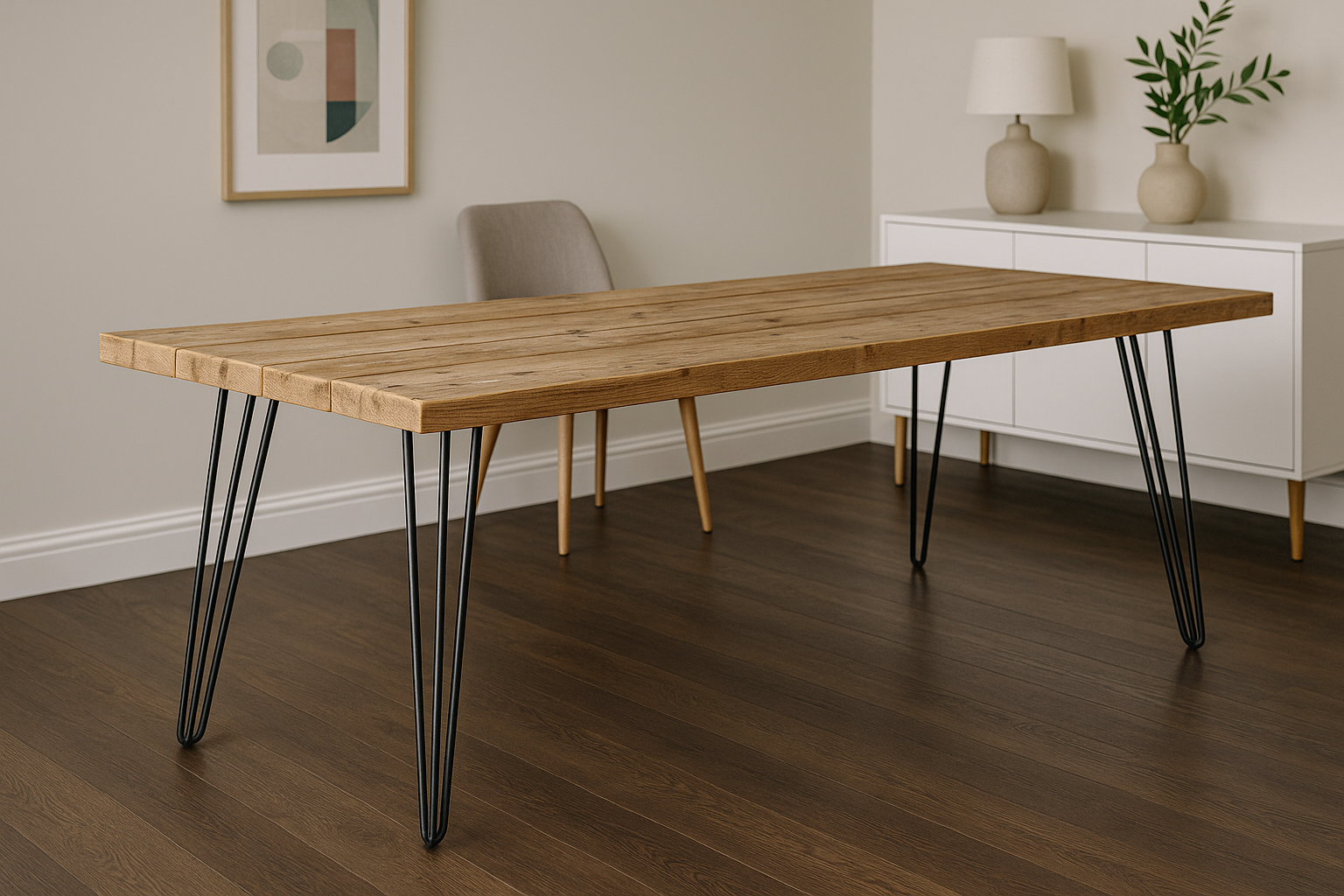
A dining table made from scaffold boards and hairpin legs has a unique style that sits comfortably between rustic and contemporary. The boards bring texture, history, and a sense of raw authenticity, while the slender steel legs keep the piece modern and airy. This kind of table works well in industrial-inspired lofts, eclectic interiors, and family homes where furniture is meant to be both practical and inviting. The rustic top makes it feel approachable, while the minimalist legs prevent it from overwhelming the space.

What Hairpin Legs Are and How They Look

Hairpin legs are made from bent steel rods welded to a mounting plate, usually in either two-rod or three-rod versions depending on the strength required. Their name comes from their resemblance to a bent hairpin, and their appeal lies in their slim profile and mid-century-inspired look. On a dining table, they provide strength while staying visually subtle, allowing the character of the scaffold board top to stand out.

Why Scaffold Boards and Hairpin Legs Work Together

Scaffold boards are chunky and rustic. Left on their own, they can sometimes look heavy and industrial. Pairing them with hairpin legs counterbalances this weight by introducing lightness and elegance. The result is a table that feels grounded and sturdy yet also refined. The contrast between rugged timber and sleek steel gives the table a timeless, versatile look that suits a wide range of interiors.

Choosing the Right Colour for the Legs

Hairpin legs are available in finishes like black, white, or raw steel. Black is the most versatile and contrasts beautifully with the lighter tones of sanded scaffold boards. White feels fresh and modern, particularly in bright, Scandinavian-inspired spaces. Raw steel enhances the industrial character but needs sealing to prevent rust. If you want something unique, the legs can be painted in any colour you choose — sand them first to help adhesion, then apply paint by spray or brush, and finish with a clear protective coat for durability.

Why Scaffold Boards Are Popular for DIY Tables

Scaffold boards are widely used in DIY furniture because they are affordable, accessible, and full of character. Originally designed for use on building sites, they are made from strong softwood planks, usually around 38mm thick and 225mm wide. Their chunky proportions make them well-suited to table tops, and reclaimed boards in particular bring dents, marks, and weathering that tell a story. New boards are also available if you prefer a cleaner look, but many people enjoy the authenticity of reclaimed wood.

Cutting the Boards to Size

Scaffold boards usually come in lengths up to 3.9m, so you’ll almost always need to cut them down. A circular saw will do the job, though a track saw or mitre saw gives cleaner and straighter results. Always measure carefully and secure the boards firmly before cutting. Safety is important: scaffold boards are heavy, so wear goggles, hearing protection, and a dust mask, and ideally use dust extraction to keep the work area clean. If you’d rather avoid cutting, some suppliers sell boards pre-cut to size, which saves time and effort though costs a little more.

Joining Scaffold Boards Together

To make a dining table top, you’ll need to join two, three, or more scaffold boards edge to edge. The most secure method is to glue the edges and clamp them tightly until dry. For added strength and alignment, you can insert dowels or biscuits along the joints, though this requires extra tools. If you prefer a simpler approach, you can attach battens across the underside to hold the boards together. This is quicker but may leave small gaps between the planks, which aren’t ideal if you want a perfectly smooth surface.

Reinforcing Against Cupping and Sagging

As natural timber, scaffold boards expand and contract with changes in humidity. Over time, this can cause cupping, where the edges curl slightly. To minimise this, you can add bars across the underside of the table running perpendicular to the grain. Wooden battens screwed in place are simple and affordable, while metal bars provide more strength but are more expensive and harder to fit. For longer tables over 150cm, adding a lengthwise batten or “spine” underneath helps prevent sagging in the middle.

Positioning the Hairpin Legs

When attaching the legs, position them about 5–8cm in from the corners for a balanced look and good stability. Before drilling, check that the legs won’t clash with skirting boards if the table will sit against a wall, and test the layout with chairs to ensure comfortable legroom.

Sanding the Boards

Scaffold boards often arrive rough, particularly if reclaimed. Sanding is essential to make them smooth enough for a dining surface. Start with a coarse grit to remove dirt, marks, and unevenness, then progress to finer grits for a polished finish. An electric sander will make this process much faster, but sanding by hand is possible if you prefer a more traditional approach. The aim is to create a surface that feels pleasant to touch and is safe for everyday use.

Pilot Holes and Edge Profiles

Always drill pilot holes before fixing screws into the underside of the boards. This prevents splitting and ensures cleaner results. For the edges, you can use a router to create a rounded or chamfered profile, or simply ease them with sandpaper. Even a slight rounding makes the table more comfortable to use and gives it a professional finish.

Finishing the Table Top

Finishing not only protects the wood but also enhances its natural grain. Hardwax oil is one of the most popular options, giving a matte finish that feels natural while providing good resistance to spills. Danish oil and tung oil also bring warmth and depth to the wood, though they may need reapplying over time. Varnishes and polyurethanes offer the toughest protection, making the surface resistant to stains and scratches, though they can sometimes look shinier than oils. For best results, apply multiple thin coats, sanding lightly between applications.

Conclusion

A dining table made with scaffold boards and hairpin legs strikes the perfect balance between rustic authenticity and modern elegance. The rugged, characterful boards give the table warmth and history, while the slender steel legs keep the design light and versatile. With careful preparation — cutting, joining, sanding, and finishing — you can create a table that is strong, stylish, and unique.

This style is perfect if you want a dining table that feels personal and full of character without breaking the budget. Whether you use reclaimed boards for their story or new boards for a cleaner look, combining them with hairpin legs creates a piece of furniture that looks timeless and feels welcoming — a table ready to host countless meals and memories.

Posted on

How to Make a Dining Table with an Oak Veneer Top and Hairpin Legs

Building your own dining table is a rewarding project that gives you a stylish, practical piece of furniture without the price tag of high-end designer pieces. A particularly attractive option for many DIY makers is to combine an oak veneer top with slim hairpin legs. This pairing creates a table that feels modern, elegant, and versatile, offering the warmth of real wood grain balanced by the lightness of steel.

The Style of the Table and Where It Belongs

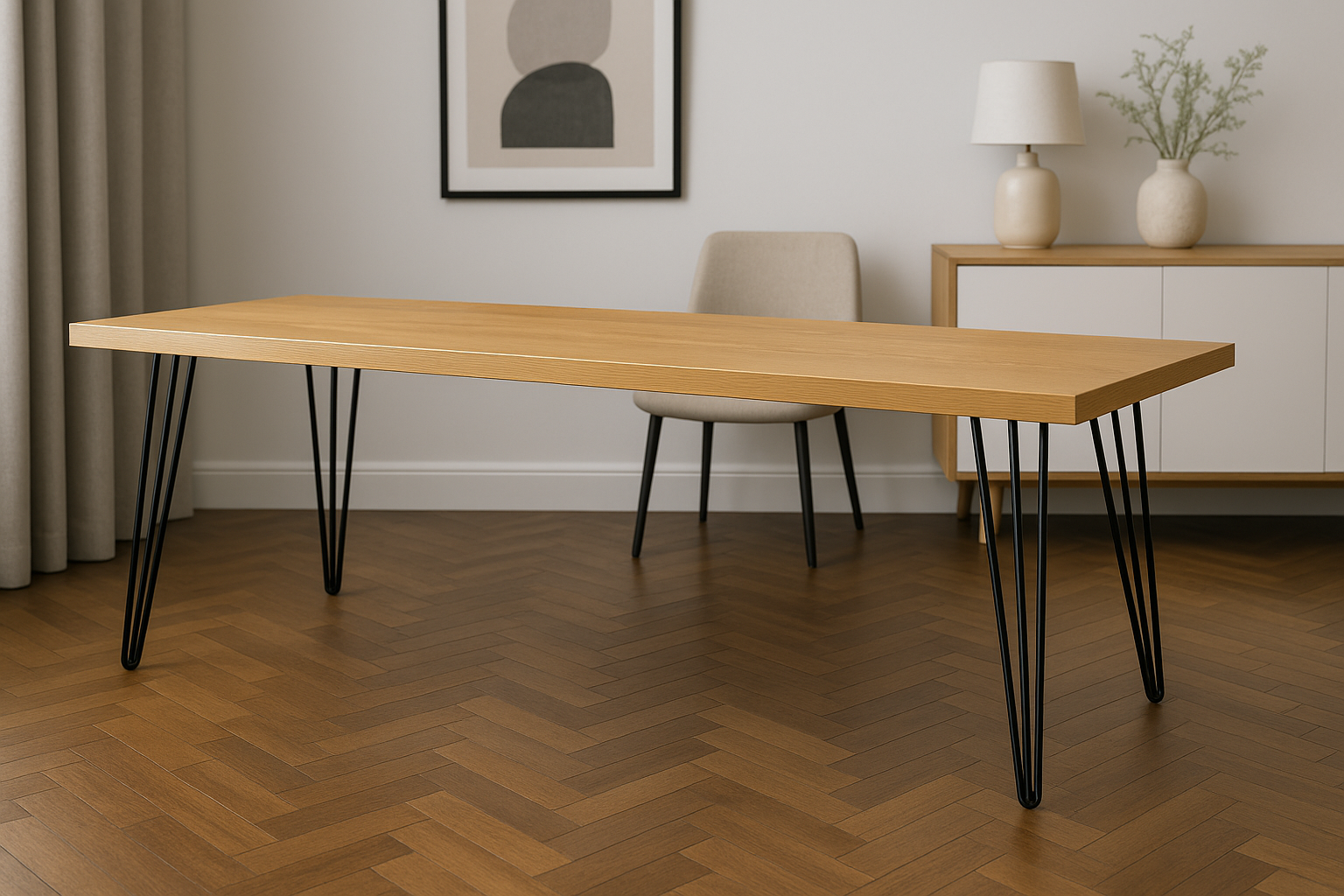
A dining table with an oak veneer top and hairpin legs has a sleek, minimal profile that suits a wide range of interiors. The steel legs are slim and refined, making the table feel light in the room, while the oak veneer surface adds natural warmth and character. This style is ideal for Scandinavian-inspired dining rooms, compact apartments where space and airiness are important, and contemporary homes that value simplicity. It can serve equally well as a family table or as a stylish centrepiece for entertaining.

What Hairpin Legs Are and How They Look

Hairpin legs are crafted from steel rod bent into a U-shape and welded to a mounting plate. Typically available with two rods for lighter uses or three rods for greater strength, they are strong while maintaining a very slender appearance. The design originated in the 1940s and has never gone out of style. On a dining table, hairpin legs keep the focus on the top while providing a modern, mid-century-inspired base that feels timeless.

Why Oak Veneer and Hairpin Legs Work Together

Oak veneer offers the natural grain and warmth of oak in a lighter, more affordable form. Because hairpin legs are slim and understated, they complement veneer perfectly, allowing the surface to take centre stage. The combination creates a balance of refinement and practicality, resulting in a table that feels elegant without being bulky. It’s an especially good option for smaller dining rooms, as the slim legs maximise visual space while still providing strength.

Choosing the Right Colour for the Legs

Hairpin legs usually come in black, white, or raw steel. Black is a classic choice that works with almost any finish of oak veneer, giving a sharp, modern contrast. White has a softer look that suits lighter interiors and makes the table feel even more airy. Raw steel adds an industrial touch but requires sealing to prevent rust. If you’d like a custom colour, the legs can be painted — sand them lightly first, then apply paint with a spray can for a smooth, even finish, sealing afterwards with a clear coat for durability.

Why Oak Veneer Differs from Solid Oak

Oak veneer is made from a thin slice of real oak bonded to a stable core such as MDF or particleboard. This gives you the beauty of natural oak grain while keeping the board light and affordable. Unlike solid oak, veneer doesn’t move with humidity and is less prone to cupping or warping. However, veneer cannot be sanded and refinished many times, and once the surface layer is damaged, it’s harder to repair. This makes it less durable for heavy use compared to solid oak.

Durability and Dining Use

Dining tables see a lot of daily wear and tear — hot plates, drinks, spills, and the occasional knock. Veneer can handle everyday use, but it won’t last as long as a solid oak surface if mistreated. The thin veneer layer is more vulnerable to scratches and chips, and once worn through it cannot be restored in the same way as hardwood. To keep a veneer dining table looking good for many years, it’s important to use placemats and coasters consistently, avoid placing hot dishes directly on the surface, and wipe spills promptly. With care, an oak veneer top will continue to look attractive, but it does require a little discipline.

Choosing Thickness for Veneered Boards

Oak veneered panels are typically available in 18mm, 22mm, or 25mm thicknesses. Eighteen millimetres is sufficient for a small table but may feel a little light on larger spans. Twenty-two millimetres is a good middle ground, while 25mm gives the table a more substantial look and reduces sagging. Because hairpin legs are slender, pairing them with a slightly thicker veneer panel creates a good balance and ensures the table feels sturdy.

Working with Veneer

Cutting veneered panels requires care to avoid chipping. A fine-tooth saw blade, pre-scoring the cut line with a sharp knife, or applying masking tape along the cut helps reduce splintering. Sanding veneer must also be done gently. Start with fine-grit sandpaper, such as 180, and avoid aggressive sanding — especially with electric sanders — as you risk going through the veneer into the core material. For edges, hand sanding is safest.

Cutting or Ordering Pre-Cut Panels

If you have the right saws, you can cut the panels yourself at home. A track saw will give the most accurate results. Always use clamps, goggles, and dust protection when cutting. If you don’t have access to quality tools, many suppliers offer veneered boards pre-cut to size. This option costs more per square metre but saves mess and ensures perfectly square edges, making assembly much easier.

Reinforcing Larger Tables

Although veneered boards are stable, longer tables can still sag over time. For dining tables over 150cm in length, consider adding a lengthwise batten or spine underneath to increase stiffness. This is especially important with hairpin legs, which don’t provide as much lateral support as heavier frames.

Positioning the Hairpin Legs

Hairpin legs should be positioned 5–8cm in from each corner to create a stable base and balanced look. Before attaching, it’s a good idea to test the layout with chairs to ensure the legs don’t interfere with seating. If the table will sit against a wall, check that the legs won’t clash with skirting boards.

Pilot Holes and Edge Treatments

When attaching the legs, always drill pilot holes into the underside of the veneered board to prevent splitting. Veneered panels often expose the core on the edges, which can be covered with iron-on edge banding for a seamless oak appearance. If you prefer a softer feel, lightly sand the edges or add a subtle chamfer, but take care not to cut through the veneer layer.

Finishing an Oak Veneer Top

Finishing not only protects the surface but also enhances the oak grain. Hardwax oil is a popular choice, leaving a natural matte finish while adding durability. Danish oil or tung oil also give warmth but may need reapplication over time. Varnishes and polyurethanes create the toughest barrier against spills and scratches, though they can look shinier than oils. For veneer, apply several thin coats and sand very lightly between applications to avoid damaging the surface.

Conclusion

A dining table with an oak veneer top and hairpin legs is a stylish, affordable, and versatile project. The oak veneer provides natural warmth and grain, while the slim steel legs keep the design light and modern. It’s a table that works beautifully in contemporary, Scandinavian, and minimalist interiors. While veneer won’t last as long as solid oak under heavy wear, with the regular use of placemats and coasters it can serve you well for many years.

By choosing the right thickness of board, cutting carefully or ordering pre-cut, reinforcing longer spans, sanding lightly, and applying a thoughtful finish, you can create a table that looks professional and feels elegant without breaking the bank. It’s proof that with smart material choices, you can have the beauty of oak and the style of hairpin legs in a piece of furniture you’ll be proud to gather around.

Posted on

How to Make a Dining Table with an Oak Veneer Top and Steel Box Section Legs

A dining table is one of the most used and loved pieces of furniture in any home. It’s where meals are shared, work is done, and conversations happen. Building your own dining table gives you the opportunity to choose materials that fit your style and budget while creating something unique. One practical and stylish option is to pair an oak veneer top with steel box section legs. This combination gives you the look of natural oak with the strength and stability of steel, creating a table that feels modern, functional, and elegant.

The Style of the Table and Where It Belongs

A dining table made with oak veneer and box section steel legs has a sleek, contemporary look. The steel brings bold, geometric lines, while the oak veneer offers the warmth and grain of real wood. Together, they create a table that works well in modern apartments, minimalist dining rooms, and Scandinavian-inspired spaces. It’s versatile enough to serve as both a family table and a stylish centrepiece for entertaining guests.

What Box Section Steel Legs Are and How They Look

Box section legs are made from hollow rectangular or square steel tubing welded into rigid frames. Their clean, architectural lines give the table a grounded, structured look. They are incredibly strong, which makes them an ideal partner for veneered panels that need reliable support. Unlike slimmer hairpin legs, box section frames add substance and presence, making the dining table feel professional and substantial.

Why Oak Veneer and Steel Are a Good Match

Oak veneer is a thin layer of real oak bonded to a stable core such as MDF or particleboard. This makes it lighter and more affordable than solid oak, while still offering the appearance of natural grain. Steel box section legs balance the lightness of the veneer by adding strength and visual weight. The combination creates a modern piece of furniture that blends natural warmth with industrial sharpness, striking the right balance between style and practicality.

Choosing the Right Colour for the Legs

The colour of your legs sets the tone for the whole table. Black is the classic choice, providing contrast with the oak veneer and suiting almost any setting. White feels lighter and fresher, ideal for bright, modern spaces. Raw steel has a raw industrial edge but must be sealed to avoid rust. If you want a custom colour, you can paint the legs yourself — sanding first to help adhesion and then applying paint by spray or brush. A protective topcoat will extend durability.

Why Oak Veneer Differs from Solid Oak

Oak veneer is a clever compromise between solid wood and cheaper laminates. Unlike laminate, which is only a printed pattern, veneer is made from thin slices of real oak, giving you authentic grain and texture. Unlike solid oak, it is bonded to a stable substrate, which means it doesn’t warp or move with humidity in the same way. However, veneer has its limitations: because the top layer is thin, it cannot be sanded and refinished repeatedly, and once damaged it is more difficult to repair.

Durability and Daily Use

It’s important to understand how oak veneer performs in real life. Dining tables are subject to constant wear and tear — hot plates, spills, knocks, and scratches. While a solid oak table can be sanded and refinished many times, a veneered table top will not last as long if it is heavily used. Veneer can chip or wear through if mistreated. The key to making an oak veneer dining table last is to use placemats and coasters regularly, avoid putting hot items directly on the surface, and wipe up spills quickly. With care, a veneer top can stay beautiful for many years, but it requires more protection than solid wood.

Choosing the Thickness of Veneered Boards

Veneered panels are typically available in thicknesses of 18mm, 22mm, or 25mm. Thicker panels give the table a more substantial look and help prevent sagging, particularly on larger dining tables. Eighteen millimetres is fine for smaller tables, while 22mm or 25mm is a better choice for longer spans where extra strength is needed. Because veneer panels are lighter than solid oak, opting for a thicker size is often a good idea to create a sturdy, premium feel.

The Realities of Working with Veneer

Veneer is attractive but requires care during preparation. Because the surface layer is thin, sanding must be done very lightly to avoid going through to the substrate. Cutting veneer can also be tricky because of the risk of chipping along the edges. Using a fine-tooth blade, scoring the cut line with a knife, or applying masking tape along the cut can help minimise damage. Veneer doesn’t have the same depth of character as solid oak, but it still offers a convincing oak look at a lower price.

Cutting and Preparing the Top

If you decide to cut your veneered board yourself, use a track saw for the most accurate results. A fine-tooth circular saw blade can also work, but precision is important. Always wear goggles, hearing protection, and a dust mask. If you don’t have access to good tools, many suppliers sell veneered boards pre-cut to size, saving you the trouble of cutting while ensuring clean, professional edges.

Reinforcing Longer Tables

Although veneered boards are stable, they can still sag under heavy use over long spans. For dining tables longer than 150cm, it’s wise to add a lengthwise batten or spine underneath for reinforcement. This simple step prevents sagging and helps the table stay sturdy over time.

Positioning the Box Section Legs

Box section legs should be positioned about 5–8cm in from each end of the table for stability and balance. If the table will be placed against a wall, check that the legs won’t clash with skirting boards. It’s also important to test with chairs to ensure the frames don’t obstruct comfortable seating.

Sanding Oak Veneer

Sanding veneer requires a delicate touch. Start with fine sandpaper, around 180 grit, and sand lightly with the grain. Avoid aggressive sanding, especially with power tools, to prevent going through the veneer layer. For edges, hand sanding is safest. The goal is simply to smooth the surface and prepare it for finishing, not to remove material.

Pilot Holes and Edge Treatments

When attaching the legs, always drill pilot holes to prevent the substrate from splitting. Edges of veneered boards often expose the core material, which can be softened with sanding or finished with iron-on edge banding for a seamless oak appearance. If you want to add a profile, a very subtle chamfer or rounded edge is possible, but it must be done with care because the veneer layer is thin.

Finishing the Veneer Top

Finishing protects the surface and enhances the oak grain. Hardwax oil is a great option, leaving a natural matte finish and providing reasonable durability. Danish oil or tung oil add warmth and depth but may need reapplying. Varnishes and polyurethanes create the toughest surface, protecting against stains and scratches, though they can sometimes look shinier than oils. For veneer, thin, careful coats are best, and sanding between coats should be done very lightly.

Conclusion

A dining table with an oak veneer top and steel box section legs is a stylish and cost-effective project. It combines the natural beauty of oak with the strength and clean lines of steel, creating a piece that works well in modern and minimalist interiors. Veneer offers affordability and stability, though it does require care: unlike solid oak, it cannot be endlessly refinished, and it will only stay looking good if you protect it from daily wear with placemats and coasters.

With careful planning, accurate cutting or pre-cut panels, light sanding, and a protective finish, you can create a dining table that looks modern and elegant while being practical for everyday use. It may not have the lifespan of a solid oak table, but treated with respect, it can serve your home beautifully for many years.

Posted on

How to Make a Dining Table with an Oak Top and Steel Box Section Legs

A dining table is more than just a surface; it’s the heart of the home, where meals are shared and conversations linger. Building your own table is a rewarding project, giving you the chance to combine strength, beauty, and practicality in a way that fits your space perfectly. One of the most popular designs today combines a solid oak top with steel box section legs. This pairing creates a table that is modern yet timeless, balancing the warmth of natural wood with the bold geometry of steel.

The Style of the Table and Where It Belongs

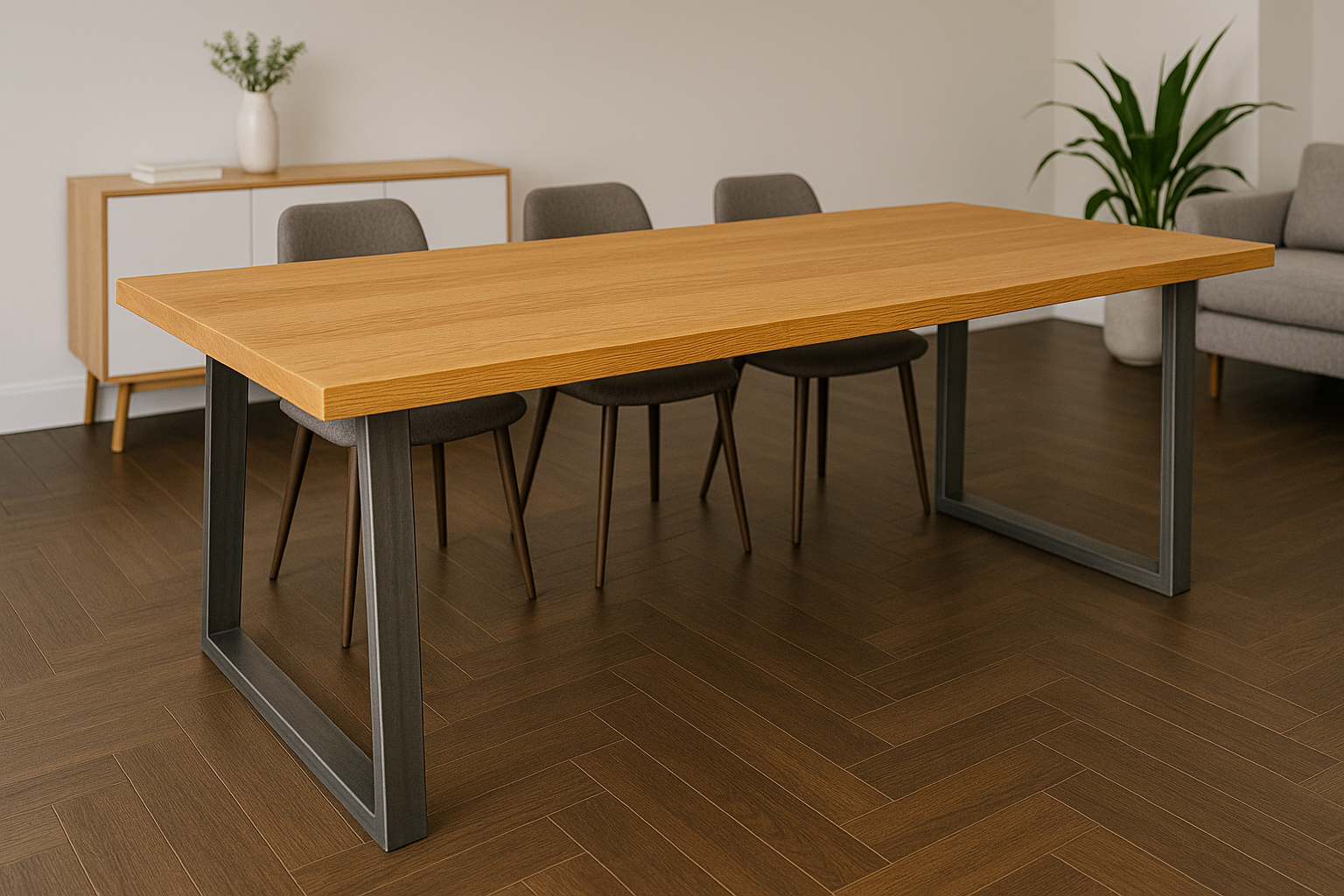
A dining table with a solid oak top and box section steel legs has a strong, architectural style that works beautifully in a range of interiors. The steel frames provide a bold, grounded presence, while the oak top adds richness and warmth. This combination is perfectly suited to industrial lofts, modern rustic homes, and contemporary apartments, but it also works in traditional settings because oak has such a classic, enduring appeal. Whether in a family kitchen or a stylish dining room, the table looks substantial, professional, and elegant.

What Box Section Steel Legs Are and How They Look

Box section legs are made from square or rectangular hollow steel tubing welded into a rigid frame. Their geometric shape gives them clean, sharp lines, making them a striking counterpoint to the organic flow of wood grain. They are available in rectangular frames, trapezoids, and other custom shapes, offering flexibility in style while maintaining strength. Unlike slim hairpin legs, box section legs have a bold, structural quality that makes the table feel solid and professional.

Why Oak and Steel Work So Well Together

Oak is one of the most valued hardwoods, known for its durability, strength, and timeless grain patterns. Paired with steel, its natural beauty is elevated by contrast. The steel legs prevent the oak from looking too rustic or heavy, while the oak top stops the steel from feeling too cold or industrial. Together they strike a balance between tradition and modernity, creating a piece that feels contemporary yet rooted in craftsmanship. This balance of materials is what makes the oak-and-steel dining table such a popular choice for today’s interiors.

Choosing the Right Colour for the Legs

The colour of your steel legs can change the feel of the entire table. Black is classic and versatile, pairing beautifully with both light and dark oak finishes. White offers a lighter, fresher look that suits Scandinavian and minimalist interiors. Raw steel has an industrial edge but usually requires sealing to prevent rust. If you want something unique, you can paint the legs in a colour of your choice. Sand them lightly before painting to help the coating adhere, then apply with either a brush or spray. Spraying tends to give the smoothest finish, while a clear topcoat will protect the legs from scratches and marks.

Choosing the Thickness of the Oak

The thickness of the oak top determines both the table’s appearance and performance. Common sizes include 19mm, 24mm, 27mm, 30mm, and 40mm. Nineteen millimetres gives a sleek, modern profile but may need reinforcement on longer spans. Twenty-four millimetres is often the best balance between cost, weight, and strength, while 27mm and 30mm feel more substantial without being unwieldy. At 40mm, the table becomes bold and chunky, making a dramatic statement but also adding considerable weight. For dining tables, most people find 24mm or 27mm a good compromise.

The Realities of Using Solid Oak

Oak is a natural hardwood, so you should expect variations. Knots, medullary rays, and changes in tone are common and contribute to its character. Some suppliers offer prime oak, which has fewer knots and a more uniform look, while character oak celebrates all the natural quirks. Both grades make beautiful tables — it simply depends on whether you prefer a more refined or more rustic aesthetic.

Cutting the Oak to Size

If you plan to cut your oak top yourself, precision is important. A circular saw fitted with a fine-tooth blade can handle the job, but a track saw will give the straightest, cleanest results. Always measure carefully, mark clearly, and cut slowly. Oak is dense and produces fine dust, so use goggles, a dust mask, and hearing protection. Dust extraction is also recommended. If you don’t have the tools or prefer convenience, many suppliers offer oak tops pre-cut to size, saving you time, effort, and mess.

Preventing Cupping and Sagging

Like all wood, oak responds to humidity. Seasonal changes can cause the boards to cup slightly, where the edges curve upward or downward. To reduce this, you can attach bars across the underside running perpendicular to the grain. Wooden battens screwed into place are simple and effective, while metal bars routed into the underside provide greater reinforcement but require more skill and expense. For dining tables longer than 150cm, adding a lengthwise batten or “spine” underneath helps prevent sagging in the middle.

Positioning the Box Section Legs

The placement of the legs is crucial to both stability and comfort. Position them about 5–8cm in from each end of the table for a balanced look. If your table will be placed against a wall, make sure the legs don’t clash with skirting boards. It’s also a good idea to test legroom with chairs before fixing the legs permanently, since box section frames take up more space than slimmer designs.

Sanding the Oak

Sanding prepares the oak surface for finishing and ensures it is smooth and comfortable to use. Begin with a medium grit such as 120 and work up to 180 or 240 for a polished surface. Always sand with the grain to avoid scratches. An electric sander will speed up the process, but hand sanding is equally effective if you prefer a traditional approach or don’t own power tools. A little extra attention to the edges and corners will make the table more pleasant to use.

Pilot Holes and Edge Profiles

Before attaching the legs, drill pilot holes into the underside of the oak. This prevents splitting and makes it easier to insert screws cleanly. For the edges, you can add detail with a router, such as a chamfer, bevel, or round-over, or you can simply ease the corners with sandpaper. Even subtle shaping improves comfort and gives the table a professional finish.

Finishing the Oak Top

A finish protects the oak from spills and enhances its natural beauty. Hardwax oil is a popular choice for dining tables, providing a matte, natural look while highlighting the grain. Danish oil and tung oil also work well, deepening the wood’s colour and adding warmth, though they may need occasional reapplication. Varnishes and polyurethanes create the most durable surface, protecting against stains and scratches, though they can sometimes appear shinier than oils. Apply multiple thin coats, sanding lightly between applications, to achieve a smooth, resilient finish.

Conclusion

A dining table with a solid oak top and steel box section legs combines durability, modern design, and timeless character. The oak provides warmth and tradition, while the steel adds structure and a contemporary edge. By choosing the right thickness, cutting carefully or ordering pre-cut, reinforcing against natural movement, sanding thoroughly, and finishing thoughtfully, you can create a table that looks professional and lasts for many years.

This style is ideal if you want a piece that feels bold, substantial, and versatile. It is a table that works as well in a modern loft as in a rustic home, proving that oak and steel are a partnership that never goes out of fashion.

Posted on

How to Make a Dining Table with Hairpin Legs and a Solid Oak Top

There’s something deeply satisfying about building your own furniture, and few projects are as rewarding as making a dining table. A table is more than just a surface; it’s a place where family and friends gather, where meals are shared, and where memories are made. One of the most popular modern designs combines slim steel hairpin legs with a solid oak top, giving you a table that is both timeless and contemporary. It’s a piece of furniture that balances warmth and strength while remaining versatile enough to suit a wide variety of interiors.

The Style of the Table and Where It Belongs

A dining table made with hairpin legs and a solid oak top has a character that feels minimal yet inviting. The thin steel legs provide a lightness that prevents the table from overwhelming a room, while the oak top introduces depth, texture, and natural warmth. This style of table works beautifully in Scandinavian-inspired homes where pale woods and clean lines dominate, but it also looks right at home in industrial lofts with exposed brick and concrete. In modern family homes, it strikes the right balance between practicality and design, while in mid-century spaces it pays homage to the 1940s origins of the hairpin leg.

What Hairpin Legs Are and Why They Work

Hairpin legs are crafted from bent steel rod, usually welded into a U-shape and attached to a mounting plate. They are available with two rods for lighter use or three rods for greater strength. Originally designed during the mid-20th century, they remain popular because of their slim, elegant profile and their ability to hold substantial weight without looking bulky. On a dining table, they give the oak top a sense of lightness and ensure that the focus stays on the wood itself.

Why Hairpin Legs Combine Well with Solid Oak

Oak is a dense hardwood that brings richness and durability to a table. Without careful pairing, though, an oak top can sometimes look overly heavy. Hairpin legs provide the perfect counterbalance: they are thin, refined, and almost disappear visually, allowing the oak to shine. The combination is one of strength and contrast — the rugged, timeless look of oak softened by the minimal elegance of steel. Together, they make a dining table that feels substantial but not overpowering.

Choosing the Right Colour for the Legs

The finish of your hairpin legs has a big impact on the look of the table. Black is the most classic and versatile option, working well with both light and dark oak finishes. White creates a fresher, airier feel that suits bright, minimal interiors. Raw steel has a raw industrial character but requires sealing to prevent rust. If you want something more customised, the legs can be painted in a colour of your choice. Lightly sanding them first helps paint adhere, and either brushing or spraying can be used depending on the finish you want. Spraying generally gives the smoothest result, while brushing allows for easy touch-ups. Adding a protective clear coat improves durability.

Why Solid Oak Stands Out from Cheaper Alternatives

Unlike laminated or veneered products, solid oak is consistent all the way through. It can be sanded, refinished, and repaired many times, giving it a lifespan that can stretch across decades. Laminated boards may look convincing at first but are prone to chipping and cannot be restored once damaged. Veneered panels offer a real wood surface but are limited by their thin top layer, which wears down over time. Oak, on the other hand, has a natural strength and presence that elevates a dining table, making it an investment as well as a functional piece of furniture.

Choosing the Thickness of the Oak Top

The thickness of the oak you choose will affect both the table’s performance and its appearance. Typical sizes from timber suppliers include 19mm, 24mm, 27mm, 30mm, and 40mm. A 19mm top feels sleek but may need reinforcement for longer spans. Twenty-four millimetres is often the best compromise between strength, price, and weight, while 27mm and 30mm look more substantial without being overly heavy. At 40mm, the table will be chunky, dramatic, and very solid, though the weight makes handling and assembly more challenging. The thicker the top, the less likely it is to sag, and the more premium it will look in a dining room.

The Realities of Working with Oak

Oak is a natural material, and with that comes character. Expect knots, variations in colour, and distinctive medullary rays, which appear as pale streaks across the grain. These features give oak its timeless look, though if you prefer a cleaner appearance, many suppliers offer prime-grade oak with fewer knots. Character-grade oak, on the other hand, embraces all the natural quirks. Neither option is better than the other — it simply depends on whether you want rustic charm or refined consistency.

Cutting the Oak to Size

If you plan to cut the oak yourself, accuracy is key. A circular saw with a fine-tooth blade is suitable, but a track saw will give you the most precise and straight cuts. Always measure carefully, mark clearly, and cut slowly. Because oak is dense and produces fine dust, wear safety goggles, a dust mask, and hearing protection, and if possible, use dust extraction. If you don’t own the right saws or want a cleaner, simpler process, many suppliers will cut oak tops to size for you. This ensures accurate dimensions and reduces both waste and mess, though it adds slightly to the cost.

Preventing Cupping and Sagging

As a natural hardwood, oak moves with changes in humidity. Over time, this can cause boards to cup, where the edges rise or fall slightly. To help prevent this, many makers attach bars across the underside of the table running perpendicular to the grain. These can be wooden battens screwed into place or metal bars routed into the underside. Wooden strips are simple and affordable, while metal is stronger but more expensive and requires more skill to fit. For dining tables longer than 150cm, it’s also wise to add a lengthwise batten or “spine” underneath to prevent sagging.

Positioning the Hairpin Legs

When it comes to attaching the legs, place them around 5–8cm in from the corners of the table. This ensures the table is stable without the legs sticking out awkwardly. If the table will be placed against a wall, make sure the legs don’t clash with skirting boards. It’s also a good idea to test the placement with chairs before fixing, as you’ll want to avoid having table legs that interfere with seating.

Sanding the Oak

Sanding prepares the oak surface for finishing and brings out its natural beauty. Start with a medium grit such as 120 and work up to 180 or 240 for a silky finish. Always sand with the grain to avoid scratches. An electric sander is the quickest way to achieve a smooth surface, but hand sanding is equally effective if you prefer a more traditional approach. Even lightly easing the edges with sandpaper makes the table more comfortable to use and gives it a professional finish.

Pilot Holes and Edge Profiles

Before attaching the legs, drill pilot holes into the underside of the oak. This prevents the wood from splitting and makes it easier to drive the screws cleanly. For the edges, you can use a router to create a chamfer, bevel, or rounded profile, or simply ease them by hand with sandpaper. Even subtle shaping makes the table more inviting and comfortable to use.

Finishing the Oak Top

Finishing is essential to protect the oak from spills and to highlight its grain. Hardwax oil is a popular choice for dining tables because it is easy to apply, enhances the natural beauty of the wood, and leaves a durable, matte finish. Danish oil or tung oil can also be used, giving a warmer tone and deepening the wood’s character, though they may need reapplying periodically. Varnishes and polyurethanes provide the toughest protection against stains and scratches, though they can sometimes look shinier than oils. For best results, apply several thin coats, sanding lightly between each one.

Conclusion

A dining table with hairpin legs and a solid oak top is a project that combines elegance, strength, and timeless style. The oak provides natural warmth and character, while the steel legs keep the table modern and refined. By choosing the right thickness of oak, preparing it carefully, reinforcing it where needed, and finishing it thoughtfully, you can create a table that looks professional, feels sturdy, and becomes a centrepiece in your home for years to come.

Whether your style leans towards minimal Scandinavian, bold industrial, or modern rustic, this combination is versatile enough to fit seamlessly. It’s a table that celebrates both the simplicity of steel and the richness of wood — a balance that makes for a piece you’ll be proud to gather around every day.