A dining table is one of the most used and loved pieces of furniture in any home. It’s where meals are shared, work is done, and conversations happen. Building your own dining table gives you the opportunity to choose materials that fit your style and budget while creating something unique. One practical and stylish option is to pair an oak veneer top with steel box section legs. This combination gives you the look of natural oak with the strength and stability of steel, creating a table that feels modern, functional, and elegant.
The Style of the Table and Where It Belongs
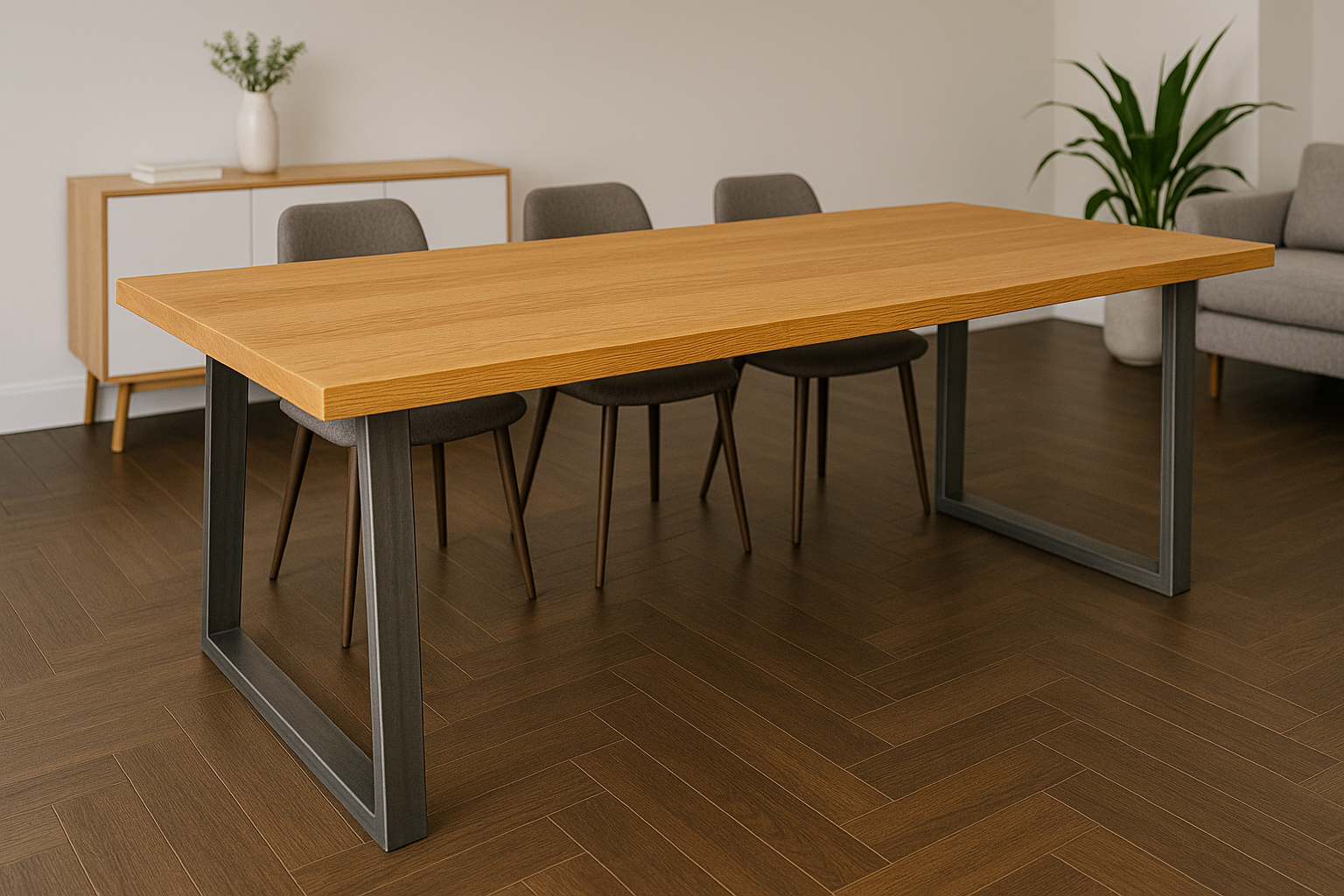
A dining table made with oak veneer and box section steel legs has a sleek, contemporary look. The steel brings bold, geometric lines, while the oak veneer offers the warmth and grain of real wood. Together, they create a table that works well in modern apartments, minimalist dining rooms, and Scandinavian-inspired spaces. It’s versatile enough to serve as both a family table and a stylish centrepiece for entertaining guests.
What Box Section Steel Legs Are and How They Look
Box section legs are made from hollow rectangular or square steel tubing welded into rigid frames. Their clean, architectural lines give the table a grounded, structured look. They are incredibly strong, which makes them an ideal partner for veneered panels that need reliable support. Unlike slimmer hairpin legs, box section frames add substance and presence, making the dining table feel professional and substantial.
Why Oak Veneer and Steel Are a Good Match
Oak veneer is a thin layer of real oak bonded to a stable core such as MDF or particleboard. This makes it lighter and more affordable than solid oak, while still offering the appearance of natural grain. Steel box section legs balance the lightness of the veneer by adding strength and visual weight. The combination creates a modern piece of furniture that blends natural warmth with industrial sharpness, striking the right balance between style and practicality.
Choosing the Right Colour for the Legs
The colour of your legs sets the tone for the whole table. Black is the classic choice, providing contrast with the oak veneer and suiting almost any setting. White feels lighter and fresher, ideal for bright, modern spaces. Raw steel has a raw industrial edge but must be sealed to avoid rust. If you want a custom colour, you can paint the legs yourself — sanding first to help adhesion and then applying paint by spray or brush. A protective topcoat will extend durability.
Why Oak Veneer Differs from Solid Oak
Oak veneer is a clever compromise between solid wood and cheaper laminates. Unlike laminate, which is only a printed pattern, veneer is made from thin slices of real oak, giving you authentic grain and texture. Unlike solid oak, it is bonded to a stable substrate, which means it doesn’t warp or move with humidity in the same way. However, veneer has its limitations: because the top layer is thin, it cannot be sanded and refinished repeatedly, and once damaged it is more difficult to repair.
Durability and Daily Use
It’s important to understand how oak veneer performs in real life. Dining tables are subject to constant wear and tear — hot plates, spills, knocks, and scratches. While a solid oak table can be sanded and refinished many times, a veneered table top will not last as long if it is heavily used. Veneer can chip or wear through if mistreated. The key to making an oak veneer dining table last is to use placemats and coasters regularly, avoid putting hot items directly on the surface, and wipe up spills quickly. With care, a veneer top can stay beautiful for many years, but it requires more protection than solid wood.
Choosing the Thickness of Veneered Boards
Veneered panels are typically available in thicknesses of 18mm, 22mm, or 25mm. Thicker panels give the table a more substantial look and help prevent sagging, particularly on larger dining tables. Eighteen millimetres is fine for smaller tables, while 22mm or 25mm is a better choice for longer spans where extra strength is needed. Because veneer panels are lighter than solid oak, opting for a thicker size is often a good idea to create a sturdy, premium feel.
The Realities of Working with Veneer
Veneer is attractive but requires care during preparation. Because the surface layer is thin, sanding must be done very lightly to avoid going through to the substrate. Cutting veneer can also be tricky because of the risk of chipping along the edges. Using a fine-tooth blade, scoring the cut line with a knife, or applying masking tape along the cut can help minimise damage. Veneer doesn’t have the same depth of character as solid oak, but it still offers a convincing oak look at a lower price.
Cutting and Preparing the Top
If you decide to cut your veneered board yourself, use a track saw for the most accurate results. A fine-tooth circular saw blade can also work, but precision is important. Always wear goggles, hearing protection, and a dust mask. If you don’t have access to good tools, many suppliers sell veneered boards pre-cut to size, saving you the trouble of cutting while ensuring clean, professional edges.
Reinforcing Longer Tables
Although veneered boards are stable, they can still sag under heavy use over long spans. For dining tables longer than 150cm, it’s wise to add a lengthwise batten or spine underneath for reinforcement. This simple step prevents sagging and helps the table stay sturdy over time.
Positioning the Box Section Legs
Box section legs should be positioned about 5–8cm in from each end of the table for stability and balance. If the table will be placed against a wall, check that the legs won’t clash with skirting boards. It’s also important to test with chairs to ensure the frames don’t obstruct comfortable seating.
Sanding Oak Veneer
Sanding veneer requires a delicate touch. Start with fine sandpaper, around 180 grit, and sand lightly with the grain. Avoid aggressive sanding, especially with power tools, to prevent going through the veneer layer. For edges, hand sanding is safest. The goal is simply to smooth the surface and prepare it for finishing, not to remove material.
Pilot Holes and Edge Treatments
When attaching the legs, always drill pilot holes to prevent the substrate from splitting. Edges of veneered boards often expose the core material, which can be softened with sanding or finished with iron-on edge banding for a seamless oak appearance. If you want to add a profile, a very subtle chamfer or rounded edge is possible, but it must be done with care because the veneer layer is thin.
Finishing the Veneer Top
Finishing protects the surface and enhances the oak grain. Hardwax oil is a great option, leaving a natural matte finish and providing reasonable durability. Danish oil or tung oil add warmth and depth but may need reapplying. Varnishes and polyurethanes create the toughest surface, protecting against stains and scratches, though they can sometimes look shinier than oils. For veneer, thin, careful coats are best, and sanding between coats should be done very lightly.
Conclusion
A dining table with an oak veneer top and steel box section legs is a stylish and cost-effective project. It combines the natural beauty of oak with the strength and clean lines of steel, creating a piece that works well in modern and minimalist interiors. Veneer offers affordability and stability, though it does require care: unlike solid oak, it cannot be endlessly refinished, and it will only stay looking good if you protect it from daily wear with placemats and coasters.
With careful planning, accurate cutting or pre-cut panels, light sanding, and a protective finish, you can create a dining table that looks modern and elegant while being practical for everyday use. It may not have the lifespan of a solid oak table, but treated with respect, it can serve your home beautifully for many years.
