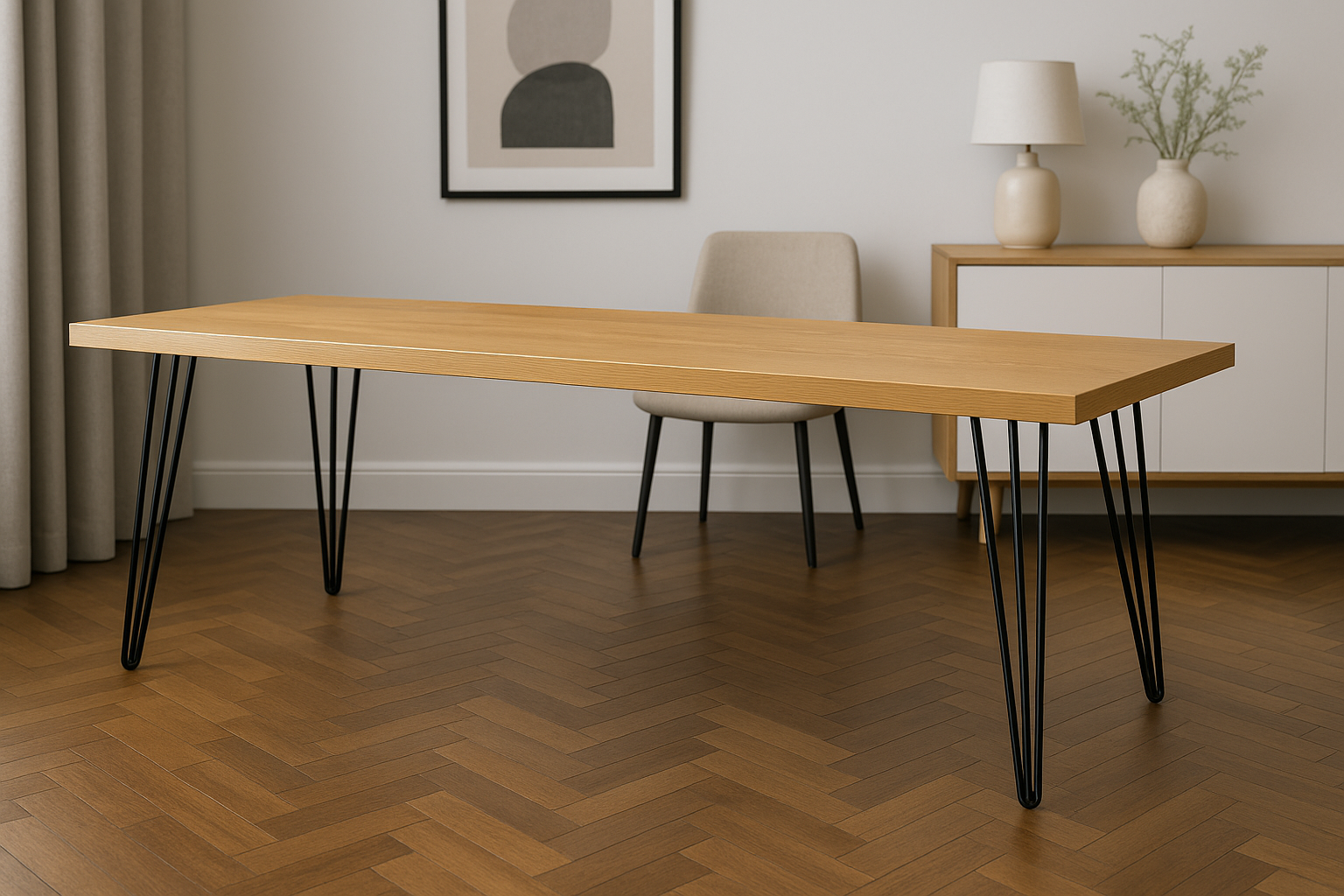
Building your own dining table is a rewarding project that gives you a stylish, practical piece of furniture without the price tag of high-end designer pieces. A particularly attractive option for many DIY makers is to combine an oak veneer top with slim hairpin legs. This pairing creates a table that feels modern, elegant, and versatile, offering the warmth of real wood grain balanced by the lightness of steel.
The Style of the Table and Where It Belongs
A dining table with an oak veneer top and hairpin legs has a sleek, minimal profile that suits a wide range of interiors. The steel legs are slim and refined, making the table feel light in the room, while the oak veneer surface adds natural warmth and character. This style is ideal for Scandinavian-inspired dining rooms, compact apartments where space and airiness are important, and contemporary homes that value simplicity. It can serve equally well as a family table or as a stylish centrepiece for entertaining.
What Hairpin Legs Are and How They Look
Hairpin legs are crafted from steel rod bent into a U-shape and welded to a mounting plate. Typically available with two rods for lighter uses or three rods for greater strength, they are strong while maintaining a very slender appearance. The design originated in the 1940s and has never gone out of style. On a dining table, hairpin legs keep the focus on the top while providing a modern, mid-century-inspired base that feels timeless.
Why Oak Veneer and Hairpin Legs Work Together
Oak veneer offers the natural grain and warmth of oak in a lighter, more affordable form. Because hairpin legs are slim and understated, they complement veneer perfectly, allowing the surface to take centre stage. The combination creates a balance of refinement and practicality, resulting in a table that feels elegant without being bulky. It’s an especially good option for smaller dining rooms, as the slim legs maximise visual space while still providing strength.
Choosing the Right Colour for the Legs
Hairpin legs usually come in black, white, or raw steel. Black is a classic choice that works with almost any finish of oak veneer, giving a sharp, modern contrast. White has a softer look that suits lighter interiors and makes the table feel even more airy. Raw steel adds an industrial touch but requires sealing to prevent rust. If you’d like a custom colour, the legs can be painted — sand them lightly first, then apply paint with a spray can for a smooth, even finish, sealing afterwards with a clear coat for durability.
Why Oak Veneer Differs from Solid Oak
Oak veneer is made from a thin slice of real oak bonded to a stable core such as MDF or particleboard. This gives you the beauty of natural oak grain while keeping the board light and affordable. Unlike solid oak, veneer doesn’t move with humidity and is less prone to cupping or warping. However, veneer cannot be sanded and refinished many times, and once the surface layer is damaged, it’s harder to repair. This makes it less durable for heavy use compared to solid oak.
Durability and Dining Use
Dining tables see a lot of daily wear and tear — hot plates, drinks, spills, and the occasional knock. Veneer can handle everyday use, but it won’t last as long as a solid oak surface if mistreated. The thin veneer layer is more vulnerable to scratches and chips, and once worn through it cannot be restored in the same way as hardwood. To keep a veneer dining table looking good for many years, it’s important to use placemats and coasters consistently, avoid placing hot dishes directly on the surface, and wipe spills promptly. With care, an oak veneer top will continue to look attractive, but it does require a little discipline.
Choosing Thickness for Veneered Boards
Oak veneered panels are typically available in 18mm, 22mm, or 25mm thicknesses. Eighteen millimetres is sufficient for a small table but may feel a little light on larger spans. Twenty-two millimetres is a good middle ground, while 25mm gives the table a more substantial look and reduces sagging. Because hairpin legs are slender, pairing them with a slightly thicker veneer panel creates a good balance and ensures the table feels sturdy.
Working with Veneer
Cutting veneered panels requires care to avoid chipping. A fine-tooth saw blade, pre-scoring the cut line with a sharp knife, or applying masking tape along the cut helps reduce splintering. Sanding veneer must also be done gently. Start with fine-grit sandpaper, such as 180, and avoid aggressive sanding — especially with electric sanders — as you risk going through the veneer into the core material. For edges, hand sanding is safest.
Cutting or Ordering Pre-Cut Panels
If you have the right saws, you can cut the panels yourself at home. A track saw will give the most accurate results. Always use clamps, goggles, and dust protection when cutting. If you don’t have access to quality tools, many suppliers offer veneered boards pre-cut to size. This option costs more per square metre but saves mess and ensures perfectly square edges, making assembly much easier.
Reinforcing Larger Tables
Although veneered boards are stable, longer tables can still sag over time. For dining tables over 150cm in length, consider adding a lengthwise batten or spine underneath to increase stiffness. This is especially important with hairpin legs, which don’t provide as much lateral support as heavier frames.
Positioning the Hairpin Legs
Hairpin legs should be positioned 5–8cm in from each corner to create a stable base and balanced look. Before attaching, it’s a good idea to test the layout with chairs to ensure the legs don’t interfere with seating. If the table will sit against a wall, check that the legs won’t clash with skirting boards.
Pilot Holes and Edge Treatments
When attaching the legs, always drill pilot holes into the underside of the veneered board to prevent splitting. Veneered panels often expose the core on the edges, which can be covered with iron-on edge banding for a seamless oak appearance. If you prefer a softer feel, lightly sand the edges or add a subtle chamfer, but take care not to cut through the veneer layer.
Finishing an Oak Veneer Top
Finishing not only protects the surface but also enhances the oak grain. Hardwax oil is a popular choice, leaving a natural matte finish while adding durability. Danish oil or tung oil also give warmth but may need reapplication over time. Varnishes and polyurethanes create the toughest barrier against spills and scratches, though they can look shinier than oils. For veneer, apply several thin coats and sand very lightly between applications to avoid damaging the surface.
Conclusion
A dining table with an oak veneer top and hairpin legs is a stylish, affordable, and versatile project. The oak veneer provides natural warmth and grain, while the slim steel legs keep the design light and modern. It’s a table that works beautifully in contemporary, Scandinavian, and minimalist interiors. While veneer won’t last as long as solid oak under heavy wear, with the regular use of placemats and coasters it can serve you well for many years.
By choosing the right thickness of board, cutting carefully or ordering pre-cut, reinforcing longer spans, sanding lightly, and applying a thoughtful finish, you can create a table that looks professional and feels elegant without breaking the bank. It’s proof that with smart material choices, you can have the beauty of oak and the style of hairpin legs in a piece of furniture you’ll be proud to gather around.
