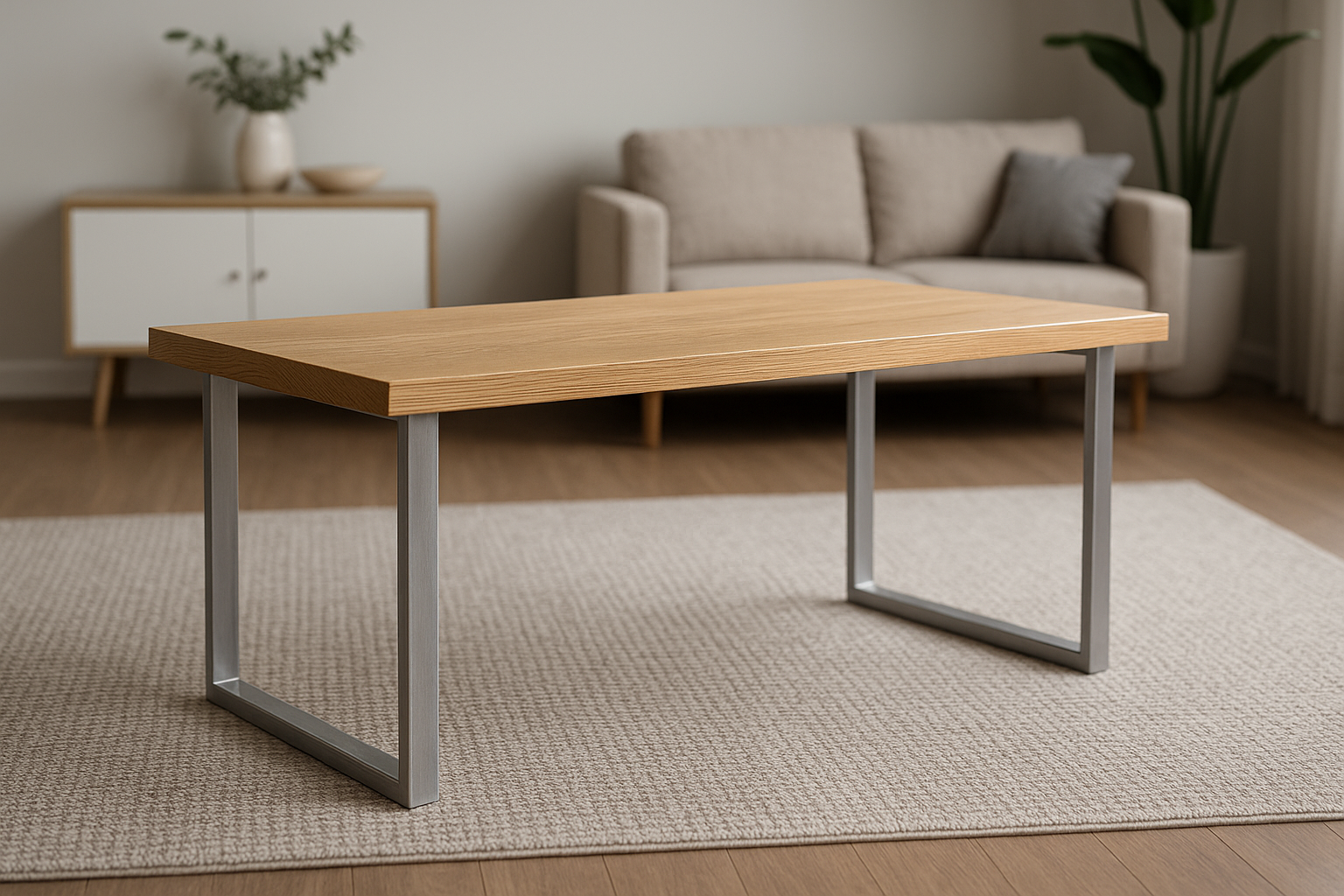
A coffee table is more than just somewhere to put your mug down — it’s a centrepiece of the living room, a hub for books, snacks, remote controls, and often the first piece of furniture guests notice when they walk in. Building one yourself allows you to create something sturdy, beautiful, and tailored to your space. Among the most stylish and durable designs is a solid oak top paired with steel box section legs. This combination marries the timeless appeal of hardwood with the clean, geometric strength of steel, producing a coffee table that looks contemporary but feels built to last.
The Style of the Coffee Table and Where It Belongs
Oak paired with steel is a design combination that balances natural warmth with industrial edge. A solid oak top brings grain, depth, and richness, while box section steel legs give the table structure and sharp lines. Together, they create a coffee table that feels modern yet timeless.
This design is particularly at home in urban lofts, where exposed brick and steel details suit the industrial look. It also works in Scandinavian-inspired homes, where oak’s warmth offsets the minimalism of steel. In modern family living rooms, it provides both strength and style — able to withstand daily use while still looking refined. Whether your décor leans rustic, industrial, or contemporary, this table fits in seamlessly.
What Box Section Steel Legs Are and How They Look
Box section legs are made from hollow steel tubing, either square or rectangular, welded into rigid frames. Their sharp geometry contrasts beautifully with the organic softness of wood grain. They’re often available in trapezoid, rectangular, or even custom shapes, giving you flexibility in the look of the table.
On a coffee table, box section legs make a bold statement. Unlike slim hairpin legs, which tend to disappear into the background, box section legs have visual weight. They anchor the table firmly to the floor, making it feel substantial and professional.
Why Solid Oak and Steel Work Well Together
Oak is one of the most prized hardwoods in furniture making. It’s dense, strong, and visually striking, with a grain pattern that ranges from straight and subtle to dramatic with medullary rays. On its own, however, oak can look heavy. Pairing it with steel box section legs balances that weight, giving the table both strength and lightness.
The steel frames provide excellent support, ensuring the heavy oak top won’t sag or warp. Visually, the mix of materials blends tradition with modernity — the warmth of wood against the cool precision of steel. It’s a look that’s equally at home in a rustic farmhouse or a modern penthouse.
Choosing the Right Colour for the Legs
Steel legs are most commonly available in black, white, or raw steel. Black is the classic choice, contrasting beautifully with oak and giving the table a bold, modern look. White feels softer and fresher, making the table lighter in appearance — ideal for Scandinavian-style living rooms. Raw steel highlights the industrial character but needs sealing with a clear coat to prevent rust.
If you want a bespoke look, painting is an option. Sand the legs lightly to help the paint adhere, then spray or brush them with your chosen colour, finishing with a protective clear coat. This allows you to tie the table into your existing décor — for example, matching the frame colour to your shelving or light fittings.
Why Solid Oak Stands Out Compared to Cheaper Alternatives
Unlike oak veneer or laminate, solid oak is consistent through its thickness. It can be sanded and refinished multiple times over decades of use. This makes it an excellent choice for coffee tables, which endure constant wear from hot mugs, water rings, and scratches. While veneer may show damage that can’t be repaired, solid oak can be restored time and again, giving it a lifespan measured in decades rather than years.
Solid oak also has a depth of grain and natural variation that imitations cannot match. Every table top is unique, carrying its own character in knots, rays, and colour shifts.
Choosing the Thickness of Oak
For a coffee table, the thickness of the top makes a big difference in both look and feel. Common sizes from timber suppliers include 19mm, 24mm, 27mm, 30mm, and even 40mm.
- 19mm gives a sleek, modern profile but can feel a little light for larger tables.
- 24mm or 27mm is a good middle ground, offering strength, substance, and balance with the steel legs.
- 30mm or 40mm creates a chunky, bold look but adds considerable weight.
For most coffee tables, 24mm or 27mm is ideal — thick enough to feel substantial, but not so heavy that the table becomes difficult to move.
The Realities of Using Natural Oak
Oak is a natural material, and part of its charm lies in its imperfections. Knots, colour variations, and medullary rays are common features. Some suppliers offer prime oak, which has fewer knots and a more uniform appearance, while character oak embraces natural features for a more rustic look.
Because oak responds to changes in humidity, it may expand or contract slightly over the seasons. On a coffee table, this is less dramatic than on larger dining tables, but it’s still worth considering. Reinforcing the underside with battens or bars helps keep the top flat and stable.
Cutting the Oak Top to Size
If you’re cutting your oak yourself, accuracy and safety are key. A track saw provides the most precise results, though a good-quality circular saw can also work with a fine-tooth blade. Always measure carefully, mark your cuts clearly, and clamp the timber securely. Oak is dense and heavy, so work slowly and use dust extraction if possible.
For many DIY makers, it’s easier to buy the oak pre-cut to size from an online supplier. This reduces waste, eliminates the need for specialist tools, and guarantees square, accurate cuts.
Sanding and Preparing the Oak
Before finishing, oak needs sanding to create a smooth surface. Start with medium-grit paper to even out the surface, then progress to finer grits for a polished feel. Always sand with the grain to avoid scratches. An electric sander speeds up the process, but hand sanding works well on edges and corners.
At this stage, you may also want to ease the edges for comfort. A simple round-over with sandpaper softens the corners, or you can use a router to create a chamfered or profiled edge. Even subtle shaping makes the table feel more refined.
Attaching the Box Section Legs
Box section legs are usually fixed by screwing through their mounting plates into the underside of the top. Before attaching, decide on placement: legs are generally inset by 5–8cm from the edges for stability and balance. Drill pilot holes first to prevent splitting the wood, then fix the screws securely. Because oak is dense, using a drill with sufficient power makes the job much easier.
If the table will sit against a wall, check that the frames don’t clash with skirting boards. It’s also worth testing the leg position with your seating to make sure the frames don’t obstruct foot space.
Finishing the Oak Top
A finish protects the wood and enhances its natural grain. For a coffee table, durability is essential — hot drinks, water spills, and scratches are inevitable.
- Hardwax oil is an excellent choice, offering a natural matte look while providing good resistance to stains.
- Danish oil or tung oil bring warmth and depth but may require periodic reapplication.
- Polyurethane varnish creates the toughest barrier, making the surface resistant to scratches and stains, though it adds more shine.
Apply several thin coats, sanding lightly between applications for a smooth, resilient finish. The result is a surface that looks beautiful while withstanding the daily wear of living room life.
Conclusion
A coffee table with a solid oak top and steel box section legs is a project that combines timeless materials with modern design. The oak top provides warmth, character, and durability, while the steel legs add structure and bold geometry. Together, they create a coffee table that feels substantial, stylish, and ready to handle daily use.
By choosing the right thickness of oak, cutting or ordering pre-cut panels, sanding carefully, finishing thoughtfully, and attaching the legs with precision, you can build a piece that looks as good as a designer table but carries the satisfaction of being handmade.
This combination suits a wide range of interiors, from industrial lofts to modern family living rooms, and with the right finish it will last for decades. A coffee table built from solid oak and steel isn’t just furniture — it’s a centrepiece you’ll use and appreciate every day.
