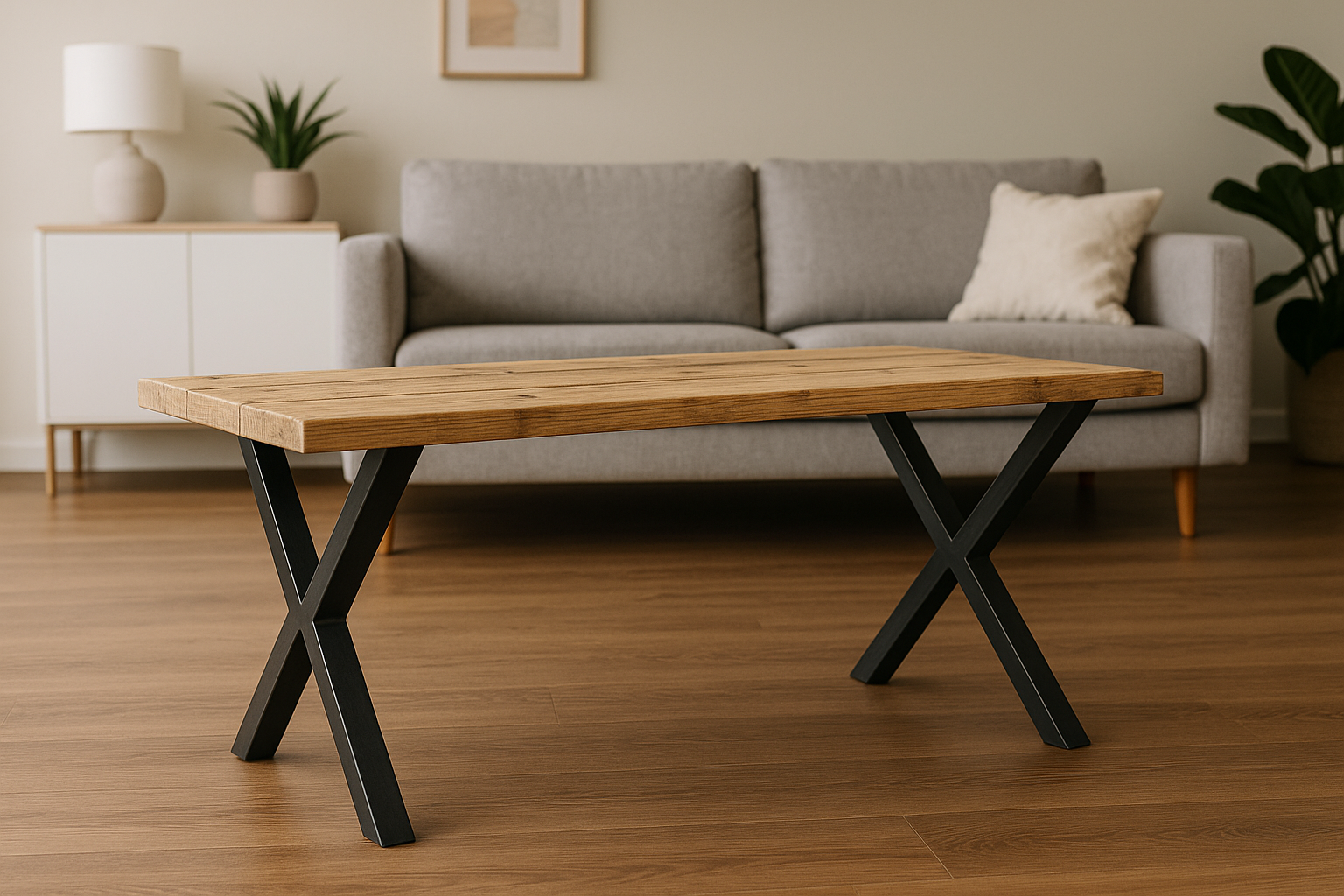
A coffee table is the workhorse of the living room. It’s where drinks are placed, snacks are shared, books and magazines are stacked, and laptops or games consoles often make an appearance. It’s also a visual anchor, drawing the eye to the centre of the room. Building your own coffee table means you can choose a size, style, and material that reflects your personality and suits your space. One combination that strikes a brilliant balance of rustic character and industrial strength is a scaffold board top paired with steel box section legs.
This design creates a table that is full of charm and history but also grounded and bold. It’s affordable, relatively simple to build, and makes a piece of furniture that feels just as at home in a modern loft as it does in a rustic farmhouse.
The Style of the Coffee Table and Where It Belongs
Scaffold boards have an inherently rugged look. Whether new or reclaimed, they bring visible grain, knots, and character to a project. On their own, they can feel heavy and rough, but when combined with the clean geometry of steel box section legs, the result is balanced and stylish. The steel adds structure and sharp lines, lifting the rustic top into a piece that feels modern and intentional.
This style works beautifully in industrial interiors, where exposed brick, concrete, and steel are celebrated. It also suits eclectic or rustic living rooms, where imperfections and natural textures add charm. Even in more minimalist settings, the combination of wood and steel creates a coffee table that feels practical but design-led.
What Box Section Steel Legs Are and How They Look
Box section legs are made from hollow square or rectangular steel tubing welded into strong frames. They are available in shapes such as rectangles, trapezoids, or custom designs, and their straight lines give them an architectural quality that contrasts beautifully with the irregular character of scaffold boards.
On a coffee table, these legs bring visual weight. Unlike hairpin legs, which are slim and understated, box section legs make a bold statement. They anchor the table and give the rustic top a strong, modern foundation.
Why Scaffold Boards and Steel Work So Well Together
Scaffold boards are chunky, typically 225mm wide and 38mm thick. This makes them naturally sturdy but also visually heavy. Box section steel legs counterbalance that bulk with clean, precise lines. The mix of rustic timber and engineered steel achieves a harmony that feels both rugged and refined.
The steel frames also provide excellent support, ensuring the table top remains strong and stable. It’s a combination that blends the raw charm of reclaimed timber with the durability of modern materials.
Choosing the Right Colour for the Legs
Box section steel legs are usually available in black, white, or raw steel finishes. Black provides a classic, bold contrast with the lighter tones of scaffold boards. White offers a softer, fresher look, which can brighten up the rustic character of the wood. Raw steel leans into the industrial style but should be sealed with a clear coat to prevent rust.
If you want something more bespoke, you can paint the legs. Sand them lightly first for adhesion, then apply spray paint or brush paint in your chosen colour, finishing with a clear protective coat. This gives you flexibility to coordinate the table with your living room décor.
Why Scaffold Boards Are a Popular DIY Choice
Scaffold boards have become a go-to material for DIY makers. They’re affordable, widely available, and incredibly strong. Their thickness makes them sturdy enough for heavy-duty use, while their rustic grain and imperfections give them character.
Reclaimed scaffold boards are especially popular for furniture. They may carry paint marks, nail holes, and weathering that tell the story of their previous life. For some people, this lived-in look is the whole appeal. New boards, by contrast, are cleaner and easier to sand smooth, but still retain a raw authenticity that works well in rustic-modern interiors.
Cutting the Boards to Size
Scaffold boards usually come in long lengths, so cutting them down is essential for coffee tables. A circular saw will handle the job, though a mitre saw or track saw gives more accuracy. Always clamp the boards securely, measure twice, and cut slowly. Scaffold boards are thick and heavy, so goggles, hearing protection, and a dust mask are essential, along with dust extraction if possible.
If you don’t want the hassle of cutting, some suppliers sell pre-cut scaffold board tops. While this option costs more, it saves effort and ensures clean, accurate edges.
Joining the Boards Together
Most coffee table tops are made by joining two or three boards side by side. The most secure method is to glue the edges and clamp them until dry. Adding dowels or biscuits helps keep everything aligned and increases strength.
If you don’t want to glue, battens can be fixed across the underside to hold the boards together. This is quicker and simpler, though it often leaves small gaps between the boards, which may not be ideal if you want a perfectly smooth surface.
Reinforcing Against Movement
Like all solid timber, scaffold boards move with humidity. Over time, this can cause cupping or warping. To reduce this, attach battens or bars underneath, running across the grain. Wooden battens screwed in place are inexpensive and effective. Steel bars routed into the underside provide even more stability but require more tools and expense.
On a coffee table, sagging is less of a concern than on a dining table, but reinforcement still helps keep the surface flat and stable for years to come.
Sanding the Boards
Sanding is an essential step. Reclaimed scaffold boards are often rough, with splinters, paint, or dirt. Even new boards need smoothing before use. Start with a coarse grit to clean and level the surface, then progress to finer grits for a smooth finish. An electric sander makes this much quicker, but hand sanding works too if you prefer a more traditional approach.
The aim is to create a surface that feels pleasant to the touch while retaining some of the wood’s natural character. Marks and imperfections can be left in place to enhance the rustic look if you like.
Pilot Holes and Edge Treatments
When attaching steel box section legs, always drill pilot holes first. This prevents splitting and ensures the screws seat properly.
For the edges, you can leave them square for a rugged look, round them slightly with sandpaper for comfort, or use a router to create a chamfer or rounded profile. Even a small amount of shaping can elevate the table and make it more comfortable to use.
Finishing the Table Top
Finishing is vital to protect the wood and bring out its grain. Hardwax oil is an excellent choice, providing a matte, natural look while guarding against stains. Danish oil or tung oil add warmth and richness but may need periodic reapplication. For maximum durability, polyurethane varnish creates a tough, protective layer that resists scratches and spills, though it adds more shine.
Apply several thin coats, sanding lightly between applications. This ensures a smooth, resilient finish that can handle the daily demands of a living room coffee table.
Conclusion
A coffee table made with scaffold boards and steel box section legs is a project that combines rustic charm with industrial strength. The boards bring warmth, history, and texture, while the steel frames provide structure and boldness. Together, they create a piece that feels substantial, stylish, and perfectly suited to daily life.
By cutting and joining the boards carefully, sanding them smooth, finishing them thoughtfully, and attaching the steel legs securely, you can make a coffee table that looks professional but still carries the handmade character that makes it unique. Affordable, durable, and full of personality, a scaffold board and steel box section coffee table is the perfect DIY centrepiece for a living room where function and style go hand in hand.
