A coffee table may not be the largest piece of furniture in your home, but it’s one of the most important. It sits in the centre of the living room, where it inevitably becomes a hub for mugs, snacks, books, laptops, and even the occasional pair of feet. Because coffee tables get so much use, the material you choose for the top matters just as much as the style of legs beneath it. A good top must be durable, attractive, and suited to daily life.
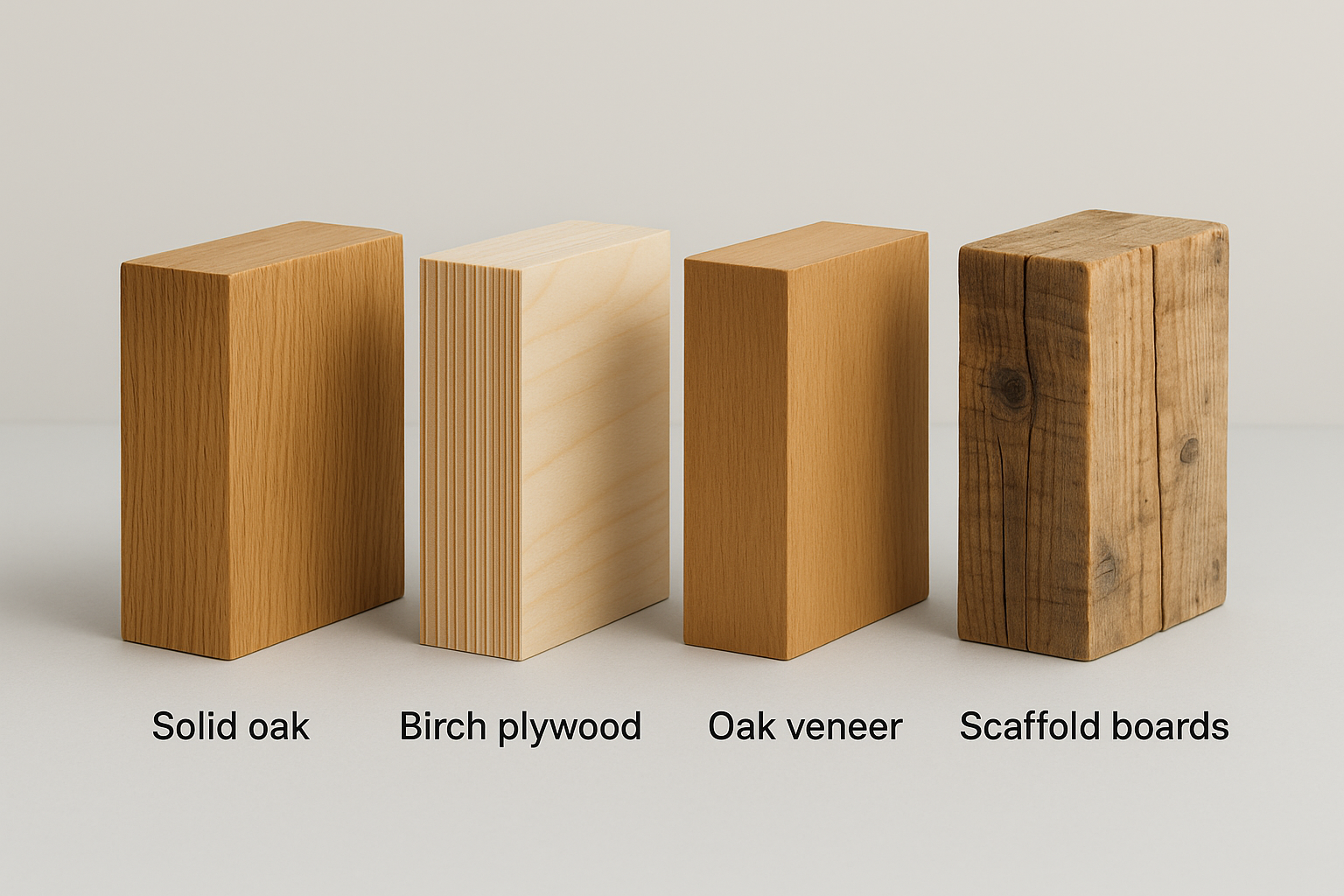
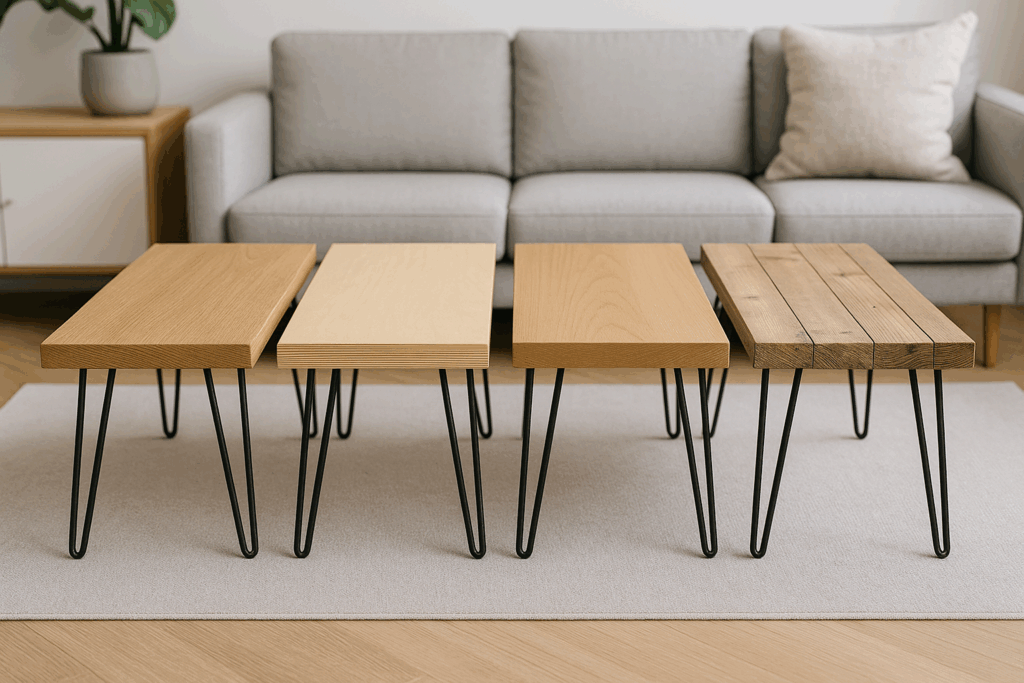
The four most popular choices for DIY coffee tables are birch plywood, solid oak, oak veneer, and scaffold boards. Each brings its own advantages, challenges, and personality. Whether you want modern minimalism, timeless luxury, rustic charm, or a cost-effective solution, one of these options will suit you.
The Style of Each Coffee Table Top
Solid oak offers timeless elegance. With its distinctive grain, natural variation, and rich tone, oak creates a coffee table that feels substantial and enduring. It suits both classic living rooms and modern rustic interiors.
Oak veneer delivers the look of oak in a lighter, more affordable package. Its clean and consistent surface makes it ideal for modern or Scandinavian-inspired rooms. It doesn’t have the depth of solid oak but offers a practical balance of style and budget.
Birch plywood has a fresh, architectural aesthetic. Its pale tone and layered edges are hallmarks of Scandinavian and minimalist design. It feels airy, contemporary, and stylishly understated.
Scaffold boards lean into rustic, industrial charm. With their chunky thickness, visible grain, and reclaimed character, they create coffee tables full of personality. They’re best suited to eclectic, rustic, or industrial interiors where imperfections are celebrated.
Strength, Weight, and Practicality
Solid oak is dense and heavy. It makes for a strong and stable top, capable of withstanding decades of daily use. Its weight can make construction and moving the table more challenging, but the payoff is durability.
Oak veneer is lighter because its core is made from MDF or particleboard. This makes it easy to work with and stable against warping. However, it isn’t as strong or durable as solid wood, and the thin veneer layer can be vulnerable to chips.
Birch plywood strikes a balance between strength and manageability. Its many thin layers of birch veneer make it resistant to warping and strong for its weight. It’s lighter than oak but still sturdy enough for coffee tables.
Scaffold boards are chunky and inherently strong, but as softwood, they dent more easily than hardwoods. They’re also heavy when used in multiples, so moving the table can be a two-person job.
Durability and Daily Use
Coffee tables are exposed to constant wear. Drinks leave water rings, food crumbs spill, and scratches are common.
- Solid oak is the most forgiving. It can be sanded and refinished many times, meaning it will last decades if cared for.
- Oak veneer looks beautiful when new, but the thin oak layer cannot be sanded deeply. Scratches and chips are harder to repair, so prevention is key — coasters and placemats are essential.
- Birch plywood is durable, but its surface veneer is thin. Sanding must be gentle, and a protective finish is crucial to resist scratches and spills.
- Scaffold boards dent and mark easily, but their rustic style means these imperfections add character rather than detract from the look. They age gracefully in homes where “lived-in” is part of the appeal.
Cost and Availability
Solid oak is the most expensive choice, reflecting its premium quality and longevity. It’s an investment material, especially for larger tables.
Oak veneer is far more affordable and widely available. Veneered panels can also be bought pre-cut to size, which reduces the need for heavy-duty tools.
Birch plywood is mid-range. It’s more costly than softwood plywood but cheaper than solid hardwood. Its availability from timber merchants and online suppliers makes it accessible for most DIY projects.
Scaffold boards are the cheapest option. Reclaimed boards are particularly cost-effective and bring added character. Even new boards are inexpensive compared to oak or birch ply.
Cutting and Preparation
Solid oak requires precise cutting with high-quality tools. Its density makes it harder to work with, but the results are rewarding.
Oak veneer demands delicate handling. Its thin layer chips easily when cut, so a fine-tooth blade, masking tape, or scoring along the cut line helps protect the surface.
Birch plywood cuts cleanly with the right blade, though accuracy is crucial. A track saw is best for straight lines, and dust extraction is recommended due to the fine dust it produces.
Scaffold boards are easier to cut but must usually be joined together to form a top. This involves gluing, dowels, or battens underneath to hold the boards securely.
Sanding and Finishing
- Solid oak can be sanded aggressively and reshaped if needed. It responds beautifully to oils and varnishes, which enhance its grain while providing protection.
- Oak veneer must be sanded very gently with fine paper, as the surface is thin. It should be finished with oils or varnishes that don’t require heavy sanding between coats.
- Birch plywood needs careful sanding to avoid going through the veneer. Hardwax oil or polyurethane varnish works well to highlight its pale tone while protecting it.
- Scaffold boards often require heavy sanding initially to remove dirt, paint, or splinters, followed by finer sanding for smoothness. Finishes like hardwax oil, Danish oil, or varnish can be used depending on whether you want rustic or refined results.
Which One Should You Choose?
- Choose solid oak if you want a premium, long-lasting coffee table that can be refinished and repaired for decades.
- Choose oak veneer if you want the look of oak without the cost or weight, and don’t mind taking extra care with coasters and mats.
- Choose birch plywood if you prefer a clean, modern aesthetic and want a balance between affordability and durability.
- Choose scaffold boards if you value rustic character, affordability, and don’t mind dents or imperfections becoming part of the table’s story.
Conclusion
Coffee tables are subjected to constant use, so the top material you choose will define both its style and its lifespan. Solid oak is the most durable and timeless, oak veneer is stylish and budget-friendly but requires more care, birch plywood offers a modern, minimal look at a reasonable cost, and scaffold boards bring rustic authenticity and affordability.
When paired with the right legs — whether bold steel box section frames or slim hairpin legs — each material can be transformed into a coffee table that reflects your taste and lifestyle. The key is to match the material not only to your décor but also to the way you actually live day to day. With the right choice, your DIY coffee table will become more than just a surface — it will be the centrepiece of your living space.
