Few DIY projects are as rewarding as building your own desk. Not only do you save money compared to buying ready-made furniture, but you also get something unique that reflects your style. A particularly popular and characterful approach is to use hairpin legs combined with scaffold boards for the top. This creates a desk that feels sturdy, rustic, and modern all at once, perfect for home offices, studios, and even dining or craft tables depending on the size you build.
The Style of the Desk and Where It Belongs
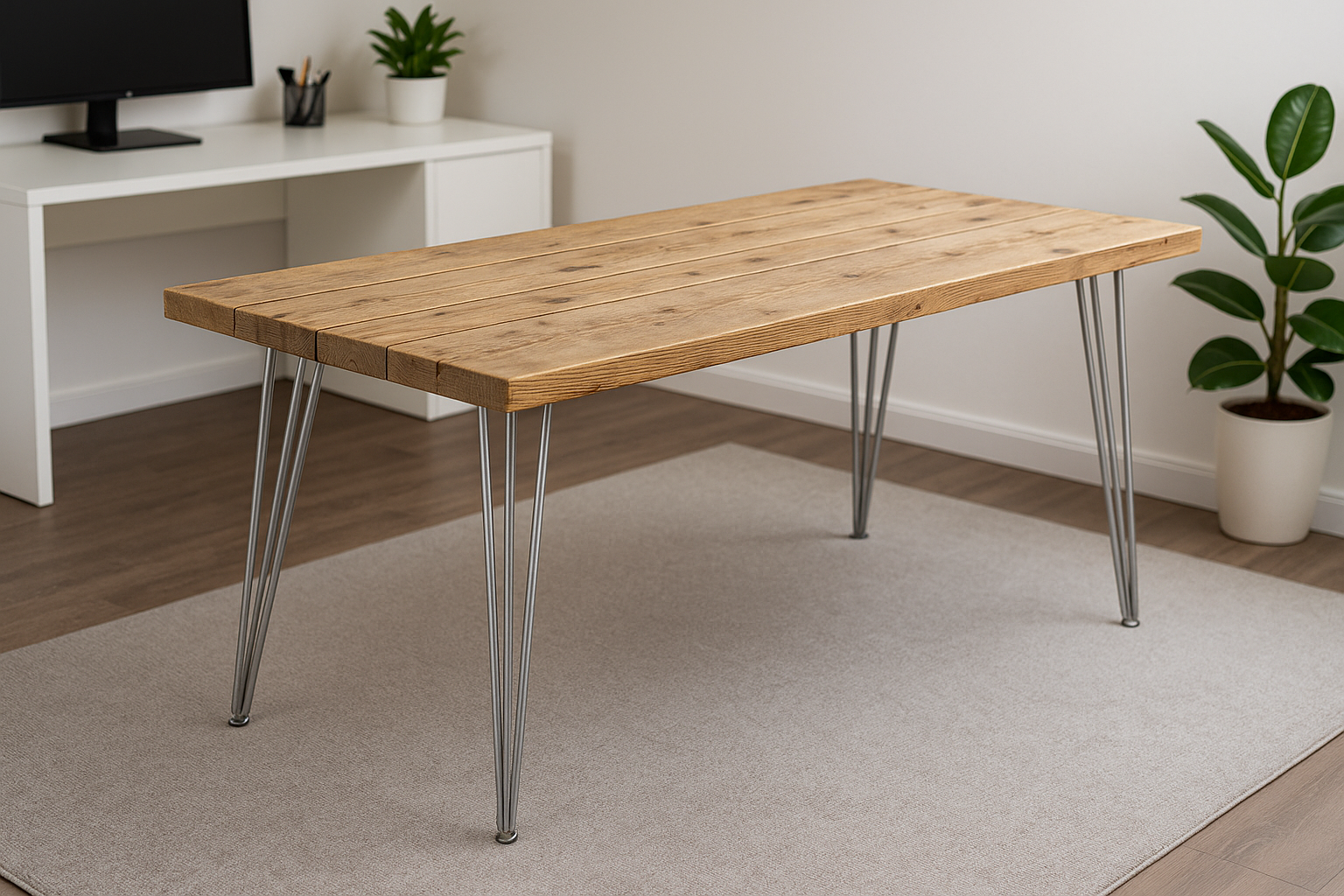
A desk built from scaffold boards and hairpin legs has a style that straddles rustic charm and contemporary minimalism. The boards bring a raw, industrial quality, especially if reclaimed, while the slender metal legs add lightness and balance. This type of desk works well in industrial-inspired apartments with exposed brick and concrete, but it is equally at home in more eclectic interiors where a touch of rough-and-ready wood contrasts with clean design. In Scandinavian or modern rustic homes, the combination feels natural and authentic, especially if you choose a simple matte finish on the wood.
What Hairpin Legs Are and Why They Work
Hairpin legs are made from steel rod bent into a U-shape and welded onto a small metal plate for mounting. They are named for their resemblance to a bent hairpin and were first created in the 1940s. The design has endured because it is elegant, unobtrusive, and surprisingly strong. Available in two-rod or three-rod versions depending on the load they need to support, hairpin legs are visually light but structurally solid. They are ideal for pairing with heavier tops like scaffold boards because they stop the desk from looking overly bulky while still holding everything steady.
Why Hairpin Legs Combine Well with Scaffold Boards
Scaffold boards have a rugged, chunky look. On their own, they can appear quite heavy and utilitarian. Pairing them with slim hairpin legs creates the perfect balance: the boards bring character and substance, while the legs add elegance and modernity. This contrast makes the final piece versatile enough to sit in a sleek apartment or a rustic workshop. The steel and wood combination feels timeless, practical, and stylish in a way that appeals to many different tastes.
Choosing the Right Colour for the Legs
Hairpin legs usually come in black, white, or raw steel. Black is a classic choice that works in almost every situation, offering contrast against the pale or weathered tones of scaffold boards. White feels fresher and can soften the industrial look, blending well in Scandinavian or light-filled spaces. Raw steel emphasizes the industrial feel but must be sealed to prevent rust. If you want a more custom look, you can paint the legs yourself. Start by sanding them lightly to help paint adhere, then apply either with a brush or spray. Spray paint usually gives the most even coat, and adding a clear protective top layer will improve durability.
Why Scaffold Boards Are Popular for DIY Furniture
Scaffold boards have become a go-to material for DIYers because they are affordable, widely available, and full of character. Originally designed for construction scaffolding, they are made from strong softwood planks, usually around 38mm thick, and often reinforced with metal bands at the ends. Their chunky size, rustic look, and durability make them perfect for repurposing into tables, shelves, and desks. Many people enjoy the fact that reclaimed boards carry marks, dents, and weathering, which give the finished furniture a sense of history and authenticity.
Dimensions of Scaffold Boards
Standard scaffold boards are usually around 225mm wide and 38mm thick, with lengths up to 3.9m. To make a desk top, you typically join two, three, or four boards side by side depending on the width you want. The thickness makes them robust, and the width is practical for gluing up into panels. Because of their size, scaffold boards can create a top that feels substantial without needing a frame underneath.
The Realities of Using Scaffold Boards
As with any natural material, scaffold boards have imperfections. Reclaimed boards may have knots, cracks, dents, and even paint marks from previous use. While many people value this rustic look, it may not suit everyone. If you prefer a cleaner appearance, you can buy new untreated scaffold boards, though they will lack some of the character of reclaimed timber. Either way, you should expect some variation and irregularity, as that is part of their charm.
Cutting the Boards to Size
If you want to cut scaffold boards yourself, a circular saw will do the job, but a track saw or mitre saw will give the cleanest and straightest results. Always measure carefully and mark your lines before cutting. Safety is crucial: scaffold boards are chunky, so use clamps to secure them, wear goggles and hearing protection, and use dust extraction if possible. Cutting softwood creates plenty of sawdust, and it’s best to keep your work area as clean as possible.
If you prefer not to cut and join boards yourself, many suppliers now offer scaffold board tops pre-cut to size. The advantages are less mess, no need for large saws, and perfectly square edges. The downside is cost: pre-cut boards are more expensive per square metre, but they save time and hassle.
Joining Scaffold Boards Together
To create a wide desktop, you need to join several boards edge to edge. The simplest method is to apply wood glue along the edges and clamp them tightly until dry. For extra strength and alignment, you can use dowels or wood biscuits inserted into slots along the edges. This requires a drill or biscuit joiner but makes the joint stronger and neater. If you don’t want to glue, you can fix battens across the underside to hold the boards together. This method is easier but may leave small gaps between boards, which some people find less attractive.
Preventing Cupping and Sagging
Scaffold boards, like any solid wood, expand and contract with changes in humidity. Over time, this can cause cupping, where the edges curl upward or downward. To counteract this, you can add bars running across the grain on the underside of the desk. These can be simple wooden strips screwed into place, or more sophisticated metal bars routed into the wood. Metal is stronger but also more expensive and requires specialist tools. For longer desks, over 150cm, adding a lengthwise batten or spine underneath helps prevent sagging in the middle.
Positioning the Hairpin Legs
When attaching the legs, position them around 5–8cm in from the corners. This ensures good stability while maintaining a balanced look. If your desk is going against a wall, check that the legs don’t clash with skirting boards. It’s also a good idea to sit at the desk and check legroom before finalising their position, as moving them too far inward can create awkward seating.
Sanding Scaffold Boards
Scaffold boards can be rough, especially if reclaimed. Sanding is essential to create a smooth and pleasant work surface. An electric sander makes the process faster, starting with a coarse grit to remove dirt and roughness, then working up to a finer grit for a polished feel. Always sand with the grain where possible. If you don’t own a sander, you can sand by hand, though it will take more time. Some people even enjoy the process, finding it therapeutic and more connected to the material.
Pilot Holes and Edge Profiles
Before screwing the legs into the underside, always drill pilot holes. This prevents the wood from splitting and makes it easier to insert screws cleanly. You can also refine the edges of your desktop. A router allows you to create a rounded or chamfered edge, while simply easing the corners by hand with sandpaper makes the desk more comfortable to use. The choice depends on whether you want a rustic, straightforward look or a more polished finish.
Finishing the Desk Top
Finishing is vital to protect scaffold boards and bring out their beauty. Hardwax oil is a favourite because it is easy to apply, enhances the grain, and provides a durable, matte finish. Other oils like Danish or tung oil add warmth but may need refreshing over time. Varnishes and polyurethanes create a tougher protective layer against spills and scratches, though they can sometimes look shiny. For the best results, apply multiple thin coats and lightly sand between applications.
Conclusion
A desk built from hairpin legs and scaffold boards is a project that combines rustic character with modern elegance. The robust, weathered boards give the piece history and charm, while the slim steel legs keep it contemporary and balanced. With careful cutting, joining, sanding, and finishing, you can create a desk that is not only functional but also a statement piece in your home.
This style of desk is perfect if you want something affordable, sustainable, and full of character. Whether you prefer the rough authenticity of reclaimed boards or the cleaner look of new timber, scaffold boards and hairpin legs offer endless potential. The result is a sturdy, stylish, and unique workspace that you’ll enjoy for years to come.
