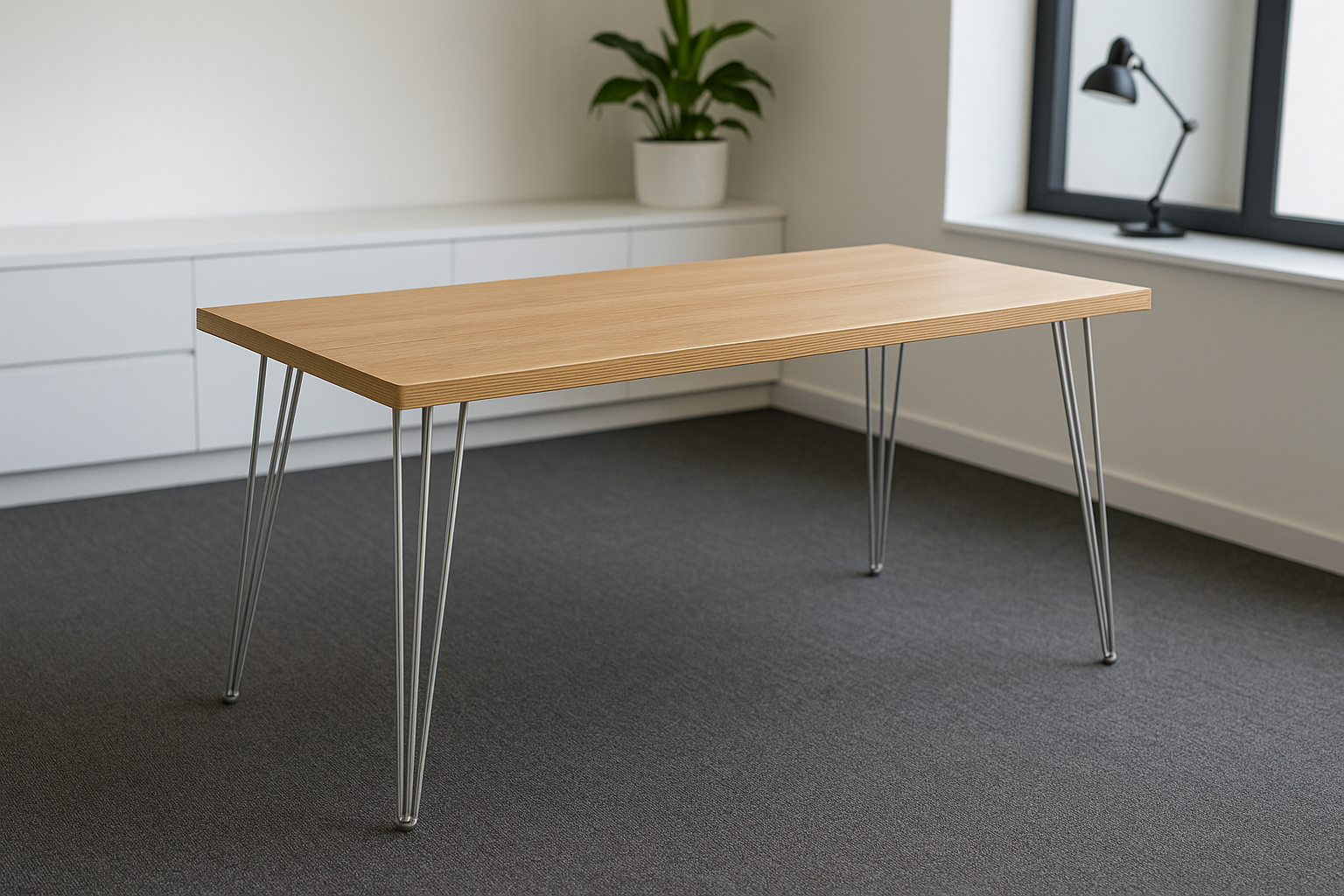
Making a desk is one of the most satisfying DIY projects you can take on, and with the right materials, it can be affordable, stylish, and durable. While solid oak is beautiful, it is also heavy and expensive, which is why many people look to oak veneer as an alternative. Pairing a veneered oak top with hairpin legs creates a desk that looks sleek, modern, and high-end without the challenges of working with a solid hardwood slab.
The Style of the Desk and Where It Belongs
A desk made with hairpin legs and an oak veneer top has a light, contemporary style. The slim steel legs keep the structure minimal, while the oak veneer surface provides the warmth and natural grain of oak at a fraction of the weight and cost. This kind of desk looks right at home in modern apartments, creative studios, minimalist home offices, and spaces inspired by Scandinavian design. The look is understated and versatile, allowing the desk to blend seamlessly with existing furniture.
What Hairpin Legs Are and Why They Suit Veneer
Hairpin legs are crafted from bent steel rods welded onto a small mounting plate. Their name comes from their resemblance to a bent hairpin, and their enduring popularity since the 1940s is testament to their versatility. They are slim, unobtrusive, and available in a variety of finishes, which makes them the perfect complement to an oak veneer top. The steel provides the necessary strength while allowing the wood surface to be the main visual feature. For veneered furniture, hairpin legs are particularly suitable because they avoid the bulkiness that would clash with the clean, streamlined surface of veneer.
Why Oak Veneer Combines Well with Hairpin Legs
Oak veneer gives the appearance of solid oak without the same mass or cost. It’s usually a thin layer of real oak bonded onto a stable substrate such as MDF or particleboard. The result is a panel that looks like oak but is lighter, easier to handle, and less prone to warping. Because hairpin legs already have a delicate, minimal look, combining them with veneer creates a balanced desk that feels elegant but not overpowering. The steel carries the weight of the top easily, while the veneer delivers the character of oak without demanding heavy construction techniques.
Choosing the Right Colour for the Legs
Hairpin legs are typically sold in black, white, or natural steel. Black provides a classic, versatile look that works with almost any style. White feels bright and airy, especially in Scandinavian-inspired interiors. Natural steel looks raw and industrial, but it usually requires sealing to prevent rust. For a bespoke look, you can paint the legs yourself. Lightly sand the steel to help the paint adhere, then use either a brush or spray paint. Spraying gives the most even finish, while brushing allows for indoor touch-ups. Adding a clear topcoat will help protect the paint from scratches.
Why Oak Veneer Is Different from Solid Oak and Laminates
Oak veneer sits in the middle ground between solid hardwood and cheaper laminates. Unlike laminate, which uses printed patterns to imitate wood, veneer is made from a thin slice of real oak, so the surface has genuine grain and texture. Unlike solid oak, it is bonded to a core board such as MDF, which makes it stable and less prone to seasonal movement. This stability means you don’t need to worry about cupping or expansion as much as you do with solid oak. Veneer cannot be sanded and refinished as often as solid wood because the top layer is thin, but with careful handling, it can last for many years.
Choosing Thickness for a Veneered Desk Top
The thickness of veneered boards depends on the core material available from suppliers. Common thicknesses include 18mm, 22mm, or 25mm. The thicker the board, the less prone it will be to sagging, and the more substantial the desk will look. Eighteen millimetres is usually enough for a small desk, while 22–25mm is recommended for longer spans or heavier use. Since veneer is lighter than solid oak, you can afford to go a little thicker without making the desk too heavy to handle.
The Realities of Using Veneer
Although oak veneer looks like solid oak, it has some limitations. Because the surface layer is thin, you need to be careful when sanding to avoid going through to the core material. Veneered boards can also sometimes show small defects or patches where the veneer has been joined. These are usually subtle and less noticeable once the desk is finished, but it’s worth being aware that veneer does not have the same depth or variability as solid wood. On the positive side, it offers the beauty of oak grain in a cost-effective and environmentally efficient way.
Cutting Veneered Boards to Size
If you are cutting the veneered board yourself, use a circular saw with a fine-tooth blade, or ideally a track saw for perfectly straight lines. Veneer is prone to chipping, so it helps to score the cut line with a sharp knife first and to use masking tape along the cut to support the fibres. Work slowly and carefully, and always use protective gear like goggles and a dust mask. If you want to avoid the risk of chipping altogether, consider ordering pre-cut panels online. This ensures crisp, square edges, reduces mess, and saves time. The cost per square metre is slightly higher, but the convenience and professional finish often make it worthwhile.
Reinforcing Longer Desks
For desks longer than about 150cm, adding a lengthwise batten or “spine” underneath can help prevent sagging. While veneered boards are more stable than solid wood, they can still flex under load. A simple wooden batten screwed into the underside of the desk provides extra stiffness and peace of mind.
Positioning the Hairpin Legs
When attaching the legs, position them about 5–8cm in from the edges of the desk top. This ensures stability while giving the desk a balanced appearance. If your desk will sit against a wall, check that the legs don’t hit the skirting boards. It’s also worth doing a quick test fit with a chair to make sure the leg placement doesn’t interfere with comfortable seating.
Sanding Veneer
Because oak veneer is thin, sanding needs to be done gently. Start with fine-grit sandpaper such as 180 and avoid heavy pressure. An orbital sander can be used, but only with care—lingering too long in one spot risks sanding through the veneer. Many people prefer to sand veneer by hand, which is slower but much safer. The goal is to smooth the surface and prepare it for finishing, not to remove material.
Pilot Holes and Edge Profiles
Before attaching the legs, drill pilot holes to prevent the substrate beneath the veneer from splitting. This makes it easier to drive screws in cleanly and accurately. For the edges, most veneered boards will already have a clean finish, but you can soften them slightly by sanding or by applying an iron-on edge banding to cover exposed core material. Rounded or chamfered profiles are possible, but they need to be done with care since the veneer layer is thin.
Finishing an Oak Veneer Desk Top
Finishing an oak veneer desk protects it from spills and wear while bringing out the natural grain. Hardwax oil is an excellent choice, giving a durable, matte finish that enhances the oak’s warmth. Other oils such as Danish or tung oil also work well but may need reapplying periodically. Varnishes and polyurethanes provide a tougher, more protective coat, though they can look shinier. Whichever finish you choose, apply thin, even coats with a cloth, brush, or roller, and lightly sand between coats to achieve a smooth result.
Conclusion
Building a desk with hairpin legs and an oak veneer top is a project that strikes a balance between style, practicality, and affordability. Hairpin legs give the desk a light and modern profile, while the veneer offers the natural beauty of oak without the weight or expense of solid timber. By choosing the right thickness, cutting carefully or ordering pre-cut, reinforcing longer spans, sanding gently, and finishing thoughtfully, you can create a desk that looks professional and serves you well for years.
This approach is ideal if you want the appearance of oak but don’t want the challenges of working with a heavy hardwood slab. With a little care, you’ll end up with a desk that combines strength, beauty, and practicality in equal measure—a perfect addition to any home office or creative workspace.
