Building your own desk is one of the most rewarding DIY projects you can take on. Not only do you end up with a piece of furniture that perfectly fits your space, but you also gain the satisfaction of creating something with your own hands. One of the strongest, most modern options for a DIY desk pairs steel box section legs with a birch plywood top. This combination balances industrial sturdiness with natural warmth, giving you a desk that looks professional and lasts for years.
The Style of the Desk and Where It Fits
A desk made with steel box section legs and a birch plywood top has a bold, modern look that works beautifully in a wide range of interiors. The clean lines of the legs lend an industrial feel, while the plywood top keeps the design approachable and warm. This type of desk is perfect for contemporary apartments with exposed materials, loft-style homes, and minimalist spaces where function and form are equally important. It also works in home offices where you want a serious, sturdy desk without going overboard on traditional heaviness.
Unlike more delicate designs, this desk has a substantial presence. The steel gives it a visual weight that grounds the space, while the birch plywood surface keeps it versatile enough to fit with other furniture styles.
What Box Section Steel Legs Are and How They Look
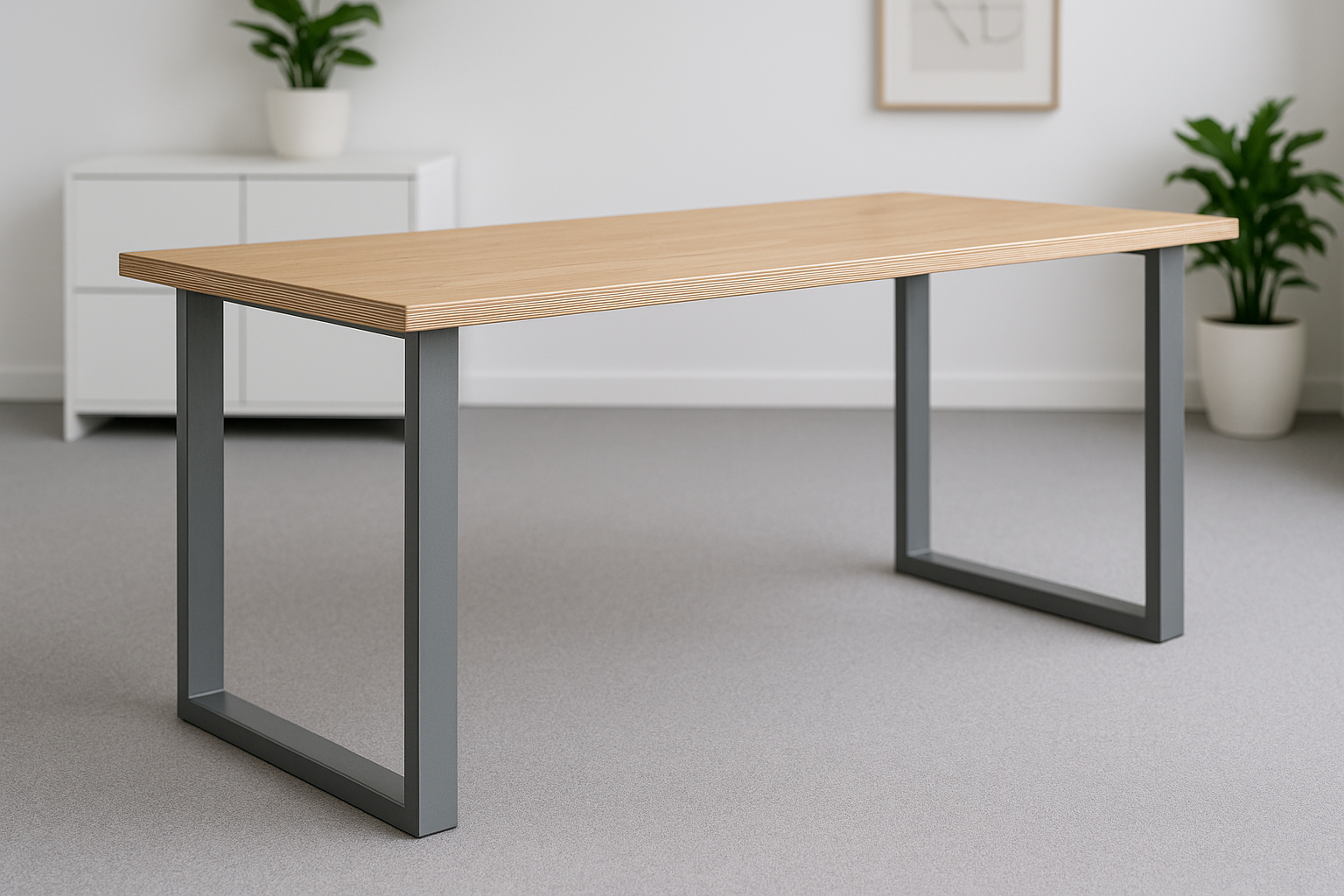
Box section legs are made from rectangular or square hollow steel tubing that is welded into a frame. The hollow construction keeps them strong yet lighter than solid metal, and the squared profile gives them a geometric, architectural look. They can be manufactured in simple rectangular frames, trapezoid shapes, or even with angled details for extra flair.
The result is a leg design that feels more solid than hairpin legs but less bulky than timber supports. Their look is unmistakably modern: sharp edges, flat planes, and a sense of durability that makes them popular in both office and home settings.
Why Box Section Legs Combine Well with Birch Plywood
Pairing steel box section legs with birch plywood works on both a practical and aesthetic level. Steel provides the strength to support heavy loads without flexing, while birch plywood offers a warm, natural surface that balances the industrial feel of metal. Together they create a desk that is modern, functional, and stylish without feeling cold.
The contrast between the sleek powder-coated steel and the pale, patterned edges of the plywood makes the desk a striking focal point. It’s a combination that looks equally at home in a minimalist home office, a co-working studio, or even a creative workshop.
Choosing the Right Colour for Steel Box Section Legs
Box section legs are commonly sold in three finishes: black, white, and natural steel. Black is the most versatile and works well in almost any room, offering a bold, timeless look. White feels cleaner and lighter, blending into bright modern spaces or Scandinavian-style interiors. Natural steel has a raw, industrial appeal, though it will need sealing to prevent rust.
If you want something unique, you can paint the legs yourself in a bespoke colour. Before painting, the legs should be sanded lightly to give the paint a surface to grip. You can then apply paint using a brush, roller, or spray can. Spraying usually gives the most even finish, while a brush offers more control if you are working indoors. Adding a clear topcoat or varnish afterward will increase durability.
Birch Plywood vs. Cheaper Plywood
The top of your desk deserves just as much attention as the legs, and this is where birch plywood shines. Birch ply is a hardwood plywood made from multiple thin veneers of birch layered and glued together. It has a dense structure, a fine grain, and a smooth surface that makes it perfect for furniture.
By contrast, cheaper softwood plywoods made from pine or spruce are usually designed for construction. They often contain voids, knots, and rough surfaces, and are more prone to warping. Birch plywood not only looks better but also resists flexing and maintains its shape over time, making it the superior choice for a desk top.
Why Birch Plywood Is So Popular in Furniture Making
In recent years birch plywood has become a favourite among designers and DIYers. Its layered edge has become almost iconic, often left exposed as part of the finished look. Its clean, pale surface suits the Scandinavian and Japanese-inspired styles that dominate modern interiors, while its strength and affordability make it a practical choice. It is also more sustainable than solid hardwoods, as the veneers maximize the usable wood from each log.
Choosing Between 18mm and 24mm Thickness
When deciding on plywood thickness, consider how you’ll use the desk. An 18mm top looks sleek and modern while being lighter and more affordable. It works well for smaller desks or lighter loads. However, if the desk will span more than 150cm or carry heavy equipment, 24mm plywood is the better choice. It is stiffer, less prone to sagging, and gives the desk a more substantial appearance. The extra thickness often feels more premium, even though it still retains a contemporary profile.
The Realities of Using Plywood
Plywood, even high-quality birch, comes with some quirks. You may see small circular or oval patches where knots have been replaced during manufacturing. Scratches, colour variations, or other imperfections are also common. These don’t detract from its strength and can even add character, but it’s worth knowing in advance so you’re not surprised when you unwrap your sheet.
Cutting the Plywood to Size
If you plan to cut your plywood yourself, use a circular saw with a fine-tooth blade. A track saw will give the most accurate and clean results. Take your time with measurements and markings, and always think about safety: wear protective goggles, hearing protection, and a dust mask, and ideally connect your saw to a dust extractor to minimise airborne particles.
Another option is to order your desktop pre-cut from a supplier. This guarantees perfectly square edges, reduces waste, and saves a lot of mess. While cut-to-size services are usually more expensive per square metre, they are often worth it if you don’t own good-quality cutting tools.
Reinforcing Longer Desks
If your desk is longer than about 150cm, it’s a good idea to reinforce the underside with a batten or “spine.” This extra support reduces sagging over time, particularly if you’ve chosen the thinner 18mm plywood. A single piece of timber running lengthwise down the middle is usually enough to add stiffness.
Positioning the Legs
Leg placement is another detail to get right. Positioning the box section frames about 5–8cm from each end works well for stability and balance. If the desk will sit against a wall, check that the legs don’t interfere with skirting boards. You’ll also want to ensure they don’t reduce legroom, particularly if you’re planning to use the desk with a mobile chair.
Sanding the Plywood
Before finishing, the plywood should be sanded. Start with 120-grit paper and work up to 180 or 240 for a smooth finish. Be careful not to sand too aggressively with a power sander, as the thin top veneer can be worn through, exposing the glue layers beneath. For edges and corners, sanding by hand is often safest and gives the most control.
Pilot Holes and Edge Profiles
When it comes time to attach the legs, always drill pilot holes. Screwing directly into plywood without them risks splitting and can make it harder to secure the screws properly. Use screws that are short enough not to come through the top.
For an extra professional touch, you can shape the plywood edges. A router lets you create a chamfered or rounded profile, but you can also achieve a subtle softened edge by sanding. Exposed ply edges are part of the design appeal, so there’s no need to cover them up.
Finishing the Top
The final step is finishing. This not only protects the plywood but also enhances its beauty. Hardwax oil is a popular choice because it’s easy to apply, enhances the grain, and leaves a natural matte finish. Other oils such as Danish or tung oil soak in and give warmth but may need refreshing occasionally. Varnishes and polyurethanes form a tougher barrier, offering maximum durability, though they can sometimes look glossy. Applying several thin coats and sanding lightly between them will give the smoothest, most resilient result.
Conclusion
A desk built with steel box section legs and a birch plywood top is a project that combines strength, modern style, and timeless practicality. The steel provides solidity and a sharp architectural look, while the birch plywood brings warmth and versatility. By choosing the right thickness of plywood, cutting carefully (or ordering pre-cut), sanding gently, and finishing thoughtfully, you can create a desk that feels professional and lasts for years.
Whether you want a substantial home office workstation, a minimalist study table, or a creative studio desk, this design is flexible enough to fit in. With its industrial-meets-natural balance, it’s a piece of furniture that looks as good as it performs—and one you’ll be proud to say you built yourself.
