Birch plywood is one of the most versatile and attractive sheet materials available, and when combined with sleek hairpin legs, it makes for a dining table that is affordable, stylish, and practical. Unlike bulky traditional tables, this design feels light and modern, while still being strong enough for everyday family meals. If you’re looking for a project that balances contemporary style with ease of construction, a birch plywood top on hairpin legs is an excellent choice.
The Style of the Table and Where It Belongs
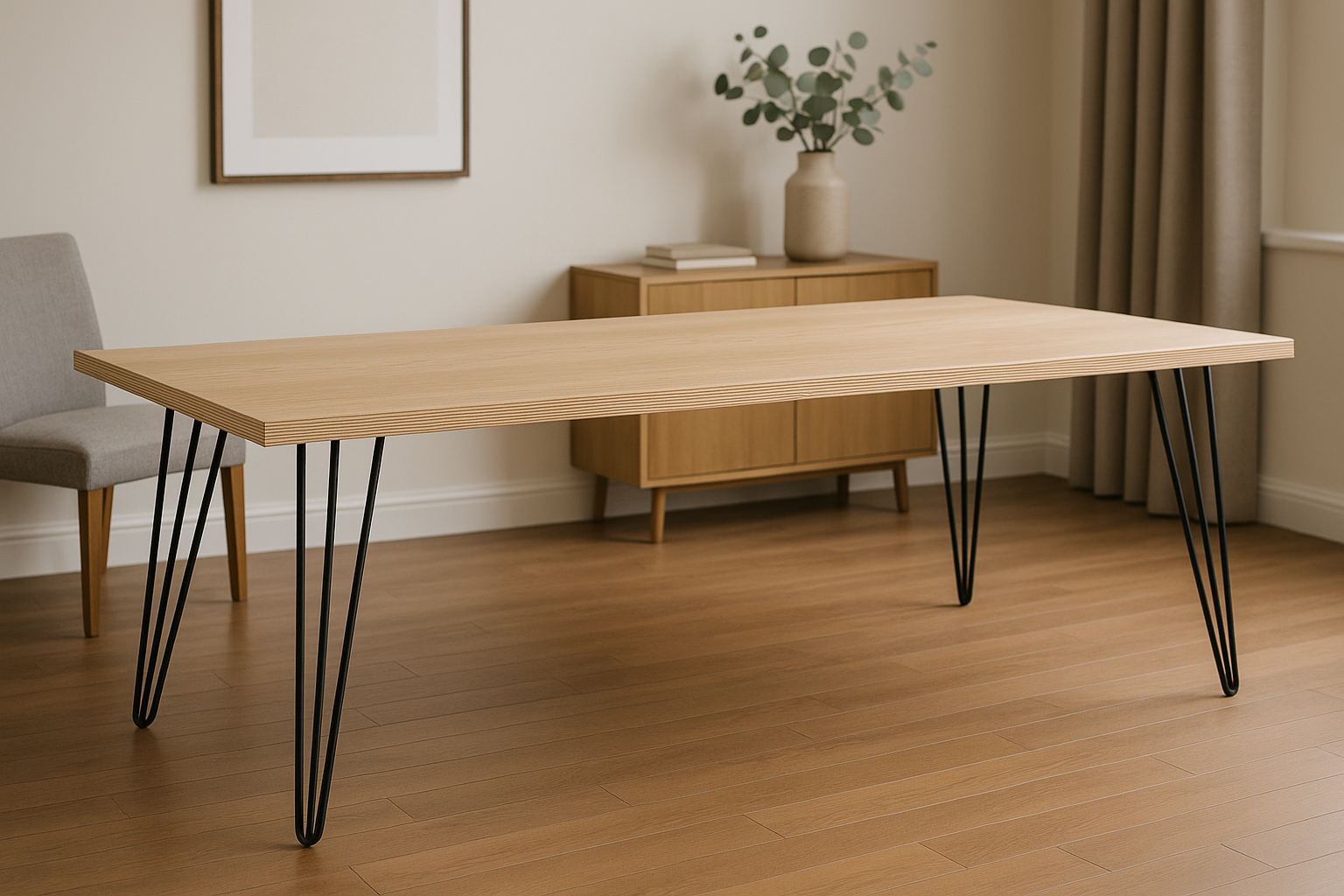
A dining table made from birch plywood and hairpin legs has a clean, minimalist look. The pale, subtle grain of birch works perfectly in Scandinavian-inspired interiors, modern apartments, and creative studios where a light and airy aesthetic is important. The slender steel legs keep the table visually unobtrusive, allowing the plywood top to take centre stage. This is a table that blends easily into its surroundings, whether you prefer a minimalist dining room, a rustic-modern kitchen, or an eclectic open-plan space.
What Hairpin Legs Are and How They Work
Hairpin legs are made from bent steel rods welded to a mounting plate. Their design dates back to the 1940s and has remained popular for its simplicity and strength. Available in two-rod or three-rod versions, hairpin legs can comfortably support heavy tops while maintaining a slender profile. On a dining table, they keep the structure light and stylish, ensuring that the table doesn’t feel clunky or overpowering in the room.
Why Birch Plywood and Hairpin Legs Work Well Together
Birch plywood is a high-quality sheet material made by laminating thin layers of birch veneer, alternating the grain for strength. This creates a stable, flat panel that is much stronger than cheaper softwood plywoods used in construction. Because it’s strong and available in large sheets, it can be cut into a table top of almost any size. Pairing it with hairpin legs is ideal because the slim steel complements the clean, modern aesthetic of plywood, creating a table that feels both practical and stylish.
Choosing the Right Colour for the Legs
Hairpin legs are typically available in black, white, or natural steel. Black provides a classic contrast with birch plywood, highlighting its pale tone. White enhances the Scandinavian feel, creating a fresh, airy look. Natural steel adds an industrial edge but should be sealed to prevent rust. If you want something more unique, you can paint the legs in any colour you choose — sanding them lightly first, then applying spray paint or brush paint, followed by a clear coat for durability.
Why Birch Plywood Stands Out
Unlike cheaper plywoods, which are usually softwood with voids and knots, birch plywood is made from multiple layers of dense birch veneer. It is stable, smooth, and consistent, with an attractive pale surface and layered edge that many people choose to leave exposed as a design feature. It has become increasingly popular for furniture making because it combines strength with a clean modern look and is easy to work with compared to solid hardwoods.
Choosing the Right Thickness
For dining tables, plywood thickness matters. The most common sizes for birch plywood are 18mm and 24mm. An 18mm sheet looks sleek and costs less but may sag over longer spans if unsupported. A 24mm top is sturdier, feels more substantial, and is less prone to sagging while still maintaining a modern look. For a dining table that sees daily use, 24mm is often the better choice, especially for longer lengths.
The Realities of Using Plywood
As a sheet material, plywood isn’t perfect. Even high-quality birch plywood may have small patches or plugs on the surface where knots have been replaced, as well as occasional scratches from handling. These can usually be sanded smooth or minimised with finishing, but they are part of the nature of working with plywood. The layered edges are often celebrated as part of the design, though they can also be edged with solid wood strips if you prefer a cleaner look.
Cutting the Top to Size
If you plan to cut the plywood yourself, accuracy is important. A circular saw will do the job, but a track saw is best for ensuring perfectly straight cuts. Always clamp the sheet securely, mark clearly, and work slowly. Plywood produces a lot of fine dust, so wear a dust mask, goggles, and hearing protection, and use dust extraction if possible. If you don’t have the right tools, consider ordering your plywood pre-cut to size from an online supplier. Although this costs slightly more per square metre, it saves time, reduces waste, and ensures perfect dimensions.
Reinforcing Larger Tables
For dining tables longer than 150cm, you may want to reinforce the top to prevent sagging. This can be done by attaching a wooden batten or “spine” lengthwise underneath. This is especially useful if you opt for the thinner 18mm plywood. Reinforcement ensures the table stays level and strong even under daily use.
Positioning the Hairpin Legs
Hairpin legs should be positioned around 5–8cm in from the corners of the table. This gives a balanced appearance while keeping the table stable. Before drilling, check that the legs won’t interfere with skirting boards if the table is against a wall, and test with chairs to ensure legroom is comfortable.
Sanding Birch Plywood
Sanding is essential to prepare the surface for finishing, but care is needed. With plywood, aggressive sanding can wear through the top veneer and expose glue. An orbital sander can be used carefully, but sanding by hand is often safer, especially on edges. The goal is simply to smooth the surface and remove minor scratches without thinning the veneer.
Pilot Holes and Edge Treatments
Always drill pilot holes before fixing screws into plywood. This prevents splitting and ensures screws go in cleanly. For the edges, you can leave the layered ply exposed for a modern, architectural look, or soften them with light sanding. If you prefer a more refined edge, you can use a router to add a chamfer or round-over, or attach solid wood strips for a seamless oak-like finish.
Finishing the Plywood Top
A protective finish is vital for a dining table. Hardwax oil is an excellent choice, providing durability while highlighting the natural grain and colour of birch. Other oils such as Danish or tung oil can also be used, though they may need refreshing over time. Varnishes and polyurethanes provide the toughest barrier against spills and scratches, though they tend to look shinier. For the best results, apply several thin coats, lightly sanding between applications to create a smooth, resilient finish.
Conclusion
A dining table made from birch plywood and hairpin legs is the perfect blend of modern style, affordability, and practicality. The plywood top provides strength and a clean, minimalist look, while the slim steel legs keep the design elegant and light. With thoughtful preparation — choosing the right thickness, cutting accurately, reinforcing longer spans, sanding carefully, and applying a protective finish — you can create a table that looks professional, feels solid, and serves your household for years.
This combination is ideal if you want a dining table that is simple yet stylish, versatile enough to fit into a variety of interiors, and practical for everyday life. It’s proof that with the right materials and a bit of care, you can make a piece of furniture that rivals high-end designs while carrying the pride of being made by your own hands.
