When building your own dining table, one of the biggest choices you’ll make is what material to use for the top. The legs set the tone, but the top defines the table’s character, performance, and longevity. Popular DIY options include birch plywood, solid oak, oak veneer, and scaffold boards. Each has its own style, strengths, and limitations. The best option depends on your budget, your taste, and how much wear your dining table will see.
The Style of Each Table Top
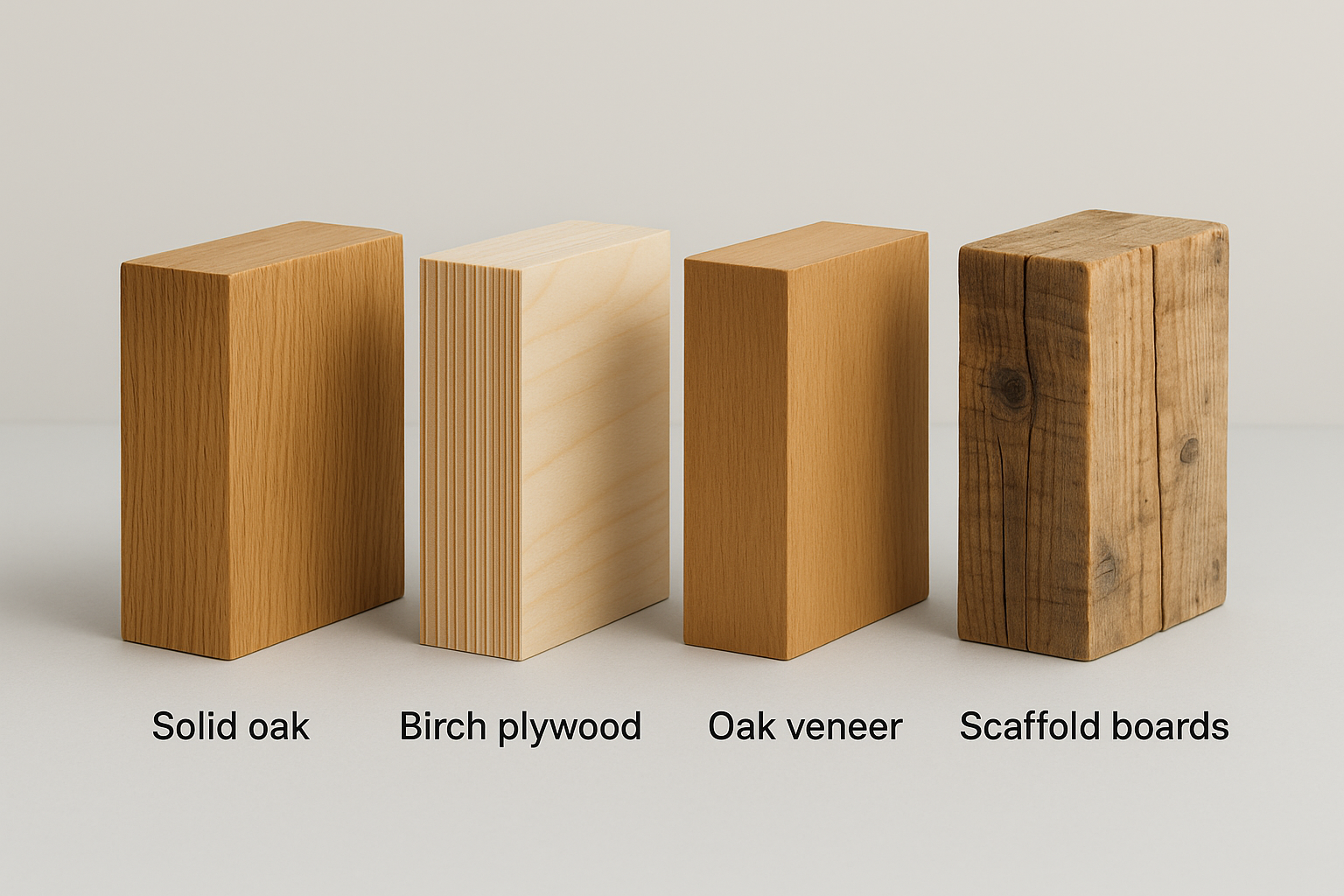
Solid oak is the classic choice. It feels timeless, heavy, and luxurious, with a depth of grain and colour that only real hardwood provides. It suits both traditional dining rooms and modern rustic homes, and it can look polished or casual depending on how it’s finished.
Oak veneer provides the look of oak in a more affordable, lighter package. Its clean, uniform appearance makes it ideal for modern, Scandinavian, or minimalist dining spaces. Veneer doesn’t have the same richness as solid oak but is a smart compromise for those on a tighter budget.
Birch plywood has a fresh, contemporary aesthetic. With its pale, subtle grain and exposed layered edges, it feels architectural and modern, especially in Scandinavian-inspired or urban interiors. It’s perfect if you want a clean, airy table with a design-led feel.
Scaffold boards bring rustic charm and character. Their chunky, weathered look makes them perfect for industrial lofts, eclectic dining rooms, or family homes where a table with a lived-in look feels right at home.
Strength, Weight, and Practicality
Solid oak is strong and durable but heavy. A large oak dining table requires careful handling and reinforcement to prevent sagging on longer spans. Its density means it will last for decades, but it also demands more effort during construction.
Oak veneer is much lighter and easier to work with. Because the oak is only a thin surface layer, it is bonded to a stable core such as MDF, making it resistant to warping. However, it isn’t as strong as solid wood, and the surface layer limits how much wear it can withstand.
Birch plywood is stable and strong relative to its weight. Unlike cheaper softwood plywood, birch ply has many layers of dense veneer, giving it strength across large sheets. It’s less heavy than oak and easier to cut, but it may sag over long spans unless reinforced.
Scaffold boards are inherently thick, around 38mm, so they make sturdy tops without needing extra reinforcement in smaller sizes. They’re not as hard as oak, so they dent more easily, but their rustic style means those marks often add to the character.
Durability and Daily Use
Dining tables see constant use — from hot plates to drink spills to everyday knocks. Solid oak is the most forgiving in the long term. Scratches can be sanded out, and the wood can be refinished many times, keeping the table looking good for decades.
Oak veneer, on the other hand, is less durable. Because the oak layer is thin, it cannot be sanded and refinished repeatedly. A veneer table can stay beautiful if you’re diligent about using placemats and coasters, but it won’t withstand the same level of wear as solid wood.
Birch plywood is durable but has its own quirks. The surface veneer is relatively thin, so it needs gentle sanding and a protective finish. With care, it makes an excellent dining surface, though it will show scratches more readily than oak.
Scaffold boards are forgiving in a rustic way. They may dent and mark easily, but instead of ruining the table, these imperfections become part of its character. If you want a more polished look, scaffold boards may feel too rough, but if you enjoy rustic charm, they only get better with age.
Cost and Availability
Solid oak is by far the most expensive option. It is a premium hardwood, and a large dining table requires a lot of it. It’s an investment piece, both in cost and longevity.
Oak veneer is affordable and widely available, offering the look of oak without the high price tag. Veneered boards can also be purchased pre-cut to size, saving hassle during construction.
Birch plywood sits in the middle. It is more expensive than softwood ply but still cheaper than solid oak. It’s widely available from timber merchants and online suppliers.
Scaffold boards are the most budget-friendly option. New boards are inexpensive, and reclaimed boards are even cheaper while offering extra character. They’re readily available from builders’ merchants and salvage yards.
Cutting and Preparation
Solid oak requires accurate, careful cutting with high-quality tools. It’s heavy and tough to work with but rewarding.
Oak veneer needs more delicate handling. It can chip easily when cut, so a fine-tooth blade, masking tape, or scoring the cut line is recommended.
Birch plywood cuts cleanly with the right tools, but accuracy matters. A track saw gives the best results, and because it produces lots of dust, proper safety gear is important.
Scaffold boards are straightforward to cut, though they’re heavy. To create a wide top, they must be joined together using glue, clamps, or battens underneath. Sanding is essential to transform them from rough planks into a usable surface.
Finishing Options
All four materials benefit from finishing. Solid oak responds beautifully to hardwax oil, Danish oil, or polyurethane varnish, enhancing the grain while protecting the surface.
Oak veneer should be finished with thin coats of oil or varnish, applied carefully to avoid damaging the thin surface.
Birch plywood looks great with hardwax oil, which highlights the pale tone while giving protection. Polyurethane can be used for added toughness.
Scaffold boards suit oils that highlight their rustic character. Hardwax oil provides a natural look, while varnish offers more durability for heavy use.
Which One Should You Choose?
Choose solid oak if you want a premium, long-lasting table that can be refinished and restored for decades. It’s an investment but one that pays off in beauty and durability.
Choose oak veneer if you want the look of oak at a lower cost and are prepared to take extra care to protect the surface from heavy wear.
Choose birch plywood if you like clean, contemporary design and want a balance between affordability, strength, and style. It’s particularly suited to modern, Scandinavian, and architectural interiors.
Choose scaffold boards if you want rustic charm and affordability. They’re ideal for industrial-inspired or eclectic interiors where imperfections are part of the appeal.
Conclusion
Birch plywood, solid oak, oak veneer, and scaffold boards each have their place in DIY dining table design. Oak is timeless and premium, veneer is cost-effective but requires care, birch ply is clean and modern, and scaffold boards are rustic and full of character. Paired with the right legs — whether slim hairpin legs for elegance or strong box section frames for boldness — each of these tops can be transformed into a dining table that reflects your taste and lifestyle.
The best choice comes down to how you live, how much wear your table will see, and the atmosphere you want to create in your dining space. Whatever material you choose, the result will be more than just a table — it will be the centrepiece of your home, built by your own hands.
