A dining table is often the focal point of the home — a place where meals are shared, guests are welcomed, and everyday life unfolds. Making your own table is not only rewarding but also allows you to create a piece that fits your style and budget perfectly. One of the most popular DIY combinations today is pairing scaffold boards with steel box section legs. The result is a table that feels bold, rustic, and contemporary all at once, balancing the character of reclaimed wood with the strength of steel.
The Style of the Table and Where It Belongs
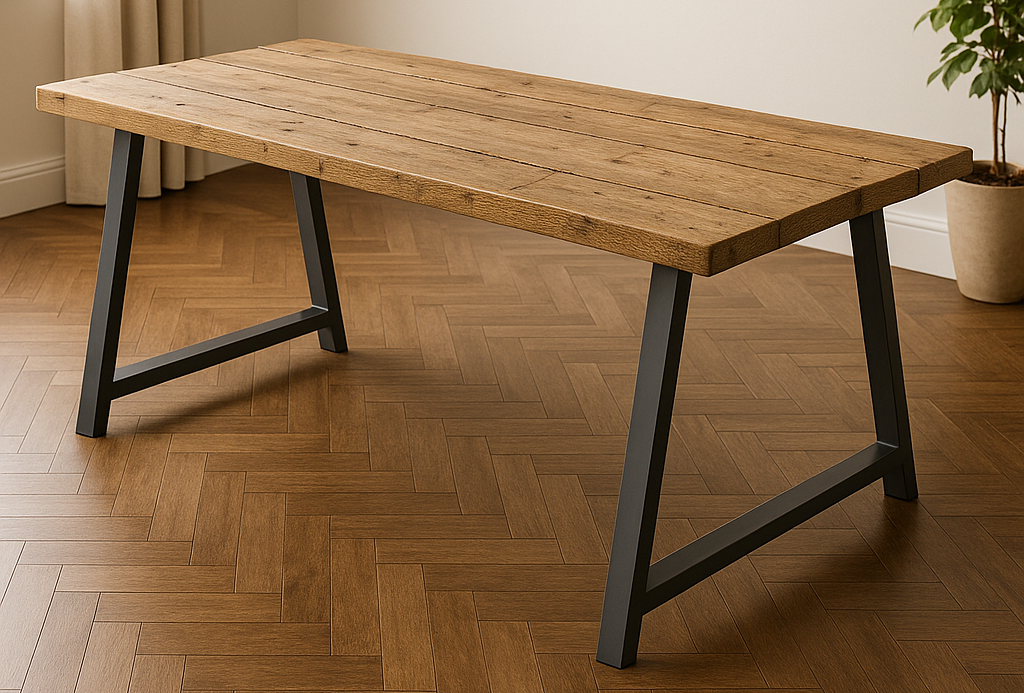
A dining table made from scaffold boards and box section steel legs has a rugged yet refined look. The boards bring rustic texture and warmth, while the squared steel legs add structure and modern geometry. This combination works especially well in industrial lofts, modern rustic homes, and creative interiors where furniture is meant to be practical but also make a statement. The chunky timber and strong steel create a table that feels substantial and grounded, ideal for both everyday family meals and larger gatherings.
What Box Section Steel Legs Are and How They Look
Box section legs are made from hollow rectangular or square steel tubing, welded into rigid frames. Their straight, sharp lines give them an architectural quality that contrasts beautifully with the organic grain of scaffold boards. Available in rectangular, trapezoid, and custom shapes, they offer flexibility in design while always providing a strong, reliable base. Unlike slim hairpin legs, box section legs have visual weight and presence, making the table feel bold and professional.
Why Scaffold Boards and Steel Are a Perfect Match
Scaffold boards are naturally chunky and characterful. On their own, they can look rustic or even rough, but when paired with box section steel legs, they transform into something balanced and striking. The rugged softness of wood plays against the clean geometry of steel, giving the table a modern industrial appeal. The strength of the steel also ensures the heavy timber top is supported securely, making this a practical as well as stylish combination.
Choosing the Right Colour for the Legs
Steel legs usually come in black, white, or raw steel finishes. Black is the most popular, offering a classic contrast with the pale tones of sanded scaffold boards. White creates a fresher, lighter look, ideal for more modern or Scandinavian-inspired interiors. Raw steel enhances the industrial edge but must be sealed to prevent rust. If you’d like something bespoke, the legs can be painted — sand them lightly first to improve adhesion, then apply spray paint or brush paint, followed by a clear topcoat for durability.
Why Scaffold Boards Are Popular for Dining Tables
Scaffold boards have become a favourite DIY furniture material because they are affordable, readily available, and inherently strong. Standard boards measure around 225mm wide and 38mm thick, with lengths up to nearly 4m. This makes them perfect for creating large dining table tops by joining several side by side. Reclaimed boards often come with marks, dents, and weathering that tell a story, while new boards are cleaner but still offer the same sturdy proportions. Their rustic appearance, combined with affordability, makes them a great option for those seeking character without the price tag of hardwood slabs.
Cutting the Boards to Size
Most scaffold boards need to be cut down to the desired table length. A circular saw can do the job, though a track saw or mitre saw gives straighter, cleaner results. Always measure carefully, mark your cuts, and clamp the boards securely before cutting. Because scaffold boards are chunky, wear goggles, a dust mask, and hearing protection, and use dust extraction where possible. If you don’t have access to the right tools, many suppliers sell scaffold board tops pre-cut to size, which costs more but saves effort and mess.
Joining the Boards
To create a wide dining surface, several boards must be joined together. The most secure method is to glue the edges and clamp them until dry. Adding dowels or biscuits helps keep everything aligned and adds strength. If you prefer a simpler approach, you can fix battens across the underside to hold the boards together. This is quicker but often leaves small gaps between the boards, which may not be ideal if you want a perfectly smooth surface.
Reinforcing Against Movement
As with any natural timber, scaffold boards move with changes in humidity. Over time, this can cause cupping or slight warping. To minimise this, attach bars across the underside of the table running perpendicular to the grain. Wooden battens screwed in place are simple and effective, while steel bars routed into the wood provide extra reinforcement but are more complex to fit. For dining tables longer than 150cm, adding a lengthwise batten or “spine” helps prevent sagging in the middle.
Positioning the Box Section Legs
Box section legs should be positioned about 5–8cm in from each end of the table. This ensures stability while keeping the proportions balanced. If the table will sit against a wall, check that the frames don’t clash with skirting boards. It’s also a good idea to test the layout with chairs to make sure the frames don’t obstruct comfortable seating, as box section legs take up more space than hairpin styles.
Sanding the Boards
Scaffold boards often arrive rough, especially if reclaimed. Sanding is essential to transform them into a pleasant dining surface. Start with coarse grit paper to remove dirt, marks, and unevenness, then move to finer grits for a smooth finish. An electric sander makes the process much quicker, but sanding by hand is possible if you prefer a traditional approach. The goal is to create a surface that feels smooth enough for daily use while retaining the wood’s natural character.
Pilot Holes and Edge Profiles
When fixing the legs, always drill pilot holes first to prevent splitting the wood. For the edges, you can leave them square for a rugged look, round them slightly with a sander for comfort, or use a router to create a chamfered or rounded profile. Even a small amount of shaping can make the table feel more finished and comfortable.
Finishing the Table Top
A finish protects the wood from spills and wear while enhancing its natural grain. Hardwax oil is a popular option for scaffold boards, giving a natural matte look while offering good protection. Danish oil or tung oil add warmth and depth but may need reapplying periodically. For maximum durability, varnish or polyurethane provides a tougher surface that resists scratches and stains, though it may create a shinier appearance. Apply several thin coats, sanding lightly between applications for the best result.
Conclusion
A dining table made with scaffold boards and steel box section legs is bold, practical, and full of character. The rugged timber top provides warmth and authenticity, while the strong steel legs add structure and modern style. With careful cutting, joining, sanding, and finishing, you can create a table that looks professional, feels substantial, and will serve your home for years.
This combination is ideal if you want a table that blends rustic charm with industrial design. Affordable, sturdy, and stylish, a scaffold board and steel box section dining table is the perfect centrepiece for any modern home — a place where everyday life and special occasions can be enjoyed in equal measure.
