
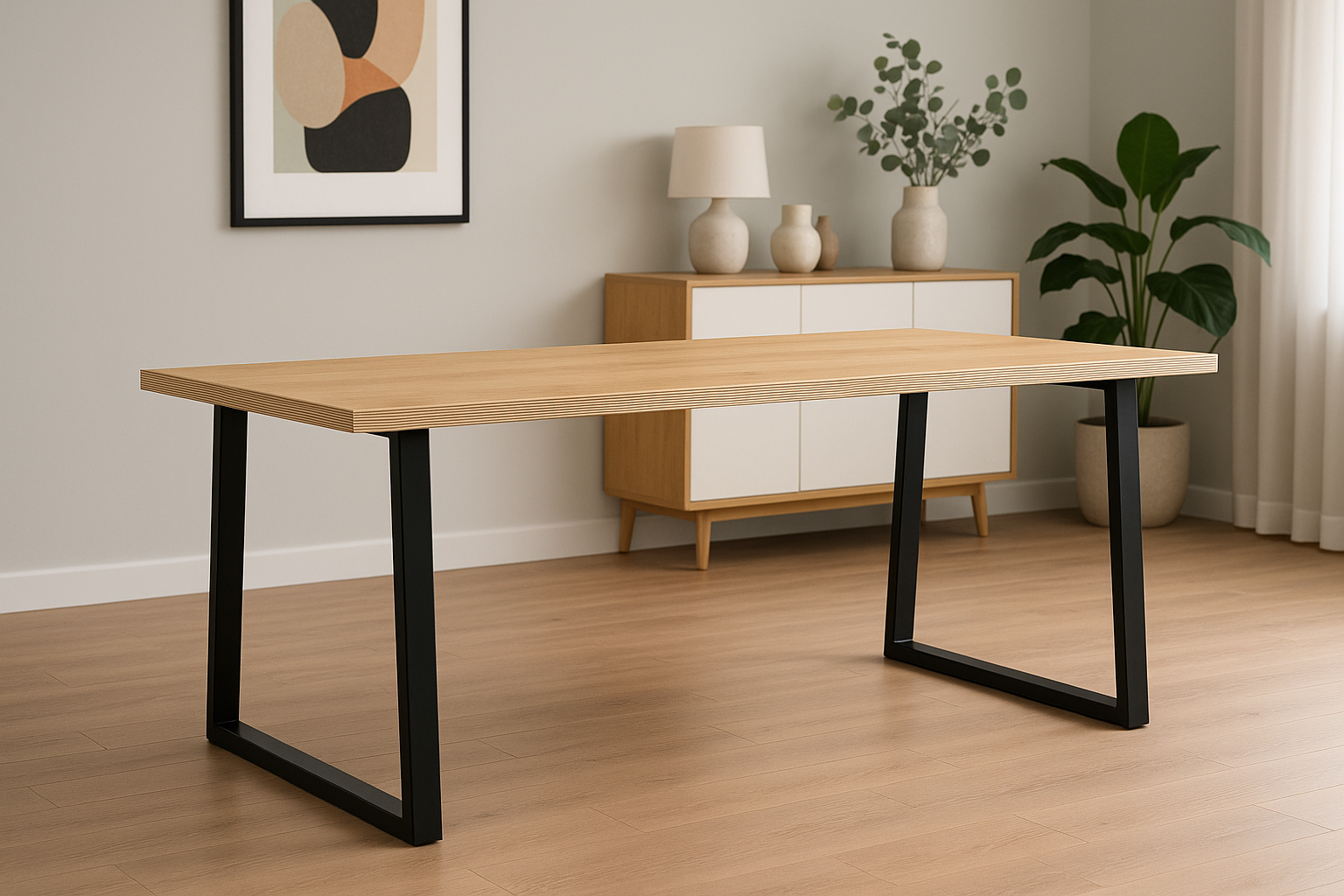
A dining table is more than just a piece of furniture. It’s a gathering place where family meals, celebrations, and conversations take place. Building your own table gives you the freedom to design something that fits your space and style perfectly. One particularly popular combination is a birch plywood top paired with steel box section legs. Together, these materials create a table that is strong, modern, and versatile — ideal for contemporary interiors where design and practicality go hand in hand.
The Style of the Table and Where It Belongs
A dining table made with birch plywood and box section legs has a clean, architectural look. The pale, subtle grain of birch adds warmth and lightness, while the bold, geometric steel frames give the table structure and presence. This pairing is particularly well-suited to Scandinavian-inspired homes, urban lofts, and modern family dining rooms. The combination of natural wood and engineered steel gives the table a timeless quality that feels at home in both minimalist and eclectic interiors.
What Box Section Steel Legs Are and How They Look
Box section legs are made from square or rectangular hollow steel tubing welded into a rigid frame. Their straight lines and angular geometry give them a strong, structural appearance that contrasts nicely with the softer look of wood grain. Available in rectangular, trapezoid, or custom shapes, they are highly versatile and extremely durable. Unlike hairpin legs, which are slender and subtle, box section legs have visual weight, giving the dining table a bold, grounded feel.
Why Birch Plywood and Steel Work Well Together
Birch plywood is a high-quality sheet material made from thin layers of birch veneer bonded together with alternating grain for strength. It is stable, smooth, and stronger than cheaper softwood plywoods used for construction. Its pale tone and fine grain give it a fresh, modern appearance. Paired with box section steel legs, the result is a dining table that is both practical and stylish. The plywood top keeps the look clean and contemporary, while the steel legs add strength and structure, creating a balance of warmth and industrial sharpness.
Choosing the Right Colour for the Legs
Steel legs are commonly available in black, white, or raw steel. Black provides a classic contrast against the light birch, making the table feel bold and modern. White has a softer effect, enhancing the Scandinavian aesthetic and keeping the overall look airy. Raw steel gives the most industrial edge but must be sealed to prevent rust. For a bespoke touch, the legs can be painted in any colour. Sand them lightly first, then apply spray paint for a smooth finish, or brush paint for smaller projects, and seal with a clear coat for durability.
Why Birch Plywood Stands Out
Unlike cheaper plywood that often contains knots, voids, and rough veneers, birch plywood is made with multiple uniform layers of dense birch veneer. It is smooth, strong, and consistent, making it ideal for furniture. Many makers choose to leave the exposed layered edges visible as a design detail, while others cover them with edging strips for a seamless finish. Birch plywood has become a popular choice for modern furniture because it combines practicality with a refined, contemporary look.
Choosing the Right Thickness
For dining tables, thickness makes a big difference to both strength and style. The two most common sizes for birch plywood are 18mm and 24mm. An 18mm top looks sleek and costs less, but for longer dining tables it may sag without reinforcement. A 24mm top feels more substantial, is sturdier, and resists sagging better while still looking clean and modern. For tables over 150cm long, 24mm is usually the best choice, especially when paired with box section legs that visually suit a more solid top.
The Realities of Using Plywood
Even high-grade birch plywood isn’t flawless. It may include small patches or plugs where knots have been repaired, and sometimes minor scratches or marks from handling. These are normal and can usually be smoothed out with sanding and hidden with finishing products. The edges may also show some glue lines, but many people celebrate this layered look as part of the modern aesthetic.
Cutting the Top to Size
If you are cutting the plywood yourself, accuracy is key. A circular saw will do the job, but a track saw is best for ensuring straight, clean lines. Always clamp the sheet securely, mark your cut lines clearly, and cut slowly. Plywood produces a lot of fine dust, so wear goggles, a dust mask, and hearing protection, and use dust extraction if available. If you don’t have the right tools, many suppliers sell pre-cut plywood tops. Though this costs more per square metre, it saves time, reduces waste, and guarantees precise dimensions.
Reinforcing Longer Tables
For dining tables longer than 150cm, reinforcement is recommended. While box section steel legs provide plenty of stability, the plywood itself may sag over time if unsupported. Adding a wooden batten or “spine” lengthwise underneath strengthens the structure and ensures the table remains level even under daily use.
Positioning the Box Section Legs
Box section legs should be positioned about 5–8cm in from each end of the table for balance and stability. Because the frames are wider than hairpin legs, it’s important to test the layout with chairs to ensure comfortable seating space. If the table will sit against a wall, also check that the legs don’t clash with skirting boards.
Sanding Birch Plywood
Before finishing, sand the plywood carefully to prepare the surface. With plywood, aggressive sanding can remove too much of the top veneer and expose glue. Start with a medium grit and work up to a fine grit such as 240, always sanding lightly and with the grain. An orbital sander can be used carefully, but hand sanding is often safer on edges.
Pilot Holes and Edge Treatments
Always drill pilot holes before screwing into plywood, as this prevents splitting and helps screws seat cleanly. For the edges, you can either leave the layered ply exposed as a design feature, lightly ease them with sandpaper, or cover them with edge banding for a seamless oak-like look. If you want a more refined edge, a router can be used to create a chamfer or rounded profile, but proceed gently to avoid damaging the veneer layers.
Finishing the Table Top
A finish protects the table and highlights the natural beauty of birch. Hardwax oil is an excellent choice, offering durability with a matte, natural feel. Danish oil or tung oil also work, bringing warmth to the wood but requiring reapplication over time. Polyurethane or varnish creates the toughest barrier against spills and scratches, though it can look shinier than oils. Apply multiple thin coats, lightly sanding between applications, for a smooth, resilient finish.
Conclusion
A dining table made with a birch plywood top and steel box section legs is a stylish, durable, and modern project. The plywood provides a clean, contemporary surface that is strong and practical, while the steel legs add structure and an architectural edge. Together they create a piece of furniture that is functional, versatile, and attractive.
By choosing the right thickness, cutting carefully or ordering pre-cut, reinforcing where necessary, sanding thoughtfully, and applying a protective finish, you can create a dining table that looks professional and lasts for years. Perfect for modern homes, studios, and open-plan living, this combination of birch and steel proves that simple materials can produce outstanding results when paired with care and creativity.
