A coffee table is the kind of furniture that quietly earns its place in the home. It sits in the middle of the living room, catching mugs, books, snacks, and laptops, while also anchoring the space visually. Because it is so central, its design matters. A well-chosen coffee table complements the room, balances practicality with style, and reflects the character of the home.
Building your own coffee table allows you to tailor it to your taste, budget, and lifestyle. One of the most rewarding yet approachable projects is a birch plywood top paired with hairpin legs. This combination is simple, modern, and versatile, creating a table that looks designer-made but is achievable with basic DIY skills.
The Style of the Coffee Table and Where It Belongs
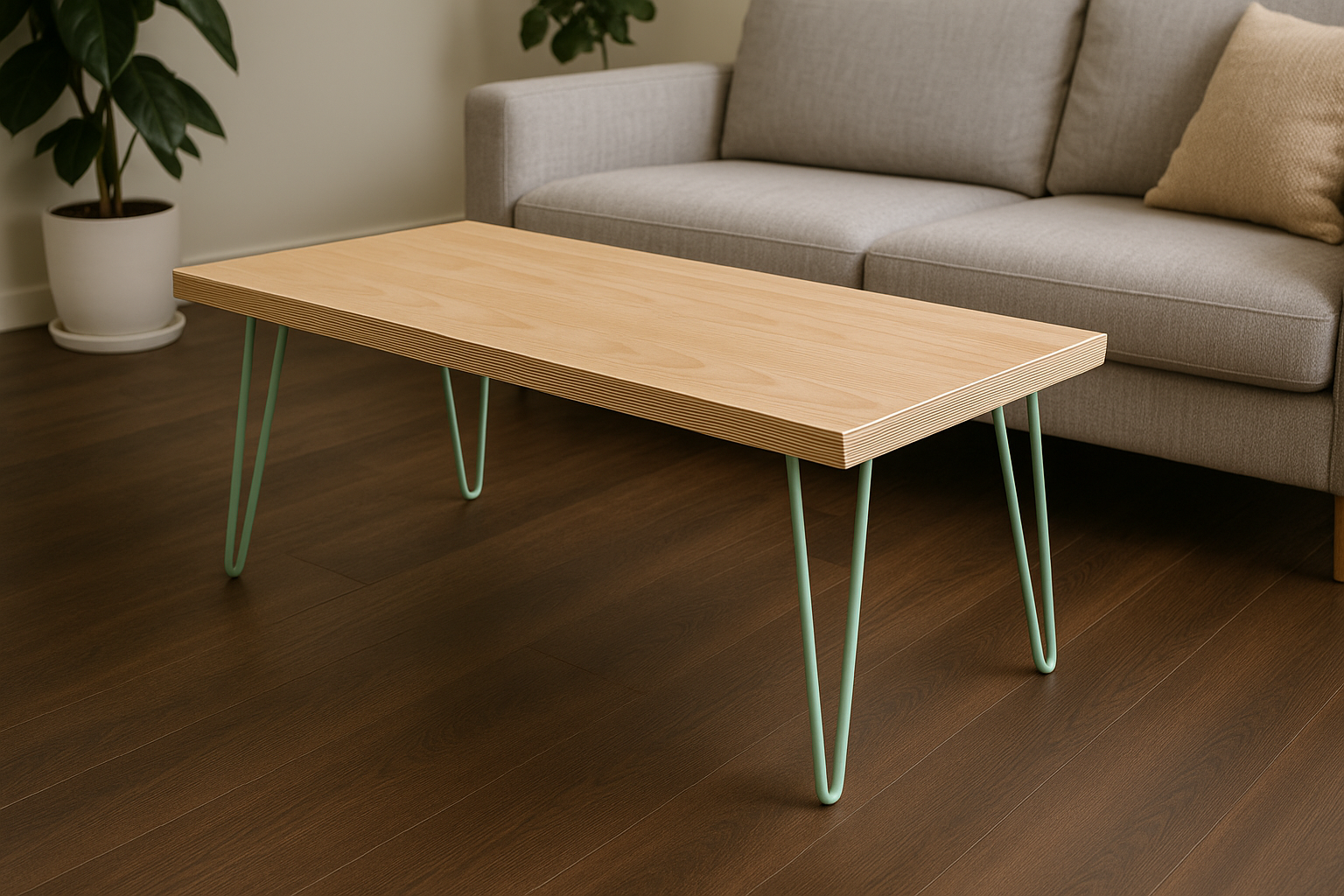
Birch plywood is instantly recognisable for its pale tone, fine grain, and distinctive layered edges. It has a clean, modern character that suits a wide range of interiors. When paired with hairpin legs, the result is a coffee table that feels light and minimal. The steel legs provide a delicate framework that doesn’t crowd the room, while the plywood top adds warmth without heaviness.
This style is particularly at home in Scandinavian-inspired living rooms, where pale woods and simplicity are key. It also works in modern apartments, where space is limited and furniture must feel light. In creative studios or lofts, plywood paired with steel legs resonates with the industrial-yet-refined aesthetic. It’s a coffee table that doesn’t shout for attention, but instead complements its surroundings gracefully.
What Hairpin Legs Are and How They Work
Hairpin legs are crafted from bent steel rod welded to a mounting plate. Typically, they come in two-rod versions, which are sleek and minimal, or three-rod versions, which provide greater strength for heavier tops. Their design dates back to the 1940s but remains popular because of their simplicity and adaptability.
On a coffee table, hairpin legs are the perfect partner for plywood. They echo the clean, no-fuss aesthetic of the top while adding a touch of mid-century elegance. Slim but strong, they allow the plywood to take centre stage, keeping the table visually uncluttered.
Why Birch Plywood and Hairpin Legs Work Well Together
Plywood has a very different personality from solid hardwood. It’s engineered from thin layers of birch veneer, each layer’s grain alternating direction for strength. The result is a panel that is stable, flat, and strong relative to its weight. Unlike cheaper softwood plywood used in construction, birch plywood is smooth, uniform, and free of large voids.
When combined with hairpin legs, the table achieves a balanced aesthetic. The legs highlight the clean, architectural quality of the plywood, while the plywood offsets the industrial look of steel with warmth and subtle grain. Together they produce a coffee table that feels light, functional, and quietly stylish.
Choosing the Right Colour for the Legs
Hairpin legs are usually available in black, white, or raw steel. Black creates a striking contrast against the pale tones of birch, giving the table a modern edge. White blends softly with the wood, enhancing the Scandinavian feel. Raw steel adds an industrial touch but must be sealed with a clear coat to prevent rust.
For those wanting a more personal touch, the legs can be painted in any colour. To do this, lightly sand them to help the paint adhere, then spray or brush on your chosen colour, finishing with a clear coat for protection. This gives you the flexibility to match the table to your existing décor or make it a standout accent piece.
Why Birch Plywood Is Popular for Furniture
Birch plywood has become one of the most popular sheet materials for DIY furniture. Unlike construction-grade plywood, which often contains knots, voids, and rough veneers, birch ply is made entirely from birch, giving it consistency and strength. Its layered edge is often celebrated as a design feature, left exposed as a decorative element that hints at its engineered construction.
It has a fresh, contemporary look that appeals to people who want furniture that feels modern but not cold. It’s also affordable compared to solid hardwood, making it a practical choice for larger projects like tables.
Choosing the Right Thickness
For coffee tables, plywood thickness makes a noticeable difference. The two most common options are 18mm and 24mm. An 18mm top looks sleek and is strong enough for smaller tables. A 24mm top feels more substantial, resists sagging better, and gives the table a bolder presence. Because hairpin legs are slender, many people find that pairing them with the slightly thicker 24mm top creates a better balance.
The Realities of Using Plywood
While birch plywood is high quality, it isn’t flawless. The surface may include small patches or “plugs” where knots were removed, as well as occasional scratches from handling. These imperfections are part of the material’s nature. Some makers choose to embrace them as part of the table’s character, while others select their panels carefully to avoid prominent marks.
Another thing to consider is sanding: the outer veneer layer is thin, so sanding must be gentle to avoid going through to the glue layer beneath. This is less of an issue with solid wood but a reality with plywood.
Cutting the Top to Size
Cutting plywood requires accuracy. A circular saw can handle the job, but a track saw gives the best results, ensuring perfectly straight lines. Always measure carefully, mark clearly, and clamp the board securely before cutting. Birch plywood produces fine dust, so goggles, a dust mask, and hearing protection are essential. Dust extraction is also highly recommended.
If you don’t have the right tools, ordering pre-cut plywood panels from an online supplier can save time and effort. While this costs slightly more per square metre, it eliminates waste, mess, and the risk of miscutting.
Reinforcing Longer Coffee Tables
Coffee tables are usually smaller than dining tables, so sagging is less of an issue. Still, if you are making a longer table — for example, one over 120cm — you may want to reinforce the underside with a batten or “spine” running lengthwise. This helps prevent sagging over time, especially if you’ve chosen an 18mm board.
Positioning the Hairpin Legs
For stability and a balanced look, position the legs about 5–8cm in from each corner. Before drilling, check how the table will sit in your living room. If it will be placed against a wall, make sure the legs don’t clash with skirting boards. It’s also worth testing the layout to ensure the legs don’t obstruct baskets, footstools, or other items you may want to store underneath.
Sanding Birch Plywood
Sanding prepares the plywood for finishing. Start with medium grit sandpaper, then progress to finer grits such as 240. Sand lightly and always with the grain. Be especially careful with the edges, as the veneer is thin. Many makers choose to leave the layered edge visible as part of the design, but it can also be softened with sandpaper for comfort.
Edge Treatments
The edges of plywood are often a focal point. You can leave them exposed for a modern, architectural look, or cover them with edge banding for a more solid-wood appearance. If you prefer subtle shaping, a router can add a small chamfer or rounded profile, or you can simply ease the corners by hand sanding.
Finishing the Surface
A finish protects the wood and enhances its natural beauty. For birch plywood, hardwax oil is an excellent choice, providing a natural matte look while guarding against spills. Danish oil or tung oil bring warmth but may require more frequent reapplication. For tougher protection, polyurethane varnish offers resistance to scratches and stains, though it can create more shine.
Apply several thin coats of your chosen finish, sanding lightly between applications. This ensures a smooth surface that can withstand the daily wear a coffee table endures — hot mugs, snack trays, and the occasional spill.
Conclusion
A coffee table with a birch plywood top and hairpin legs is an ideal DIY project for anyone who values modern style, affordability, and practicality. The pale tone and layered edges of the plywood give it a fresh, architectural look, while the hairpin legs add mid-century elegance and prevent the design from feeling heavy.
With careful preparation — choosing the right thickness, cutting accurately, sanding gently, and applying a protective finish — you can create a coffee table that feels light, stylish, and durable. It’s a table that works beautifully in contemporary, Scandinavian, and minimalist interiors, and with regular care it will serve as a functional centrepiece in your living room for years to come.
