A coffee table is often the centrepiece of the living room. It’s where mugs of tea are placed, books are stacked, snacks are served, and remote controls always seem to end up. It’s a piece of furniture that gets used every single day, often in ways we don’t even think about. Building your own coffee table gives you the freedom to choose the look, size, and materials that work for your home while also giving you the satisfaction of creating something yourself.
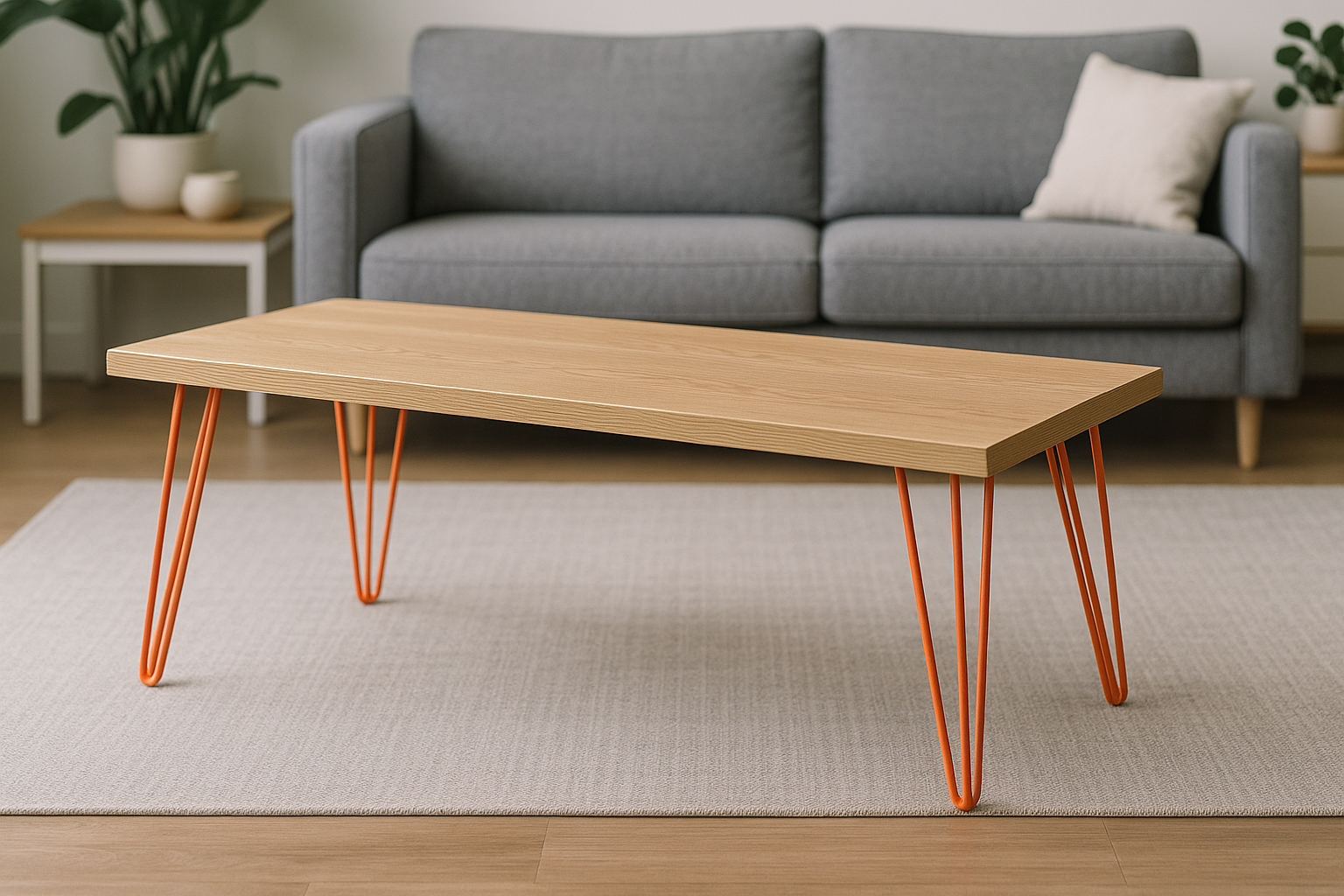
One combination that strikes an ideal balance between style, affordability, and practicality is a coffee table with an oak veneer top and hairpin legs. This pairing combines the natural warmth of oak with the light, elegant look of steel, creating a table that feels modern and versatile without being bulky. If you’re looking for a project that is achievable for a DIY maker and rewarding in everyday use, this is an excellent option.
The Style of the Coffee Table and Where It Belongs
Oak veneer paired with hairpin legs has a distinctly modern character. The veneer surface gives you the look of real oak grain but with a sleek, slim profile. Hairpin legs, originally designed in the 1940s and strongly associated with mid-century modern design, keep the piece feeling light and airy. The result is a coffee table that doesn’t overwhelm the room but instead blends seamlessly with its surroundings.
This style of coffee table works beautifully in Scandinavian-inspired homes, where pale woods and clean lines dominate. It also fits well in minimalist interiors, where clutter is reduced and each piece of furniture must pull its weight both functionally and aesthetically. In modern apartments or smaller living spaces, the slim legs and lightweight construction prevent the table from looking too heavy. And in mid-century inspired interiors, hairpin legs pay homage to a design classic while giving the table timeless appeal.
What Hairpin Legs Are and How They Look
Hairpin legs are made from bent steel rod welded to a mounting plate. They come in two-rod versions, which are lighter and sleeker, and three-rod versions, which offer greater strength for supporting heavier tops. The simplicity of their design is what makes them so enduring. They are strong enough to hold substantial weight, yet their thin profile makes them appear almost delicate.
On a coffee table, hairpin legs are the perfect partner for a veneered top. Because veneer is slimmer and lighter than solid wood, the pairing works visually: a sleek top with slender legs. The table feels light and modern while still strong enough for everyday use.
Why Oak Veneer and Hairpin Legs Work Together
Oak veneer is made by slicing very thin sheets of real oak and bonding them to a stable core such as MDF or particleboard. This construction gives you the appearance of solid oak but with far less weight and cost. While solid oak can sometimes feel heavy, both in appearance and in handling, veneer keeps things lighter. Pairing veneer with chunky legs might feel unbalanced, but hairpin legs are the ideal match. Their slender steel frames complement the refined look of veneer, creating harmony between top and base.
The end result is a table that feels elegant without being fragile, modern without being cold, and affordable without looking cheap.
Choosing the Right Colour for the Legs
The finish of your hairpin legs can dramatically alter the overall look of the coffee table. Black is the most versatile option, giving a sharp, modern contrast against oak veneer. It works in almost any interior style. White provides a lighter, fresher look that feels especially at home in Scandinavian or coastal-inspired living rooms. Raw steel offers an industrial edge, though it must be sealed to prevent rust.
If you want something bespoke, hairpin legs can easily be painted. Lightly sand the steel first to help the paint adhere, then apply spray paint for a smooth finish. Once dry, add a clear protective coat to improve durability. This allows you to coordinate the legs with other accents in your living room, from light fixtures to shelving.
Why Oak Veneer Is Different from Solid Oak
It’s worth understanding exactly what oak veneer is and how it differs from solid oak. With veneer, the surface is genuine oak, so you get the natural grain and character. Underneath, however, is a stable substrate such as MDF. This engineered structure makes the board resistant to warping and movement, unlike solid oak, which expands and contracts with humidity.
The downside is that the veneer surface is thin — usually less than a millimetre thick. This means it can’t be sanded and refinished multiple times the way solid oak can. Once the veneer layer is worn through, the surface can’t be restored in the same way. That makes it less durable in the long term, but for many projects the trade-off in cost and stability is worth it.
Durability and Everyday Use
Coffee tables endure a lot of daily abuse. Hot mugs are set down, drinks spill, food is eaten from them, and feet sometimes rest on them. A solid oak surface would handle this kind of use for decades, as scratches can be sanded out and refinished. Oak veneer requires more care. Because the top layer is so thin, scratches or chips can be permanent.
That said, with a little discipline — always using coasters and placemats, wiping up spills promptly, and avoiding dragging heavy objects across the surface — a veneer coffee table can last many years and stay looking beautiful. If you’re the kind of person who likes to protect your furniture with mats and trays, veneer is a perfectly viable option.
Choosing the Thickness of Veneered Boards
Oak veneered panels are typically available in 18mm, 22mm, or 25mm thicknesses. For a coffee table, a thickness of 22mm or 25mm gives the right balance between strength and appearance. An 18mm board can work but may feel too light, particularly with slim legs. A thicker top not only looks more substantial but also resists sagging, even if the table is made larger.
Cutting the Top to Size
If you’re cutting your veneered board yourself, accuracy and care are vital. Veneer is prone to chipping at the edges when cut. To minimise this, use a fine-tooth blade on your saw, apply masking tape along the cut line, and cut slowly. A track saw is best for achieving perfectly straight, clean cuts. Always wear goggles, a dust mask, and hearing protection, and use dust extraction where possible.
If you don’t have the right tools, many suppliers offer veneered panels cut to size. This option costs slightly more per square metre but saves time and ensures perfect edges. It also reduces wastage and keeps your workshop or living room free of sawdust and mess.
Sanding Veneer Safely
Sanding oak veneer requires a gentle touch. Unlike solid wood, where you can remove several layers to refresh the surface, veneer is thin. Start with fine-grit paper, such as 180, and sand lightly with the grain. Avoid using a heavy hand or aggressive power sanding, as this could go through the veneer and expose the core material beneath. For edges, hand sanding is usually safest.
Attaching the Legs
Before attaching your hairpin legs, mark out their positions carefully. Legs are usually set back 5–8cm from each corner for stability and a balanced look. Once you’re happy with the placement, drill pilot holes into the underside of the board. This prevents splitting and ensures the screws go in cleanly. Attach the legs with wood screws of the appropriate length, making sure they don’t go through the top.
Edge Treatments
The edges of veneered panels often expose the MDF or particleboard core. You can leave them visible for a more industrial look, but most people prefer to cover them. The simplest solution is iron-on oak edge banding, which creates the appearance of a solid oak top. Alternatively, you can attach solid oak lippings for a premium finish. If you prefer a softer edge, lightly sand the corners or add a small chamfer for comfort.
Finishing the Surface
Finishing is essential to protect the veneer and bring out the oak grain. Hardwax oil is a popular choice, giving a matte, natural look while providing some resistance to spills. Danish oil or tung oil add warmth but may require periodic reapplication. For maximum durability, especially on a table that will see daily use, a clear polyurethane varnish offers the toughest protection against scratches and stains, though it may look shinier than oils. Apply several thin coats, sanding lightly between them for the smoothest result.
Conclusion
An oak veneer coffee table with hairpin legs is a stylish, affordable, and rewarding project. The oak veneer provides the natural beauty of wood grain without the cost of solid oak, while the hairpin legs keep the design light, elegant, and timeless. With thoughtful preparation — choosing the right thickness, cutting carefully, sanding gently, protecting the edges, and applying a strong finish — you can create a coffee table that looks professional and serves your living room well.
This style works beautifully in modern, Scandinavian, and minimalist interiors, where lightness and practicality are valued. While oak veneer won’t last as long as solid wood under heavy use, with care it can remain a stylish centrepiece for many years. It’s proof that you don’t need to spend a fortune to build a table that feels bespoke, modern, and made with pride.
