Building your own desk is one of the most rewarding DIY projects you can take on. You get the satisfaction of creating something functional, beautiful, and tailored to your needs. A particularly popular combination is a solid oak top paired with steel box section legs. This pairing gives you a desk that is both timeless and contemporary: the natural warmth of oak balanced by the bold geometry of steel. The result is a workspace that feels premium, sturdy, and professional.
The Style of the Desk and Where It Belongs
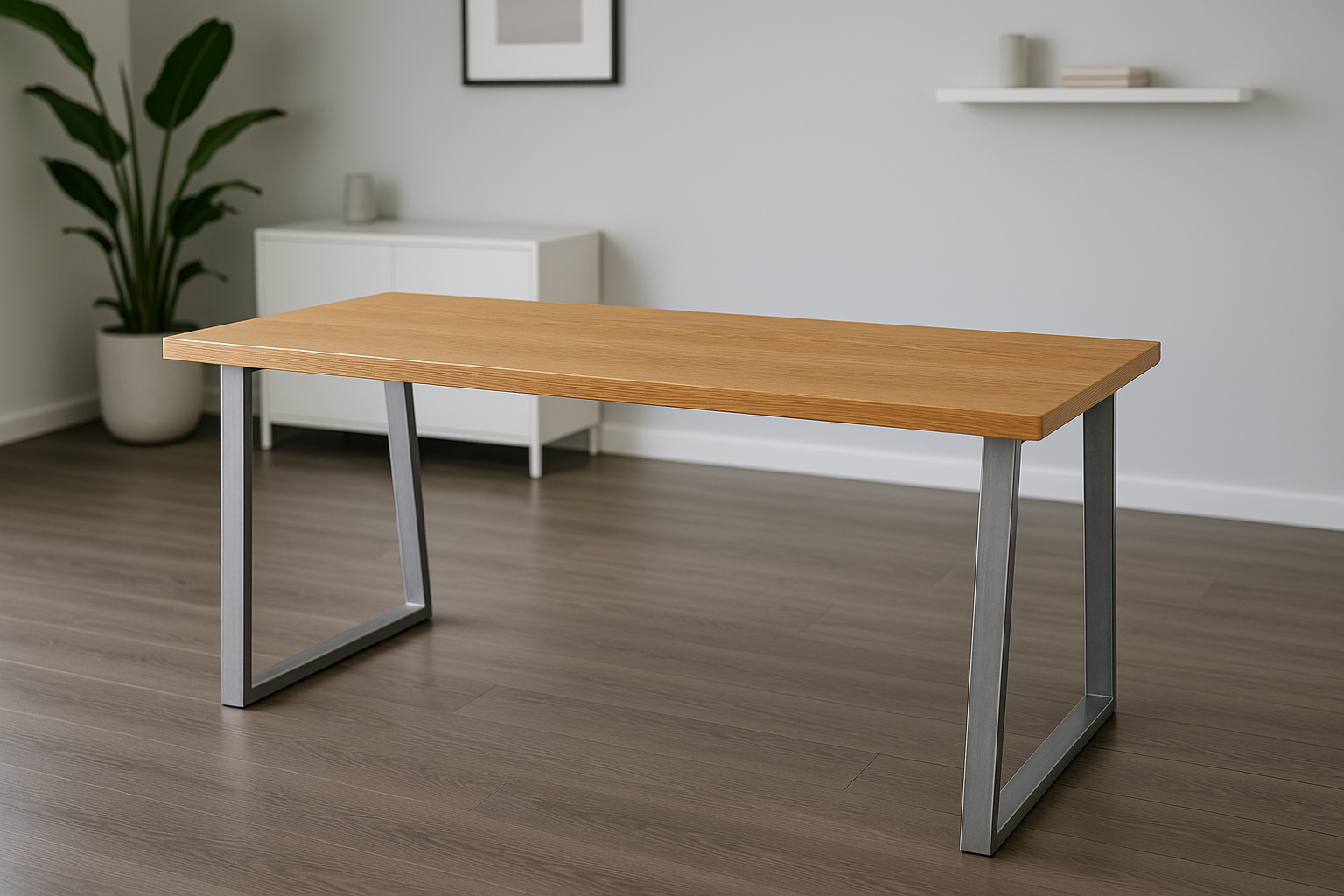
A desk with a solid oak top and steel box section legs has a distinctive style that combines rustic tradition with modern minimalism. Oak brings warmth, grain, and natural charm, while the steel legs add structure and a clean, architectural presence. This combination works beautifully in industrial lofts, modern rustic homes, and contemporary apartments where bold materials are part of the aesthetic. At the same time, it looks right at home in more traditional settings because oak has long been valued as a classic furniture wood. The balance of raw metal and refined timber makes this style versatile enough for a home office, creative studio, or even a boardroom table.
What Box Section Steel Legs Are and How They Look
Box section legs are made from square or rectangular hollow steel tubing welded into a rigid frame. They can be manufactured in a variety of shapes, from straight rectangular frames to trapezoids or even custom angular forms. Their appearance is bold and geometric, with sharp lines that contrast with the softness of wood grain. They provide immense strength, capable of supporting heavy tops like oak without flexing. The look is solid and substantial, giving the desk a professional presence while still being clean and modern.
Why Oak and Steel Combine So Well
Oak and steel are a natural pairing. Oak is heavy, tactile, and full of character, while steel is sleek, industrial, and modern. Together they create balance: the steel keeps the oak from feeling too rustic or heavy, while the oak prevents the steel from looking too cold or sterile. This mix of natural and engineered materials has become a hallmark of modern design, often referred to as industrial-chic or modern rustic. It’s a combination that not only looks good but also results in a desk that is strong, durable, and built to last.
Choosing the Right Colour for the Legs
Box section legs are usually available in black, white, or raw steel. Black is the classic choice that works in nearly all settings, offering a sharp contrast against oak’s warm tones. White feels lighter and pairs well with pale or lightly finished oak, suiting Scandinavian-inspired interiors. Raw steel emphasizes the industrial character of the desk but must be sealed to prevent rust. For a unique touch, you can paint the legs yourself in a bespoke colour. Sand the surface lightly to help the paint adhere, then apply with a spray can or brush. Spraying tends to give the smoothest finish, while brushing is practical for smaller spaces. Adding a protective topcoat increases durability.
Choosing the Thickness of the Oak
The thickness of the oak top affects both the appearance and performance of the desk. Typical thicknesses available from timber suppliers are 19mm, 24mm, 27mm, 30mm, and 40mm. Nineteen millimetres looks sleek but may feel a little light for larger spans. Twenty-four millimetres is often the best compromise between strength, weight, and cost. Anything from 27mm upwards begins to look very substantial, while 40mm is chunky, dramatic, and very heavy. The thicker the oak, the less prone it will be to sagging, and the more premium the desk will feel. For most people, 24mm or 27mm provides the right balance.
The Realities of Using Oak
As a natural material, oak comes with features that you should expect and embrace. Knots are common and may be small or large depending on the grade of oak. Medullary rays—light streaks that run across the grain—are another distinctive characteristic. Some suppliers offer “prime oak,” which has fewer knots and a more uniform look, while character oak highlights all the variations and natural features. Both can make a beautiful desk, but it’s worth deciding in advance whether you prefer a clean, consistent look or something more rustic.
Cutting the Oak to Size
If you’re cutting the oak top yourself, accuracy is key. A circular saw with a fine-tooth blade can do the job, but a track saw is the best tool for ensuring straight, precise cuts. Always measure carefully, mark clearly, and cut slowly. Safety is essential when working with hardwood: wear goggles, hearing protection, and a dust mask, and use dust extraction if possible. Oak is dense and produces fine dust, so take the time to protect both yourself and your workspace.
If you don’t own the tools or prefer a cleaner process, consider ordering oak tops pre-cut to size. Many suppliers offer this service, and while it costs more per square metre, it guarantees square, accurate edges and reduces mess and wastage.
Preventing Cupping and Sagging
Solid oak, like all wood, moves with seasonal changes in humidity. Over time, this can lead to cupping, where the board edges curl slightly upward or downward. To minimise this, you can attach bars across the underside of the desk running perpendicular to the grain. These bars can be wooden battens screwed into place or, for a more engineered solution, steel bars routed into the underside. The key is to screw rather than glue them so the oak can still expand and contract naturally. For desks longer than about 150cm, it is also advisable to add a lengthwise batten or “spine” underneath to prevent sagging in the middle.
Positioning the Box Section Legs
The placement of the legs affects both stability and usability. Position them around 5–8cm in from each end of the desk to provide balance without sticking out awkwardly. If the desk will sit against a wall, check that the legs don’t clash with skirting boards. It’s also worth checking legroom before fixing the legs, as box section frames take up more width than slim hairpin legs. A quick mock-up before drilling can save frustration later.
Sanding the Oak
Sanding oak is straightforward but should be done carefully. Start with a medium grit such as 120 and work up to 180 or 240 for a smooth finish. Always sand with the grain to avoid scratches. An electric sander speeds up the process and gives an even result, but sanding by hand is a perfectly valid option if you enjoy the process or don’t own a machine. The goal is to create a smooth, comfortable surface ready for finishing.
Pilot Holes and Edge Profiles
Before attaching the steel legs, drill pilot holes into the underside of the oak. This prevents splitting and makes it easier to drive in screws. For a refined finish, consider shaping the edges of the top. A router can add a rounded or chamfered profile, while simply easing the corners with sandpaper makes the desk more pleasant to use. Even a subtle rounding improves comfort and gives the desk a professional look.
Finishing the Oak Top
Finishing protects the oak and enhances its natural beauty. Hardwax oil is one of the best options, as it is easy to apply, brings out the grain, and leaves a natural matte finish. Danish oil and tung oil also work well, soaking into the wood and giving it a warmer tone, though they may need periodic reapplication. Varnishes and polyurethanes create the toughest surface, protecting against spills and scratches, but can sometimes look overly glossy. For the best results, apply several thin coats, sanding lightly between applications.
Conclusion
A desk built with a solid oak top and steel box section legs is a project that combines natural beauty with industrial strength. The oak provides timeless warmth and character, while the steel adds a modern, architectural edge. Together they create a desk that is substantial, stylish, and built to last. By choosing the right thickness of oak, cutting accurately or ordering pre-cut, reinforcing against natural movement, sanding carefully, and finishing thoughtfully, you can create a desk that looks professional and serves you for many years.
This style is perfect if you want a desk that feels substantial, professional, and versatile. Whether you prefer a clean, prime oak surface or a characterful slab full of knots and rays, the combination of oak and steel box section legs creates a balance of rustic tradition and modern design that will never go out of style.
