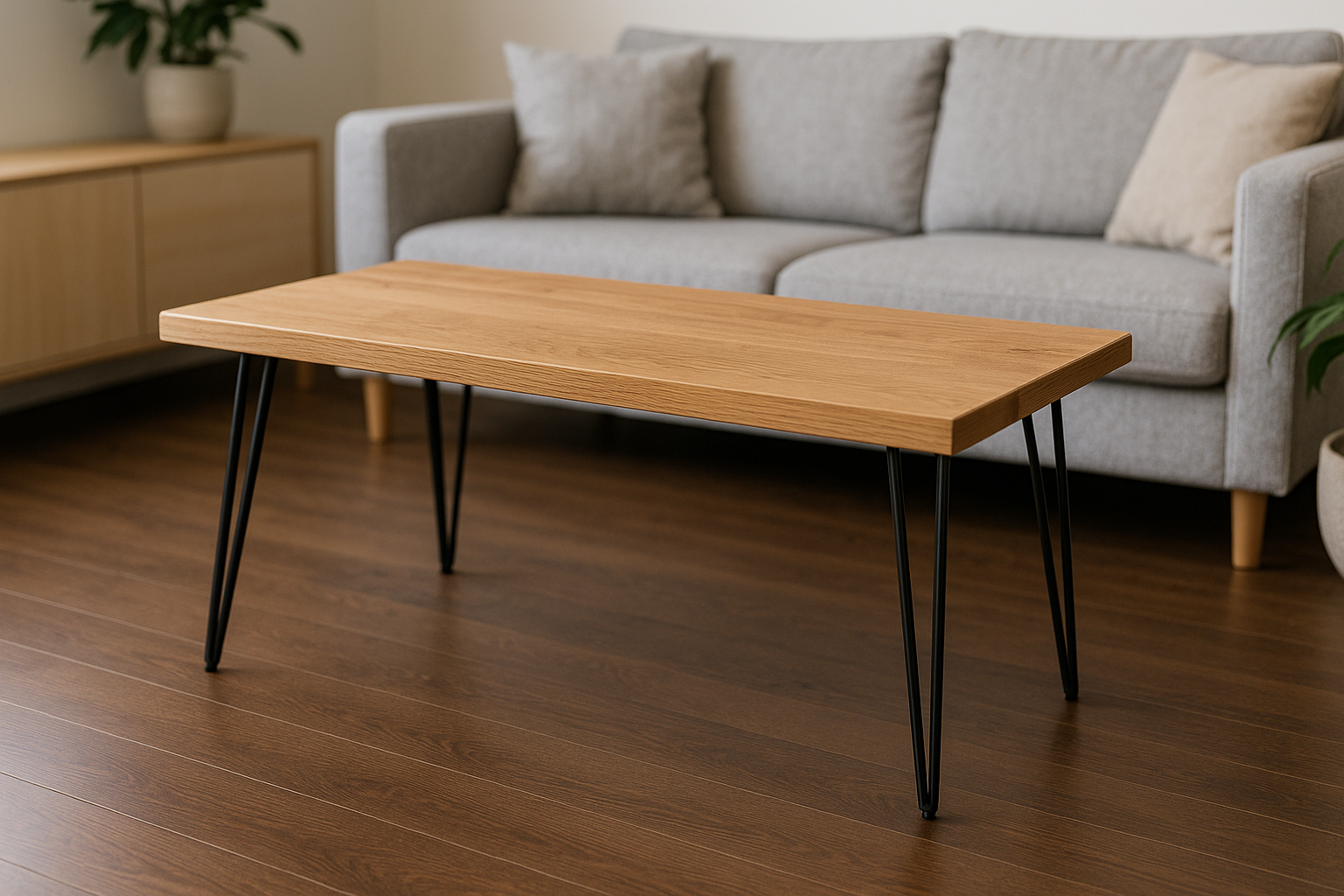
A coffee table is one of the most versatile pieces of furniture in the living room. It anchors the space, provides a surface for drinks and books, and often doubles as a spot to rest your feet. Building your own coffee table allows you to choose materials that fit your style, while giving you the satisfaction of creating something by hand. One timeless and modern combination is pairing a solid oak top with hairpin legs. The result is a table that is both strong and stylish, balancing natural warmth with slim, elegant design.
The Style of the Table and Where It Belongs
An oak coffee table with hairpin legs has a minimal yet inviting aesthetic. The slim steel legs give the piece a light, modern look, while the oak top adds richness and durability. This design suits Scandinavian-inspired interiors, industrial lofts, and modern family living rooms alike. It’s simple enough to blend into most décors, but striking enough to become a focal point.
What Hairpin Legs Are and How They Look
Hairpin legs are made from bent steel rods welded to a mounting plate. Originally designed in the 1940s, they remain popular today for their strength and mid-century appeal. Available in two-rod or three-rod versions, they support heavy tops while keeping a slim profile. On a coffee table, hairpin legs help maintain a sense of openness in the room while providing reliable support.
Why Hairpin Legs Combine Well with Solid Oak
Oak is a dense, durable hardwood with a timeless grain. On its own, it can sometimes feel heavy, but hairpin legs provide the perfect counterbalance. Their slim, refined form offsets the weight of the oak, resulting in a coffee table that feels substantial but not bulky. The pairing is a classic blend of rustic warmth and modern elegance.
Choosing the Right Colour for the Legs
Hairpin legs are available in black, white, or raw steel. Black is a versatile choice that creates a striking contrast with oak. White offers a softer, lighter look that suits modern or Scandinavian living rooms. Raw steel gives an industrial edge but must be sealed to prevent rust. If you want a custom look, you can paint the legs yourself. Sand them first for adhesion, then use spray paint for a smooth finish and add a protective clear coat.
Why Solid Oak Is Different from Cheaper Alternatives
Unlike veneered or laminated products, solid oak is consistent through its entire thickness. It can be sanded, repaired, and refinished many times, giving it a lifespan measured in decades. Laminates may imitate oak but chip easily and cannot be restored. Veneers have a real wood surface but only a thin layer that wears down over time. For a coffee table that sees constant use — mugs, snacks, remote controls, and daily knocks — solid oak is a worthwhile investment.
Choosing the Thickness of the Oak
Coffee tables don’t need as much thickness as dining tables, but the size of the top still matters. Common thicknesses include 19mm, 24mm, 27mm, and 30mm. Nineteen millimetres gives a sleek, modern profile, while 24mm and 27mm offer a sturdy, balanced feel. Thicker tops, like 30mm or more, look bold and chunky but add weight. For most coffee tables, 24mm strikes the right compromise between strength and appearance.
The Realities of Using Oak
Oak is a natural material, so expect some variation in colour and grain. Knots, medullary rays, and other natural features add to its character. If you prefer a cleaner, more uniform look, opt for prime-grade oak. If you like rustic charm, character-grade oak embraces knots and natural quirks. Neither is better — it simply depends on the style you want for your living room.
Cutting the Top to Size
If you plan to cut your oak yourself, use a track saw or a high-quality circular saw with a fine-tooth blade. Always measure carefully, mark clearly, and clamp securely. Oak is dense, so cut slowly and use dust extraction if possible. If you don’t have the right tools, many suppliers offer pre-cut oak tops, which save time and ensure accurate dimensions.
Preventing Movement
As a natural hardwood, oak moves with humidity. Over time, this can cause slight cupping or sagging. For coffee tables, which are usually smaller than dining tables, this is less of an issue, but you can still reinforce the underside with battens or bars if desired. These help keep the surface flat and stable.
Sanding and Preparing Oak
Sanding oak ensures a smooth surface ready for finishing. Start with medium grit paper, then progress to finer grits for a polished feel. Always sand with the grain to avoid scratches. An electric sander makes the job quicker, but hand sanding works well too, especially for easing edges.
Pilot Holes and Edge Treatments
When attaching hairpin legs, always drill pilot holes first to prevent splitting. For the edges, you can leave them square for a clean look, round them slightly for comfort, or use a router to create a profile. Even subtle shaping makes the table feel more refined.
Finishing the Coffee Table Top
Because coffee tables are used daily and often for drinks, a protective finish is essential. Hardwax oil is an excellent choice, offering durability and a natural matte look. Danish oil or tung oil add warmth but may require reapplication over time. For maximum protection against spills and stains, varnish or polyurethane creates a tougher surface, though it can look shinier. Apply several thin coats, sanding lightly between applications, to create a smooth and resilient finish.
Conclusion
A coffee table with a solid oak top and hairpin legs is a perfect blend of strength, elegance, and timeless design. The oak top provides natural warmth and durability, while the slim legs keep the look light and stylish. With careful preparation — choosing the right thickness, cutting accurately, sanding, and applying a protective finish — you can create a coffee table that looks professional, feels sturdy, and withstands the wear and tear of daily life.
This design suits a wide range of interiors, from minimalist and modern to rustic and industrial. It’s a project that combines functionality with style, giving you a piece of furniture that will remain at the centre of your living space for years to come.
