When it comes to building your own furniture, one of the first and most important decisions is which wood to use. The material you choose will determine not only the look of the finished piece but also its strength, longevity, and how it performs under daily use. Two of the most common choices for DIY makers and professional furniture builders alike are oak and pine. Oak is a classic hardwood known for its density and character, while pine is a versatile softwood prized for its affordability and ease of use.
Both woods have their place in furniture making, but they are very different in appearance, performance, and cost. If you are considering making a dining table, coffee table, or desk, it’s worth understanding the pros and cons of each before you start.
What Makes Oak and Pine Different
The fundamental difference lies in the categories they belong to. Oak is a hardwood, grown slowly and characterised by its density, strength, and complex grain. Pine is a softwood, grown quickly and widely used in construction as well as furniture because of its availability and lower cost.
This difference affects everything from how they look and feel to how they wear over time. Oak furniture is heavy, strong, and built to last for decades or even centuries. Pine, by contrast, is lighter, easier to work with, and more affordable, but less durable in the long term.
Style and Appearance
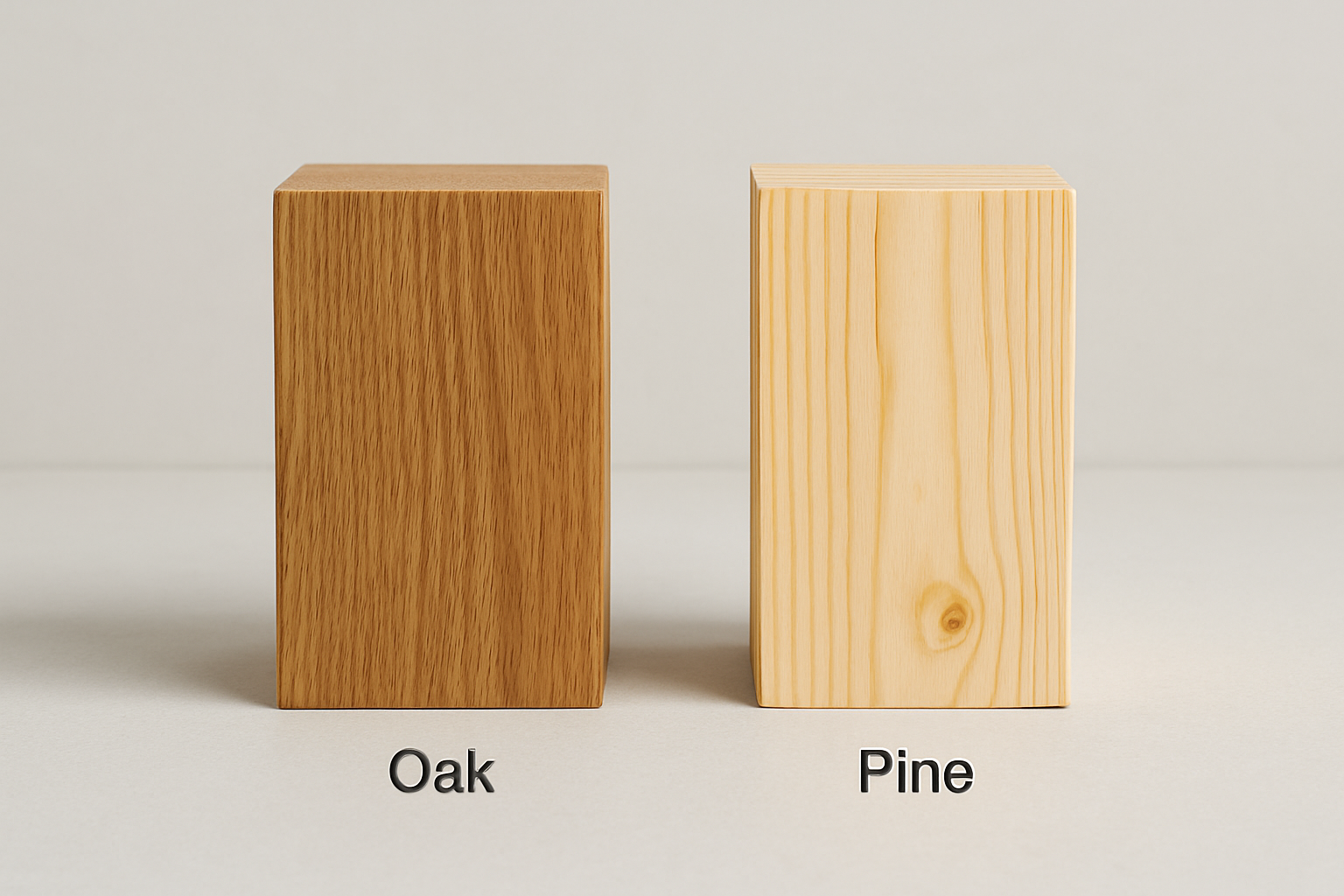
Oak has a distinctive look that has made it one of the most prized woods for furniture. Its grain is strong and visible, often with striking patterns like medullary rays. Oak’s natural tone ranges from light golden to rich brown, and it can be left natural, oiled, or stained to enhance its beauty. A dining table or desk made from oak immediately looks substantial and elegant, making it ideal for both modern rustic homes and traditional interiors.
Pine has a much simpler grain, with a lighter, pale yellow tone that can darken over time. It can look charming in a rustic or country setting, and it readily accepts paint or stain, making it a flexible option if you want to customise the look. A pine coffee table or desk can be painted white for a Scandinavian feel, stained dark for a traditional look, or left natural for a farmhouse vibe. The key advantage of pine’s appearance is its adaptability — it can be dressed up or down depending on your décor.
Strength and Durability
Oak is one of the strongest hardwoods commonly used in furniture. A solid oak dining table will withstand decades of daily use, from family meals to heavy serving dishes. An oak desk can comfortably support computer equipment and books without sagging. Oak coffee tables are durable enough to handle everything from mugs to children playing on them.
Pine is softer and more prone to dents and scratches. A pine desk may pick up marks from pens or laptops, while a pine dining table will show signs of cutlery and heavy plates much sooner than oak. However, this doesn’t mean pine isn’t usable — many people embrace the patina that develops on pine furniture, seeing it as part of its rustic charm. Still, if you need a surface that will remain pristine over many years, oak is the better choice.
Weight and Practicality
Because oak is dense, it is also heavy. Moving an oak dining table or large desk is a two-person job, and the weight makes it less practical in spaces where furniture needs to be shifted frequently. The advantage is that once in place, oak furniture feels solid and immovable.
Pine, being lighter, is easier to cut, handle, and move. If you are new to DIY furniture making, pine is far easier to work with than oak. It is more forgiving on tools, quicker to cut, and lighter to assemble. For small spaces or temporary setups, pine has the advantage of practicality.
Cost and Availability
Oak is significantly more expensive than pine. It is a slow-growing hardwood, and its density makes it more costly to process and transport. An oak dining table top or desk top is an investment, but one that will last for decades.
Pine is widely available and much cheaper, making it the go-to choice for budget-conscious DIY makers. Pine boards can be found in almost any timber yard or DIY store, while oak usually has to be sourced from specialist suppliers.
Maintenance and Longevity
Oak furniture is low-maintenance once finished properly. It can be sanded, refinished, and repaired countless times over its life. A scratched oak coffee table can be restored to look like new with some sanding and oil. This is why oak pieces are often passed down through generations.
Pine, by contrast, is softer and doesn’t respond as well to refinishing. Deep dents may remain even after sanding, and the wood tends to warp more easily if not properly dried and sealed. That said, pine coffee tables or desks can still last many years with care — they simply won’t endure for generations the way oak will.
Dining Tables, Coffee Tables, and Desks Compared
- Dining tables: Oak is the clear winner for long-term durability and elegance. It can handle daily meals, hot dishes, and constant use while still looking beautiful. Pine is cheaper and lighter, but it will show wear much more quickly.
- Coffee tables: Both woods work well, depending on your style. Oak gives you a substantial, refined centrepiece, while pine creates a more rustic, casual table that you can paint or stain to suit your décor.
- Desks: Oak desks feel professional and solid, able to support heavy equipment for years. Pine desks are more budget-friendly and lighter, but they may pick up marks from regular use and require a desk mat or coasters for protection.
Finishing Options
Oak looks beautiful when finished with hardwax oil, Danish oil, or polyurethane varnish. These finishes enhance its grain and protect it against stains and scratches. Oak’s density means it holds finishes well, and with proper care it can last for decades without needing more than the occasional refresh.
Pine benefits from finishes that harden the surface, as it is naturally softer. Varnish is often the best choice for durability, though oils and waxes can bring out its warm colour. Pine also paints well, making it ideal if you want a bold colour or a clean white Scandinavian look.
Which Should You Choose?
The choice between oak and pine ultimately depends on your budget, your style preferences, and how you intend to use the table or desk.
- Choose oak if you want a piece of furniture that will last a lifetime, develop character with age, and withstand heavy daily use. It’s an investment, but one that pays off in durability and timeless style.
- Choose pine if you want affordability, flexibility, and a lighter wood that is easy to work with. It’s perfect for rustic furniture, painted projects, or pieces you expect to change over time.
Conclusion
When it comes to making tables and desks, both oak and pine have their place. Oak is strong, dense, and built for longevity, making it the premium choice for dining tables, coffee tables, and professional desks. Pine, on the other hand, is budget-friendly, easy to work with, and versatile in style, though less durable over the long term.
If you want heirloom quality, go with oak. If you want practicality and affordability, pine is a great choice. Either way, building your own furniture ensures you get a piece that reflects your needs, your space, and your creativity — and that’s what makes it truly valuable.
