When it comes to building your own furniture, the choice of material has a huge impact on both the look of the finished piece and the satisfaction you get from making it. Among the many options available, reclaimed wood has a special appeal. It is sustainable, full of character, and makes every project unique. Whether you’re making a dining table, a desk, or a coffee table, reclaimed wood can transform a simple design into something with real depth and personality.
This article will explore what reclaimed wood is, why it works so well for furniture, the challenges you’ll face when using it, and how to prepare and finish it properly. We’ll also look at which types of tables and desks benefit most from reclaimed wood, and how to combine it with modern leg designs for a balanced, timeless look.
What Is Reclaimed Wood?
Reclaimed wood is simply timber that has been salvaged from another use and given a second life. It can come from many sources: old barns and warehouses, scaffold boards, shipping pallets, railway sleepers, or even flooring and beams from demolished houses. Instead of being thrown away or left to rot, these boards are cleaned up and reused.
The appeal of reclaimed wood lies in its history. Every mark, nail hole, and weathered surface tells a story. Unlike new timber, which often looks uniform, reclaimed wood carries the character of its previous life. It may show saw marks from decades ago, colour changes from sun and rain, or small imperfections that give it a lived-in feel.
The Unique Aesthetic of Reclaimed Wood
The first thing you notice about reclaimed wood is its patina. Years of exposure to the elements, use in construction, or contact with tools and fasteners leave behind marks that can’t be replicated artificially. The result is a surface that looks instantly warm, interesting, and authentic.
Knots, cracks, nail holes, and even old paint residues can all add to the charm. Instead of trying to eliminate imperfections, most makers choose to celebrate them. A dining table made from reclaimed boards becomes a talking point — every mark hints at a previous life. A desk built from old scaffold boards feels like it carries both history and strength.
For coffee tables in particular, reclaimed wood has huge appeal. The smaller surface area allows the wood’s character to shine without overwhelming the room, and the table instantly feels lived-in rather than pristine.
Why Reclaimed Wood Is Sustainable
Reclaimed wood is also one of the most environmentally responsible choices you can make. By reusing existing timber, you reduce demand for freshly felled trees, helping to preserve forests. You also prevent perfectly usable material from being wasted.
Many types of reclaimed wood are stronger and denser than new equivalents because they were originally cut from old-growth trees, which are no longer widely available. Choosing reclaimed wood for your dining table or desk means you’re not only saving resources but also giving yourself access to timber quality that might be hard to find otherwise.
The Challenges of Working with Reclaimed Wood
Of course, using reclaimed wood isn’t always straightforward. Unlike freshly milled timber, which arrives clean and ready to use, reclaimed boards often need significant preparation.
- Hidden nails and screws: These can damage saw blades or planers if not removed carefully. A metal detector can help identify them before cutting.
- Warping and twisting: Years of use or exposure to weather can leave boards less than perfectly straight. Some may need planing or careful clamping to bring them back into shape.
- Dirt and paint: Many reclaimed boards are rough, with ingrained dirt or old paint layers. Sanding and cleaning are essential before finishing.
- Variable sizes: Scaffold boards, for example, are typically 225mm wide and 38mm thick, but reclaimed boards can vary widely. You may need to mix and match to build a table top of the right size.
These challenges mean reclaimed wood isn’t always the easiest option for beginners. But with patience and the right tools, the results are worth it.
Preparing Reclaimed Wood
The preparation process is just as important as the build itself.
- Cleaning: Start by brushing off dirt and debris. For heavily soiled boards, a light wash with water and a stiff brush may be needed, followed by thorough drying.
- De-nailing: Go over each board carefully to remove any nails, screws, or staples. Even small fragments can damage tools.
- Flattening and straightening: Depending on the project, you may need to plane the boards flat. For rustic projects, you can often keep the roughness, but dining tables and desks usually need smoother, more level surfaces.
- Cutting to size: Use a circular saw or track saw for accurate cuts. Always measure carefully and clamp securely, as reclaimed wood can shift if not firmly held.
- Joining boards: For wide table tops, boards can be glued edge to edge, reinforced with dowels or biscuits. Alternatively, battens screwed across the underside can hold them together, though this may leave small gaps.
Choosing the Right Furniture Projects
Reclaimed wood works particularly well for dining tables, coffee tables, and desks, though each comes with its own considerations.
- Dining tables: Reclaimed wood creates a warm, inviting surface, perfect for family meals and gatherings. Because dining tables see a lot of wear, finishing is important to protect against spills and stains.
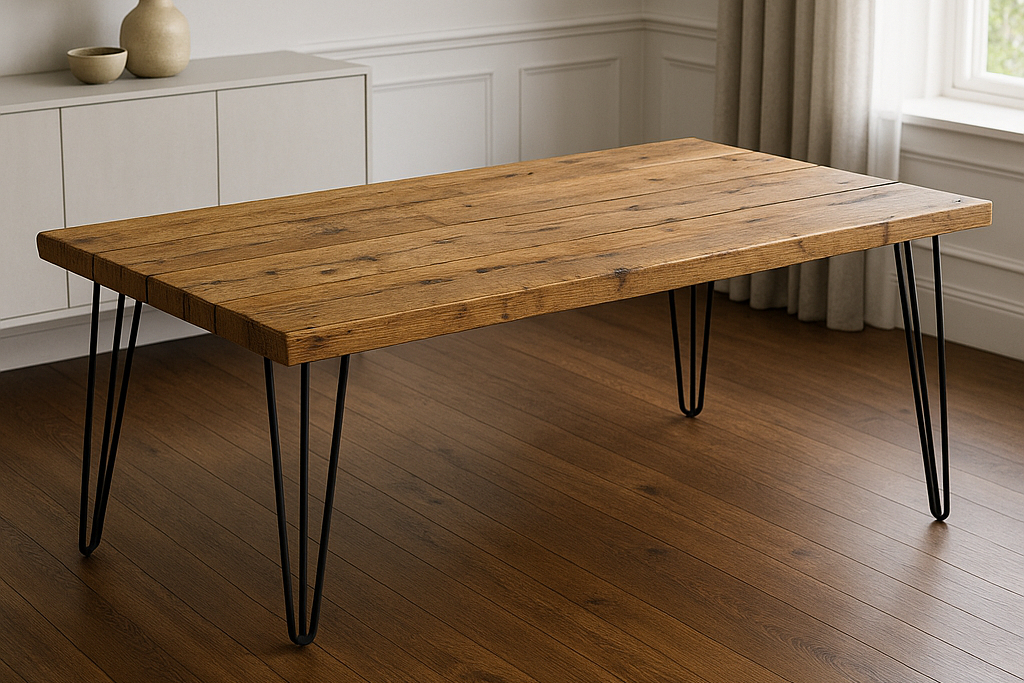
- Coffee tables: These benefit from the character of reclaimed wood without needing huge quantities. A coffee table made from old scaffold boards feels rustic yet stylish, especially when paired with slim steel legs.
- Desks: A reclaimed wood desk can add personality to a home office. The natural marks and character of the wood make the workspace feel less sterile, while still being practical if finished correctly.
Pairing Reclaimed Wood with Modern Legs
One of the best ways to use reclaimed wood is to pair it with modern legs. The rugged, characterful top contrasts beautifully with the clean lines of steel.
- Hairpin legs: Slim and elegant, they lift the rustic top, making it feel lighter. This is particularly effective for coffee tables.
- Box section steel legs: Bold and geometric, they ground the table, balancing the weight of the boards. Perfect for dining tables and desks.
- Trestle legs: A traditional option that complements reclaimed tops well, creating a sturdy and practical base.
This mix of rustic and modern is one of the reasons reclaimed wood has become so popular in DIY furniture making.
Sanding and Finishing Reclaimed Wood
Sanding is where reclaimed wood transforms. Start with a coarse grit to remove dirt, paint, and splinters, then move gradually to finer grits for smoothness. An orbital sander makes the job quicker, but hand sanding works too if you prefer a traditional approach.
Finishing depends on the look you want:
- Hardwax oil: Enhances the grain and provides a matte, natural look while offering strong protection.
- Danish oil or tung oil: Add warmth and depth but may require periodic reapplication.
- Polyurethane varnish: Provides maximum durability, making the surface resistant to scratches and water rings, though it adds more shine.
Because reclaimed wood already has character, you don’t need to overdo the finish — the goal is to protect it while letting its history show through.
Long-Term Appeal of Reclaimed Wood
Furniture made from reclaimed wood has a unique appeal because no two pieces are ever the same. Every dent, knot, and variation tells a story, and over time the table or desk will gain even more character through use. Unlike pristine surfaces, which can look spoiled when scratched, reclaimed wood embraces imperfection. This makes it ideal for family dining tables, busy desks, or coffee tables that are in constant use.
Reclaimed wood also ages gracefully. Instead of deteriorating, it develops more patina and personality. A reclaimed wood dining table today will look even better in ten years, with the marks of meals, celebrations, and daily life layered on top of its already rich history.
Conclusion
Reclaimed wood is one of the most rewarding materials for making DIY furniture. It is sustainable, unique, and full of character. While it requires more preparation than freshly milled timber, the effort pays off in a finished piece that feels authentic and one-of-a-kind.
Whether you’re building a dining table, a desk, or a coffee table, reclaimed wood can turn a simple design into a statement piece. Paired with modern steel legs, it creates a look that blends rustic charm with contemporary style. Finished with oils or varnishes, it becomes a surface that is practical for everyday life while celebrating the beauty of imperfection.
For makers who want furniture that tells a story, reclaimed wood is hard to beat. Every plank carries history, every knot adds character, and every finished table becomes more than just furniture — it becomes part of the home’s identity.
