When building or buying a table or desk, the wood you choose defines not only how it looks, but also how it feels to use and how long it will last. Among hardwoods, three stand out as enduring favourites: oak, ash, and walnut. Each has its own character, grain, and price point, and each brings something unique to dining tables, coffee tables, and desks.
If you’re deciding which hardwood to use, it helps to understand their differences in style, durability, and practicality. Let’s look closely at oak, ash, and walnut to see which might be the right fit for your project.
Style and Appearance
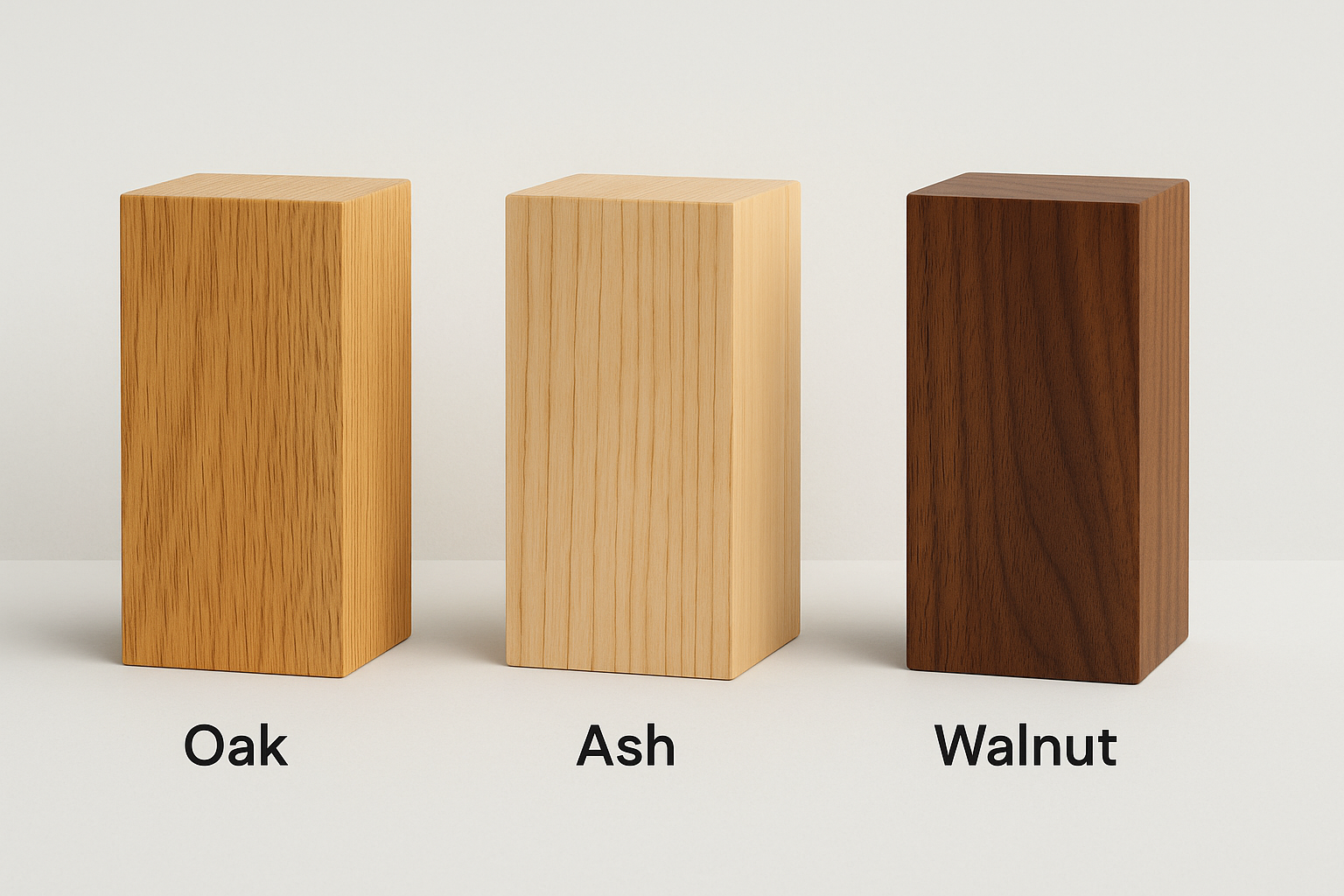
Oak is famous for its distinctive grain and golden tones. It carries a sense of tradition and weight, looking equally at home in rustic farmhouse interiors and more formal spaces. Oak’s prominent medullary rays and natural variation give every table top its own character.
Ash has a lighter appearance, often almost white or pale cream with subtle grain patterns. Its colour and texture make it ideal for modern or Scandinavian interiors, where a clean, airy look is desired. Compared to oak, it feels fresher and less heavy visually.
Walnut is the most luxurious of the three, with its rich chocolate-brown tones and elegant swirling grain. It has long been associated with premium furniture, creating pieces that feel sophisticated and refined. A walnut dining table or desk makes a bold statement, instantly drawing the eye.
Strength and Durability
All three are hardwoods, so they’re naturally strong and well-suited for furniture that will take daily wear.
- Oak is extremely durable. A dining table made of oak can withstand decades of meals and gatherings. An oak desk will support heavy equipment without sagging.
- Ash is also strong but slightly less dense than oak. It’s tough enough for daily use but lighter to work with, which makes it appealing for DIY makers.
- Walnut is durable too, but softer than oak. It resists warping and cracking, yet its darker surface can show scratches more clearly. For that reason, many walnut pieces are finished with extra care to preserve their appearance.
Weight and Practicality
Hardwoods are heavier than softwoods, but they vary.
- Oak is dense and heavy. A large oak dining table or desk is difficult to move, but it feels solid and substantial once in place.
- Ash is noticeably lighter, making it easier to handle and assemble. For coffee tables or smaller desks, this can be a real advantage.
- Walnut sits between the two, still heavy but generally lighter than oak. Its balance of weight and strength makes it versatile for different furniture types.
Cost and Availability
Price is often a deciding factor.
- Oak is widely available and more affordable than walnut, though more expensive than softwoods like pine. It offers a good balance of cost and longevity.
- Ash is usually priced similarly to oak, sometimes slightly cheaper. Its availability makes it a cost-effective choice for those who want a light-coloured hardwood.
- Walnut is the most expensive of the three. It’s considered a premium wood, and its price reflects both its rarity and its desirability. Walnut furniture is often seen as an investment.
Dining Tables, Coffee Tables, and Desks Compared
- Dining tables: Oak offers traditional weight and durability, ash gives a light, modern look, and walnut creates a luxurious centrepiece. If you want a family table that lasts, oak or ash are practical. If you want elegance and drama, walnut wins.
- Coffee tables: Ash is ideal for small spaces thanks to its light tone, oak provides a substantial focal point, and walnut delivers richness that makes the coffee table a true statement piece.
- Desks: Oak feels strong and professional, perfect for heavy daily use. Ash is lighter, great for a modern home office, and easier to move. Walnut desks stand out as premium furniture, though they require a bit more care to avoid scratches.
Finishing and Maintenance
All three woods respond beautifully to finishes, but in different ways.
- Oak looks excellent with hardwax oil or varnish, which enhance its golden tones and protect the grain. It can be refinished multiple times over decades.
- Ash benefits from clear finishes that preserve its pale tone. Oils can add warmth, while lacquers keep the surface crisp and modern.
- Walnut often looks best with oil finishes that enrich its dark tones and highlight the swirling grain. Because scratches show more easily, a durable protective finish is especially important.
Which Should You Choose?
- Choose oak if you want durability, timeless style, and a material that will last for generations. It’s the most versatile choice across dining tables, desks, and coffee tables.
- Choose ash if you prefer a lighter, modern look and want something easier to work with that still offers the strength of hardwood.
- Choose walnut if you want a premium piece that feels luxurious and sophisticated, and you’re willing to invest more to achieve that distinctive look.
Conclusion
Oak, ash, and walnut are all excellent hardwoods for making tables and desks, but they each bring their own strengths. Oak is classic, strong, and long-lasting. Ash is light, modern, and practical. Walnut is dark, rich, and undeniably luxurious.
When deciding between them, think about how you want your furniture to look in your home, how much maintenance you’re willing to do, and how long you want the piece to last. With the right choice, your table or desk will not only serve its purpose but also bring beauty and character to your space for years to come.
